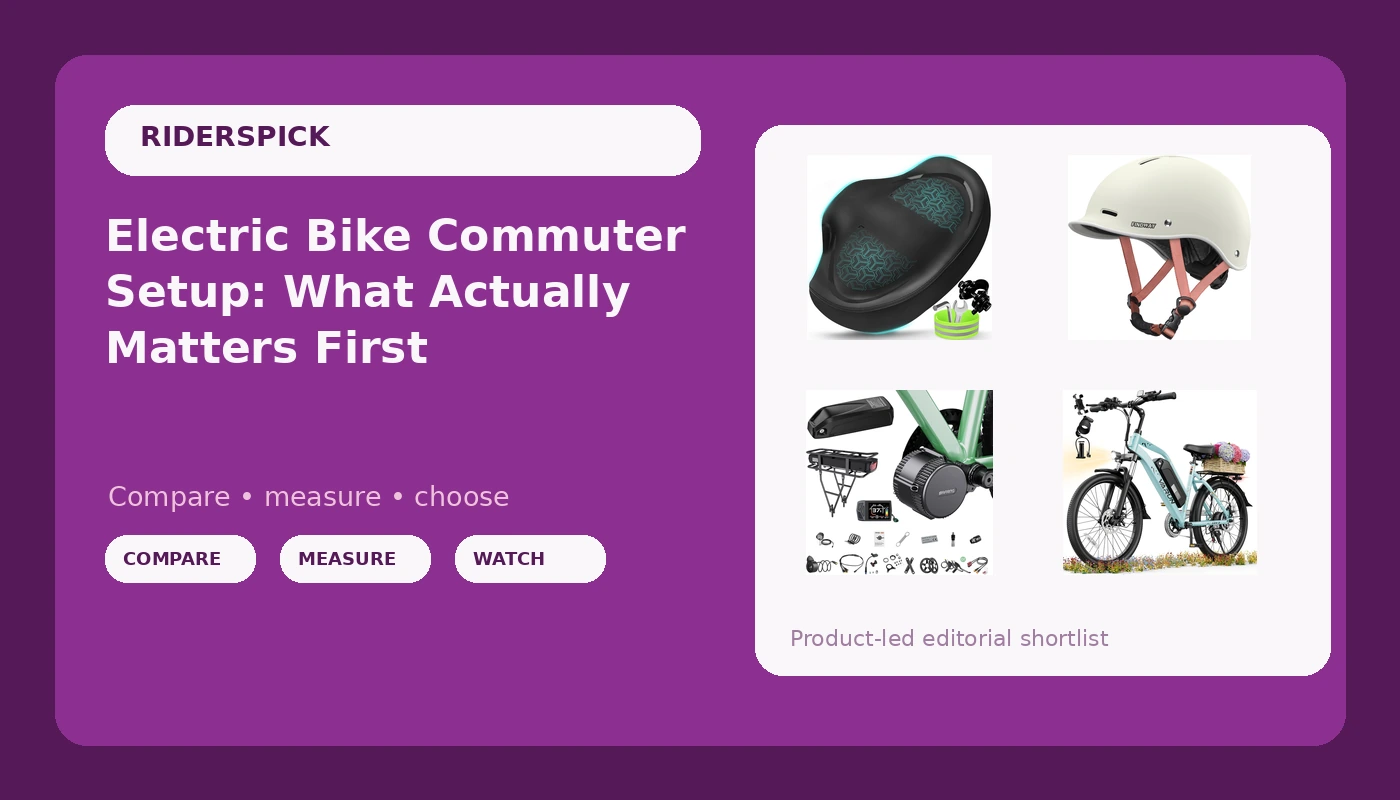
Most people building an electric bike commuter setup start with the wrong question. They ask which bike is fastest, or which listing shows the biggest range number, and then they spend a week comparing spec sheets they cannot verify. The question that actually decides whether you still enjoy the ride in month six is narrower: which parts of this setup will still be working, and still be comfortable, after a year of daily miles?
An electric bike is a system, not a single object. The battery feeds the motor, the motor drives the drivetrain, the brakes stop the whole package, and the contact points decide whether you finish the ride sore. Get one of those wrong and the whole thing feels wrong, no matter how good the other three are. That is the frame for everything below, whether you buy a complete bike or convert one you already own.
Related: How to Check E-Bike Battery Health Before You Buy →
Quick answer
Start with a complete bike if you do not already own a frame you trust. A removable 48V battery and dual disc brakes matter more than a peak wattage number. If you already own a solid bike with good brakes, a mid-drive conversion kit can make it electric without buying a second bike, but only if the frame, drivetrain, and brakes can handle the extra speed and weight. After that, spend on the contact points and the helmet: a wide padded saddle reduces pressure on longer rides, and a certified adjustable helmet is the one piece of gear you should not negotiate on.
Four useful options
| Model | Best fit | What stands out |
|---|---|---|
| VARUN Electric Bike, Peak 750W, 48V Removable Battery | Riders who want a complete, ready-to-ride cruiser | Removable 48V battery, dual disc brakes, 7-speed drivetrain, 26 inch wheels |
| BAFANG BBS02B BBS-HD Mid Drive Electric Bike Conversion Kit | Riders who already own a bike they like | Mid-drive motor at the pedals in 500W, 750W, and 1000W configurations |
| Noseless Bike Seat Cushion, Extra Padding Wide Saddle | Anyone fighting saddle pressure on longer rides | Oversized padded noseless shape, listed for e-bikes, cruisers, and exercise bikes |
| Findway Pro Bike Helmet for Adults, Adjustable Dial | Every rider, on every trip | Adjustable dial fit and a listing that states safety certification |
The complete bike: VARUN Electric Bike
The removable battery is the feature I would weigh most heavily here. A battery you can carry inside is a battery you can charge at a desk, store at room temperature, and keep out of the summer heat that shortens lithium cell life. That single detail affects how long the whole bike stays useful.
Treat the range figure as a claim rather than a promise. Peak wattage is also a peak figure, not a continuous one, and it tells you more about acceleration than about how the bike feels at cruising speed. A cruiser like this is heavier and slower to turn than a commuter hybrid, so if your route includes tight corners, a narrow stairwell, or a crowded bike room, the weight will show up in daily use.
The conversion route: BAFANG BBS02B BBS-HD Mid Drive Electric Bike Conversion Kit
A mid-drive is the right answer for hills. Because the motor runs through the drivetrain, it can use low gears to climb slowly and steadily instead of pushing raw power through a wheel. That is also why mid-drives tend to feel more like a bicycle and less like a scooter.
The trade-off is that a conversion is a project, not a purchase. You need a compatible bottom bracket, the tools to remove and refit a crankset, and a bike whose brakes and tires are honestly rated for higher speeds. Check the listing carefully for exactly what is included, because conversion kits vary in whether they ship with a battery, a display, and the wiring harness. If you are not comfortable working on a bottom bracket, budget for a shop to install it.
The comfort upgrade: Noseless Bike Seat Cushion
Saddle discomfort is the most common reason a new e-bike ends up parked. On an upright cruiser you sit more of your weight on the saddle than you would on a road bike, so the shape and padding under you matter more, not less. A noseless design is aimed at reducing pressure on soft tissue, and extra padding helps on rides where you are not shifting position often.
Two honest caveats. First, a cushion cannot fix a bike that does not fit you; if the reach to the bars or the saddle height is wrong, padding just masks it. Second, softer is not automatically better over long distances. Very plush padding can compress and create new pressure points on a two-hour ride, so start with short trips and adjust. Check the listing for the mounting method before you buy, since cushion designs attach differently.
The safety baseline: Findway Pro Bike Helmet for Adults
This is the least glamorous line item and the one I would not remove. An e-bike carries more speed and more mass than a pedal bike, and the energy involved in a fall scales with both. Certification matters because it means the helmet was tested to a published standard rather than simply shaped like one.
Fit is what turns a certified helmet into a protective one. The dial should let you snug the shell so it stays level when you shake your head, with the front edge sitting low on your forehead rather than tipped back. A helmet that has taken a hard impact should be replaced, even if the shell looks intact, because the foam that absorbs energy does not recover its structure.
Prices and availability may change. Product images, names, and retailer links are matched to verified listings. No current price, rating, stock status, or measured result is stated here without current evidence.
How assist level and terrain change your real range
Range is a function of four variables, and only one of them is the bike. The first is assist level, because the motor draws far more current in the highest setting than in the lowest. The second is total weight, meaning rider plus cargo plus the bike itself. The third is terrain and wind, since climbing and headwinds both convert battery capacity into heat instead of distance. The fourth is how much you pedal.
That is why a manufacturer range figure and your commute rarely match. A 40 mile claim can be entirely honest on flat ground, in the lowest assist setting, with a light rider pedaling steadily. The same bike on a hilly route, at full assist, with a loaded backpack can fall well short of that. Neither number is a lie; they are different tests.
Battery chemistry matters here too. A battery that has been charged and stored in a hot garage loses capacity faster than one kept at room temperature and charged to about 80 percent for storage. If you are buying a used e-bike, ask for a health check rather than trusting the original spec sheet.
A five-step way to build your setup
- Decide whether you are buying or converting. Own a bike with good brakes and a frame you like? A mid-drive kit is the cheaper path. Starting from nothing? A complete e-bike removes a dozen compatibility questions.
- Confirm the battery details before anything else. Removable, properly certified, and serviceable are the three words that matter.
- Check the brakes against the speed. If the bike can hold 28 mph, the brakes need to stop a loaded bike from 28 mph, not just from a walking pace.
- Fix the contact points next. Saddle height, saddle shape, grips, and tire pressure cost little and change comfort more than any drivetrain upgrade.
- Buy the helmet last but never skip it, and fit it properly before your first ride rather than after.
Practical guidance for the first month
- Log your first ten commutes. Note the assist level you used, the distance, and the battery percentage at the end. That log is worth more than any advertised range figure.
- Check tire pressure weekly. Underinflated tires on a heavy e-bike cost range and make the ride feel vague in corners.
- Charge where you store the bike, and let the battery cool before charging after a long ride in the heat.
- Bed in new disc brakes with a few controlled stops in a safe, empty area before you rely on them in traffic.
- Inspect the helmet shell and straps monthly, and re-check the dial tension as the padding packs down.
Which option should you choose?
Choose the VARUN Electric Bike when you want a complete, ready-to-ride cruiser and the removable 48V battery is the deciding feature. Choose the BAFANG BBS02B BBS-HD Mid Drive Electric Bike Conversion Kit when you already own a bike you trust and your route includes real hills. Choose the Noseless Bike Seat Cushion when saddle pressure, not motor power, is what is cutting your rides short. Choose the Findway Pro Bike Helmet when you need certified head protection with a fit you can adjust as the seasons change.
None of this substitutes for the specifics of your own route. I have not ridden these units, and the listing details above are the manufacturer's descriptions rather than measured results. Treat the range figure as a starting point, verify what a conversion kit includes before ordering, and confirm that any helmet you buy states a certification standard.
The bottom line
A reliable electric bike commuter setup is boring on paper: a battery you can remove and maintain, brakes that match the speed, a saddle that does not hurt, and a certified helmet that fits. The VARUN bike covers the first two out of the box for riders who want a complete cruiser. The BAFANG kit covers them for riders who already have a frame worth keeping. The noseless cushion and the Findway helmet handle the two contact points you will notice every single day. Get those four right and the rest is maintenance.