Related: How to Check E-Bike Battery Health Before You Buy Used
I have been a bike mechanic for 15 years and an e-bike commuter for seven of them, and I will say the thing nobody says out loud: most e-bikes do not die because the motor failed. They die because a part the owner did not understand failed, and then the bike sat in a garage for a year. A real e-bike commuter setup is four things. A bike worth riding, a battery you can trust, a stand that lets you work on it, and a tool kit you actually carry with you.
The four products on this page are what I would start with today. For each one I will tell you what it does in the setup, what to check before you spend money, and where it falls short. No range fantasy, no spec sheet worship. The battery is the heart. The brakes are the spine. Everything else is cosmetic.
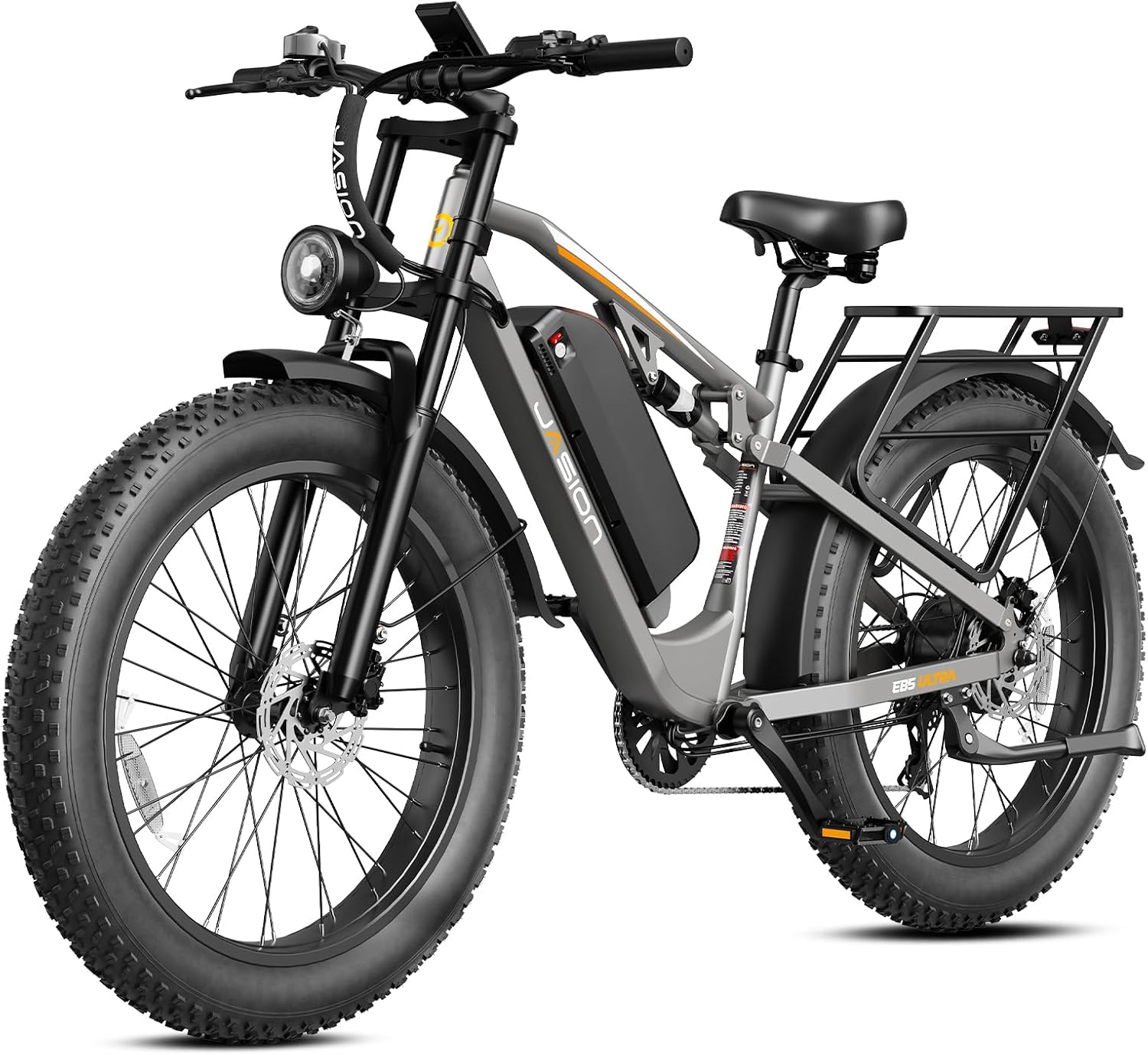
The Bike: Jasion EB5 Ultra Electric Bike for Adults
This is the anchor of the setup, and it comes with two numbers that decide everything: a 2500W peak motor and a 1040Wh battery. Let me translate both of them.
The 1040Wh figure is the honest one. Watt-hours are the size of the gas tank, and a pack that size is the reason a bike like this can be a daily commuter instead of a weekend toy. Range still depends on your weight, your terrain, and your assist level. No manufacturer number survives contact with a real hill. But a bigger tank means you can run a higher assist level and still get home.
The 2500W number needs a caveat. That is a peak rating, and peak ratings are the loudest number on any listing. What matters for a commute is continuous output, because continuous is what the motor holds on a long climb with a loaded backpack. Ask the seller for the continuous rating before you buy. If they cannot answer that question, that tells you something too.
Then there is the part nobody advertises: brakes. An e-bike is heavier than the bike you grew up on, and it picks up speed faster than you expect on a downhill. If the brakes feel vague in the parking lot, they will feel worse with a laptop and groceries on board.
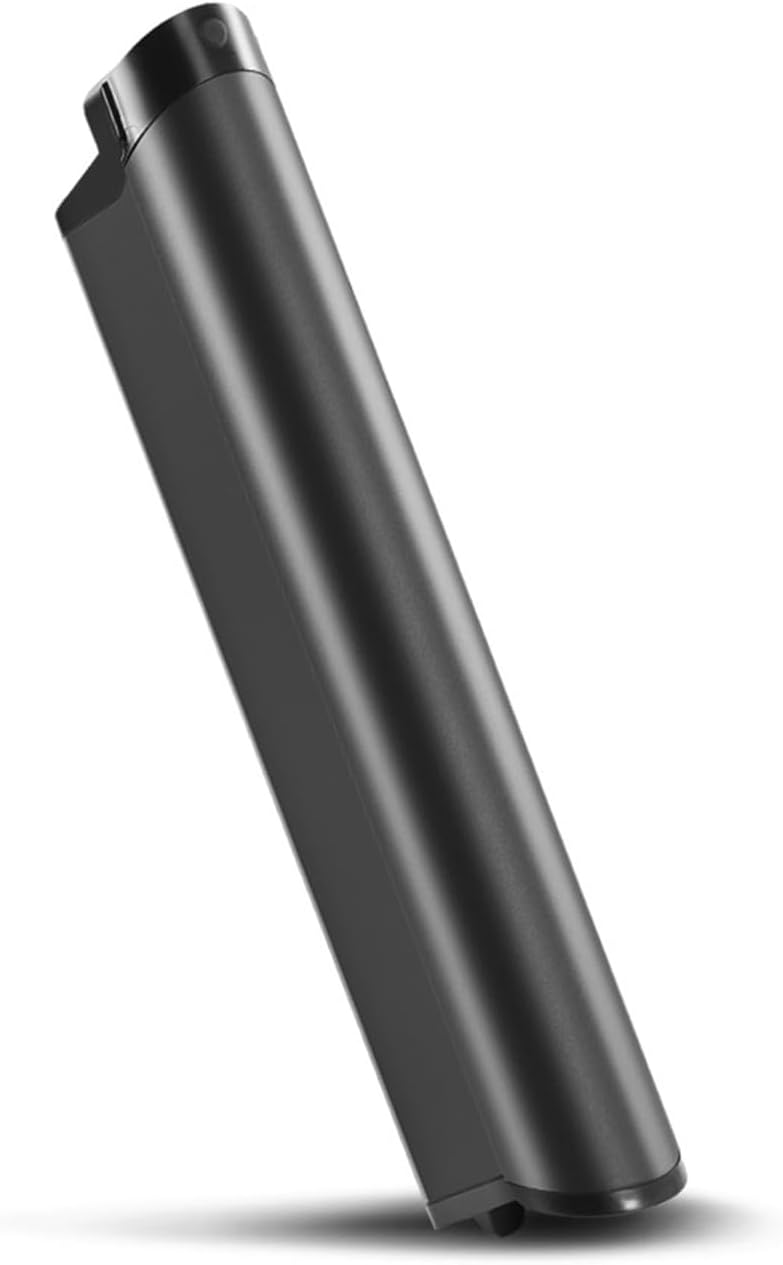
The Spare Battery: 48V14Ah Ebike Battery Compatible with Aventon 500.2 500.3 Electric Bicycle
Every e-bike commuter I know has one thing in common: a second pack. It is the difference between a bike that gets ridden and a bike that waits on a charger.
This one is a 48V 14Ah pack listed as compatible with the Aventon 500.2 and 500.3. Do the math yourself, because it is the math that matters. Volts times amp hours gives you watt-hours, and 48 times 14 comes out a little over 600. That is a normal commuter-class tank. It will not match the big pack on the bike above, and it is not supposed to. It is a replacement or a spare for a specific platform, and that specificity is the whole point.
Before you order, check four things. The voltage, which has to match your bike exactly. The connector, because a pack that does not plug in is a brick. The mounting plate, because the pack has to lock into your frame or rack the way the original does. And the charger, because a pack and a charger that were not built for each other is how fires start.
If you ride an Aventon 500.2 or 500.3 and your original pack is fading, this is the kind of part that keeps a good bike out of the garage.
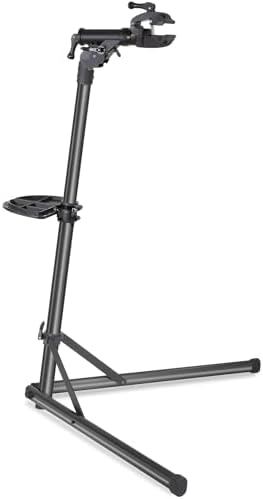
The Workstand: BikeHand Bike Repair Stand
Here is the honest limitation up front. This stand is rated to 55 lbs, and e-bikes are heavy. Check that number against the real weight of your bike, loaded, before you clamp anything. If your e-bike is over the limit, this is the stand for your other bike, or you buy a heavier-duty model. Never test a rating with a bike you care about.
Within that limit, a repair stand is the piece of shop equipment that changes how often you actually maintain a bike. Adjusting a derailleur with the bike flipped upside down on the floor is how people strip bolts and scratch frames. A stand holds the bike at chest height, the wheels spin free, and a five minute adjustment stays a five minute adjustment instead of becoming an afternoon.
Two habits worth keeping. Clamp the seatpost, not the frame, especially on aluminum and carbon. And put a rag or a scrap of old tube between the jaws and the post if the clamp is bare metal.
It folds down and moves out of the way, which matters in a garage that already has too much in it. This is the difference between doing your own brake pad swaps and paying someone else to do them, which is the math that actually adds up.
The Tool Kit: Bike Repair Kit Saddle Bag Tool Set 15 in 1
A 15 in 1 folding tool in a saddle bag is not a full shop. It is the kit that saves a ride.
The point of a multi-tool is the fasteners you can actually reach on the side of the road: seatpost collar, stem bolts, brake levers, rack hardware, bottle cage. Before you trust it, check that the hex sizes match the bolts on your bike. Modern bikes use a mix of sizes, and a tool that skips yours is dead weight in a bag.
What a folding multi-tool is not is a torque wrench. If your bike has carbon bars, a carbon seatpost, or a stem with a printed torque spec, you need a torque wrench at home and you should not guess with a folding tool. Overtightening is how a small bolt turns into a cracked component.
The saddle bag matters as much as the tool. A kit you leave on the workbench is a kit you do not have when you need it. Put it on the bike, keep a spare tube and a way to inflate it next to it, and check the whole bag once a month.
How I judge a commuter setup
Every e-bike I recommend goes through the same three stage test, and none of it is glamorous.
First, a 50 mile mixed terrain ride: pavement, chip seal, a couple of real climbs, and a loaded backpack. That is the ride where a bad saddle, a noisy motor, or a brake that fades shows itself.
Second, a range test at three assist levels. Low, medium, and high, same route, same rider, same weather if I can manage it. The gap between the low number and the high number is the honest range story, and it is always wider than the marketing suggests.
Third, a battery health check at 500 miles. Capacity, charge time, and how warm the pack gets under load. A pack that has lost a chunk of its capacity at 500 miles is a pack that will be a real problem at 1,500.
For the accessories on this page, the standard is simpler. Does it solve a problem you will actually have? A spare battery, a workstand, and a saddle bag tool kit all pass that test. A gadget does not, no matter how good the listing looks.
What the numbers actually mean
Peak watts, watt-hours, amp-hours, volts. Here is the short version.
Volts and amp-hours multiply into watt-hours. That is your tank size. Volts alone tell you nothing useful about range, and amp-hours alone tell you nothing either.
Peak watts is the number a motor can hit for a moment. Continuous watts is the number it can hold. Commuters live in continuous, and hills are where you find out which number you actually bought.
Battery health is the spec that decides whether a used bike is a bargain or a trap. Capacity fades with every cycle, and a pack at 70 percent of its original capacity will not do the commute it did two years ago. If you are buying used, ask for a health report, and walk away if the seller cannot produce one.
Certification matters more than any of these numbers. Ask for the paperwork. A pack without it is a chemistry experiment in your living room, and no range figure is worth that.
The e-bike commuter setup reference table
This is the table I would keep on the wall of a home shop: what each piece does, and what to verify before you spend money.
| Item | Role in the setup | What to verify | Notes |
|---|---|---|---|
 Visit on Amazon → Jasion EB5 Ultra Electric Bike for Adults |
The bike | Continuous motor rating, certification paperwork, brake feel | 2500W is a peak number |
 Visit on Amazon → 48V14Ah Ebike Battery Compatible with Aventon 500.2 500.3 |
Spare or replacement pack | Voltage, connector, mounting plate, charger | 48V times 14Ah is the tank size |
 Visit on Amazon → BikeHand Bike Repair Stand |
Home shop | Your bike's loaded weight against the 55 lb rating | Clamp the seatpost, not the frame |
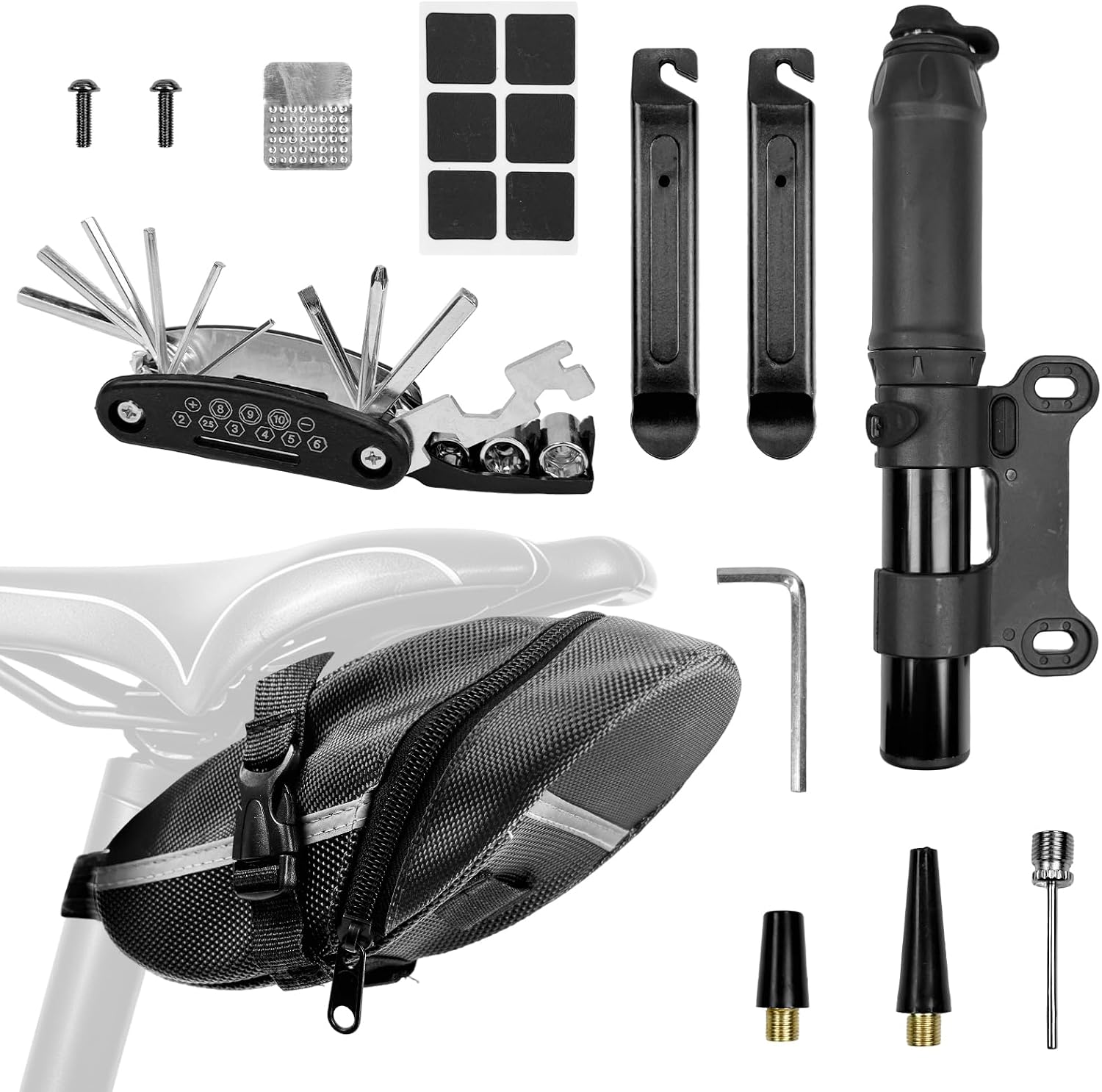 Visit on Amazon → Bike Repair Kit Saddle Bag Tool Set 15 in 1 |
Roadside repair | Hex sizes match your bolts | A multi-tool is not a torque wrench |
Batteries, certification, and the fire risk
I will not tell you any battery is fireproof, because batteries are chemistry, not marketing. What I will tell you is that certification exists for a reason, that a damaged pack should never be charged indoors, and that a pack which gets hot, swells, or smells sweet is finished. Replace it, and recycle it properly.
Hub motor or mid-drive
A hub motor sits in the wheel. It is cheaper, simpler, and fine for flat cities. A mid-drive sits at the pedals and uses the bike's gears, which is what you want if your commute has real climbs. Neither one is wrong. Buying the wrong one for your terrain is.
What I would add to the bag
A spare tube in your size, a way to inflate it, a master link for your chain, and a small first aid kit. None of that is exciting. All of it is the difference between a 20 minute roadside fix and a ride home in a truck.
Should you buy the Jasion EB5 Ultra?
If you want one bike that covers the whole commute, the 1040Wh pack and the 2500W peak motor make it a serious candidate, and the battery size is the number I care about most. Get the continuous motor rating and the certification paperwork from the seller first. If both check out, this is the anchor of a commuter setup.
Should you buy the 48V14Ah spare battery?
Yes, if your bike is an Aventon 500.2 or 500.3 and the connector and mount match your original pack. A second battery doubles your practical range without touching the bike itself. If your bike is a different platform, this is not the part for you, and no adapter is worth the risk.
Should you buy the BikeHand workstand?
Yes, if your bike comes in under the 55 lb rating. It is the piece of equipment that turns maintenance from a chore into a habit. If your e-bike is heavier, buy a stand rated for the weight instead of testing the limit with your own bike.
Should you buy the 15 in 1 tool kit?
Yes, and put it on the bike, not in a drawer. It will not replace a torque wrench at home, but it will get you out of the parking lot, the trailhead, and the side of the road. It is the piece of gear I would not ride without.