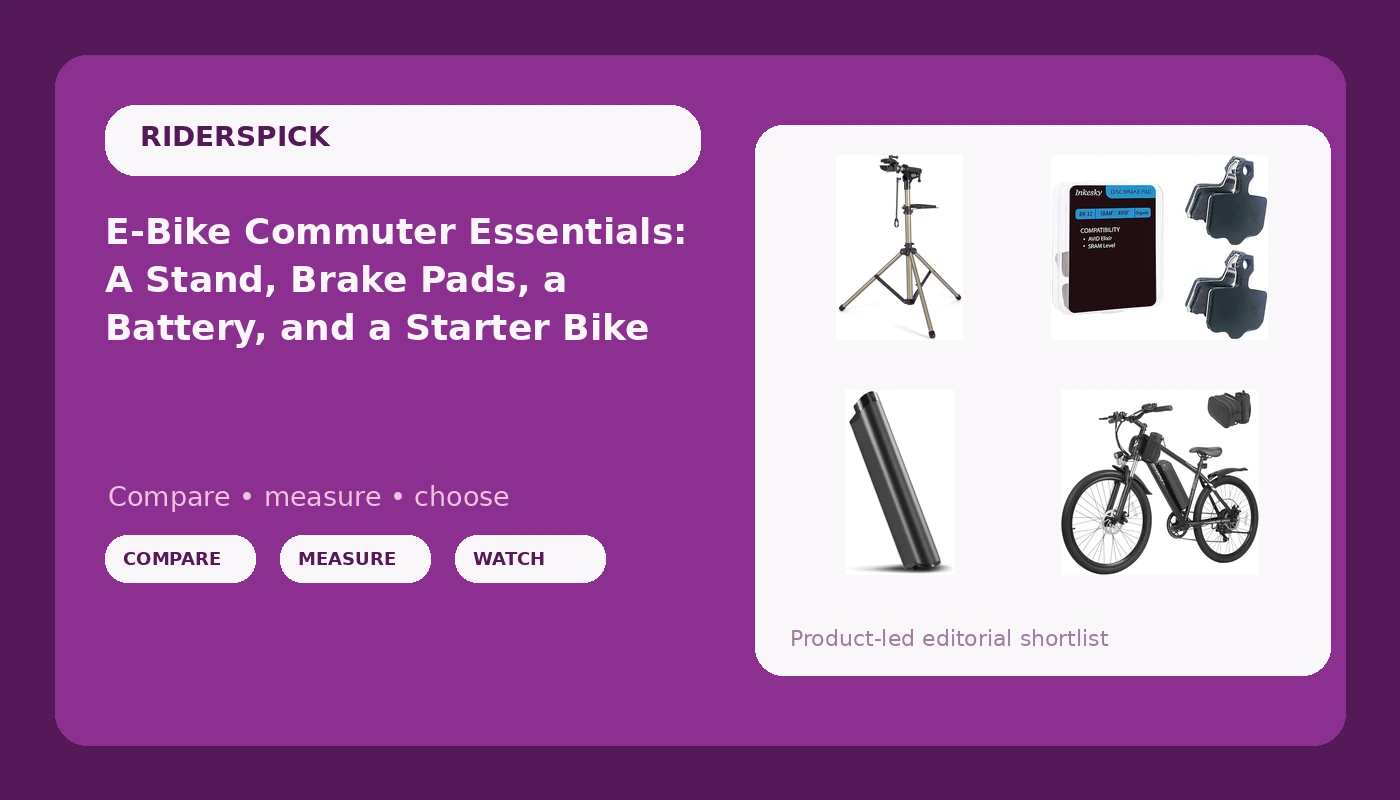
I have kept a logbook for 15 years of every part that failed on a bike that rolled through my shop, and the electric entries repeat themselves with depressing regularity: a pack that lost a third of its capacity in 18 months, brake pads worn to the backing plate on a 60 pound commuter, and a motor that whined because nobody ever checked the bolts holding it to the frame. This e-bike commuter essentials comparison is the short list I hand to people who want to ride to work on a bike that costs less than a used car and who would rather not get stranded eight miles from home. Four products, four jobs: the bike itself, the battery that decides whether it stays useful, the brake pads you will replace more than once, and the stand that keeps you from wrecking your back while you do it.
If you are starting from nothing, the Hoverfly 16"/26" adults electric bike is the entry point, the 48V14Ah pack is the upgrade that keeps an older Aventon on the road, the Rad Power and Lectric brake pads are the consumable you will reorder, and the CXWXC workstand is the piece most owners skip and later regret skipping.
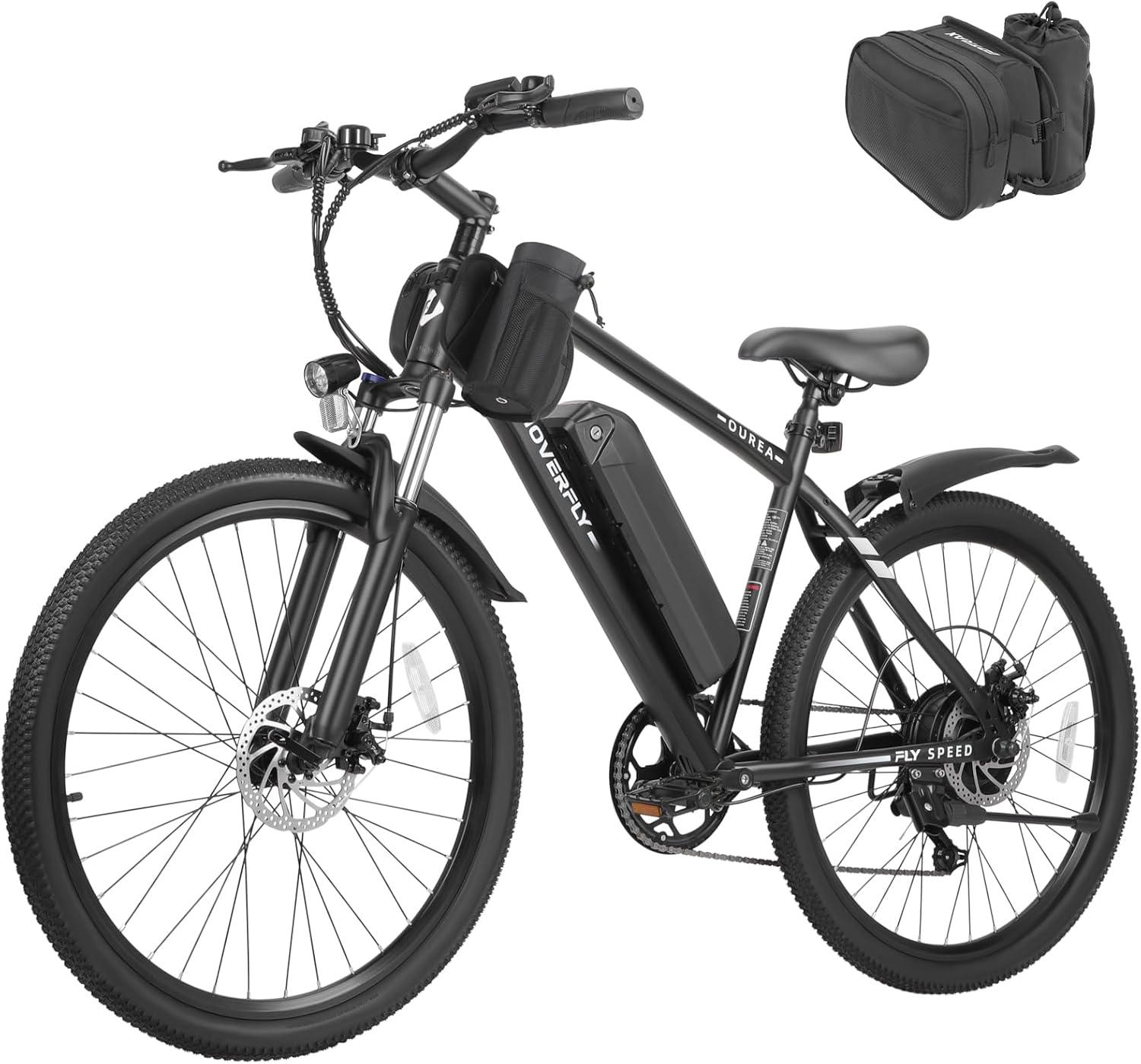
Hoverfly 16"/26" Adults Electric Bike
Two wheel sizes, a real 15.5/20 mph split, and an entry price that leaves room in the budget for brakes and a stand
Range is a best case claim, and the listing does not settle motor type or battery certification
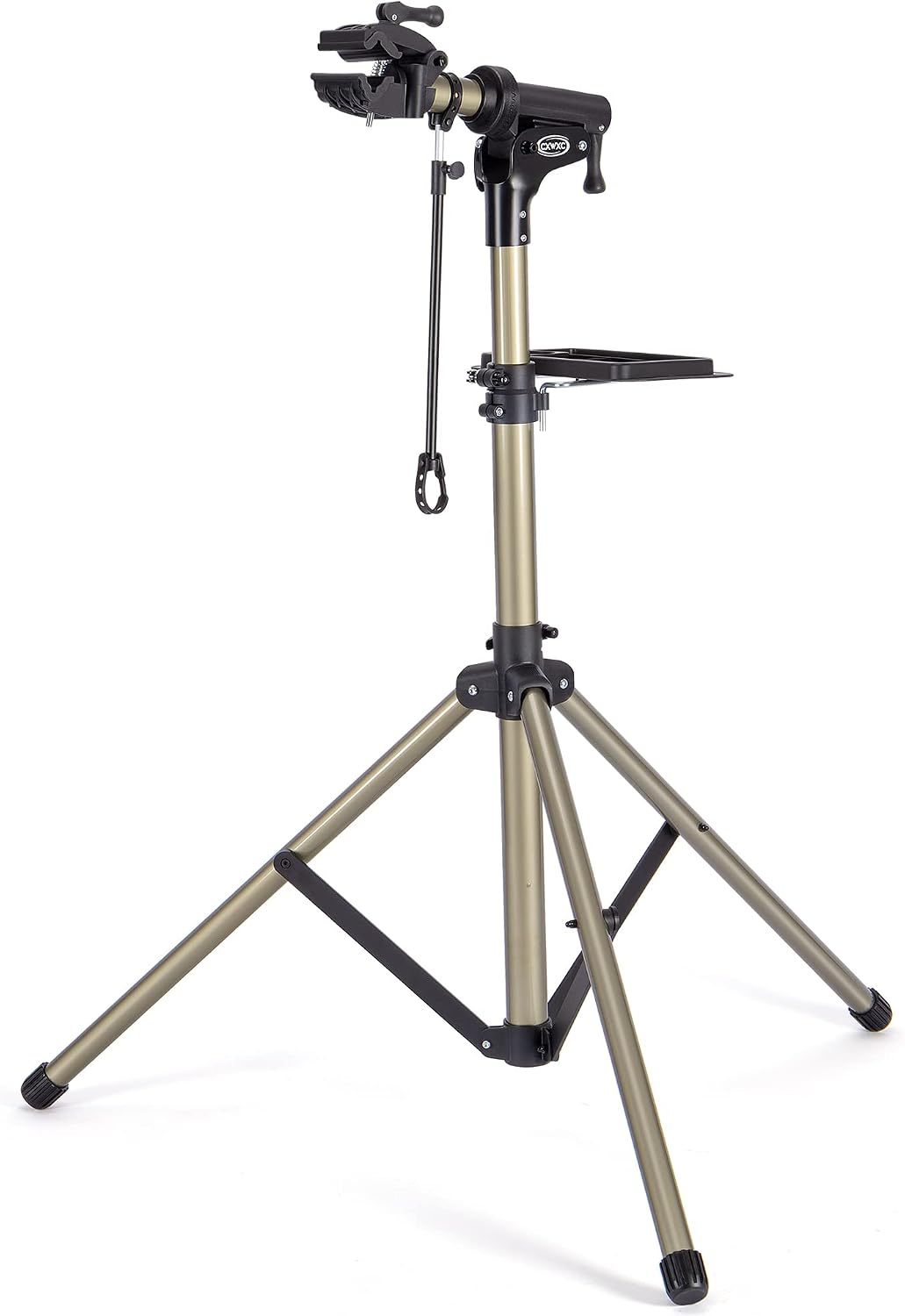
CXWXC Bike Repair Stand 88lbs
An 88 lb rating handles a loaded commuter e-bike, which most budget stands will not
It is a workshop tool, not something you carry, and it claims floor space you may not have

Brake Pads Compatible with Rad Power RadCity/RadRover, Lectric XP Trike/3/4
Covers the two commuter brands I see most, and pads are the cheapest safety upgrade you can make
Compatibility lists are broad, so you have to confirm mechanical versus hydraulic and your model year
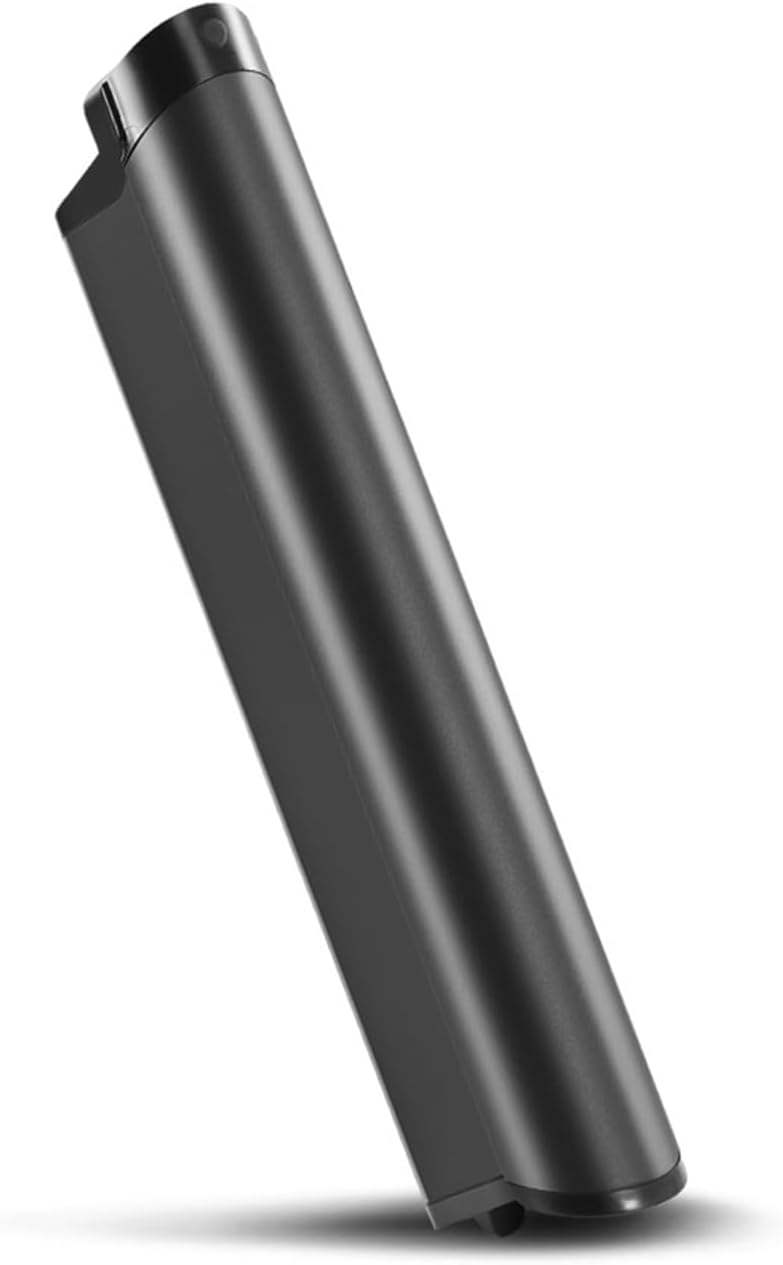
48V14Ah Ebike Battery Compatible with Aventon 500.2 500.3
672 Wh of capacity and a fit for the Aventon 500.2 and 500.3, which keeps a good frame out of the landfill
Voltage, bracket, and connector have to match exactly, and certification is not always stated
Prices and availability were captured from Amazon Creators API and may change.
The four questions I ask before I recommend anything
Every electric bike and every part that touches one gets the same four questions from me. Is the battery certified and healthy? Do the brakes stop 60 pounds of bike and rider from 28 mph? Does the real range match the claim on the box? And would I trust the thing for a year of daily commutes, in rain, on chip seal, with a laptop in a pannier?
Those questions do not change shape for accessories, they just move. A workstand gets judged on load rating, clamp design, and whether it wobbles when you torque a crank bolt. Brake pads get judged on compound, fitment, and noise. A replacement battery gets judged on voltage, capacity in watt-hours, cell quality, and whether the listing says what certification the pack carries. A whole bike gets judged on all of it at once.
The bike: Hoverfly 16" and 26" adults electric bike
The Hoverfly listing carries two of the numbers that actually matter and hides a third. The two that matter: 28 or 40 miles of claimed range depending on which version you buy, and 15.5 or 20 mph of claimed top speed. The one it hides: what kind of motor is doing the work, and what the battery certification looks like.
Read the range figure the way a mechanic reads it. A 40 mile claim is a best case, tested with a light rider, flat ground, low assist, and a fresh pack. Put a 200 pound commuter on it with a headwind and a hill and you should expect something closer to half. That is not a knock on this bike, it is how every range number in the industry works, and the only way to learn your own number is to ride your own route at your own assist level and write it down.
The two wheel sizes are the interesting part of this listing. A 16 inch version is a compact machine, which is what you want if you live in an apartment and have to carry it up a flight of stairs or slide it into a car trunk. A 26 inch version is a full size bike with full size wheels, which is what you want if your commute runs more than a few miles and you care about rolling over potholes without feeling every one of them in your spine. Small wheels are twitchier, they wear faster, and they ride harsher. Big wheels are heavier and harder to store.
At the price this bike sells for, Visit on Amazon →, the things I would verify before the return window closes are the brake type, whether the battery is removable for charging indoors, and whether the pack carries a recognized safety certification. If the listing does not answer those three questions, message the seller and ask. If they cannot answer, buy something else. Visit on Amazon → to read the listing yourself.
The stand: CXWXC bike repair stand, 88 lbs
Here is the part of e-bike ownership that catches people by surprise: a commuter e-bike is heavy. Add a battery, a rack, a lock, and a bag of groceries and you are wrestling 70 pounds of metal every time you want to adjust a derailleur or pull a rear wheel. Doing that on the floor, hunched over, is how you end up with a bad back and a scratched frame.
The CXWXC stand is rated to 88 lbs, which is the number to focus on. That is enough headroom for most commuter e-bikes with the battery still installed, and it is the reason I would pick this over a stand rated for 50 or 60 lbs. A stand that flexes under load is worse than no stand at all, because it will drop the bike mid-repair.
What I would use it for: brake pad swaps, which is a 15 minute job with the bike at chest height and a 45 minute job on the floor. Drivetrain cleaning, because you can spin the cranks and backpedal through the gears while the bike is held steady. Wheel removal, which on a rear hub motor bike is fiddly enough that you want both hands free. And rotor truing, which you simply cannot do properly with the bike lying on its side.
Two caveats. First, an 88 lb rating is a working limit, not permission to hang a loaded cargo bike with panniers and a child seat attached. Strip the bike down before you clamp it. Second, check that the clamp jaws are padded, because a bare metal clamp on a painted frame tube is how you turn a good bike into a cosmetically rough one. Visit on Amazon →.
The brake pads: Rad Power and Lectric compatible
Brakes are the one system on an electric bike I will not compromise on. A 28 mph commuter with a 200 pound rider carries a lot of kinetic energy, and the stock pads on a budget bike are often the cheapest part of the build. Pads are also a consumable, which means you will buy them again, and the spare set on a shelf in the garage is the difference between riding tomorrow and waiting a week for shipping.
These pads are listed as compatible with the Rad Power RadCity and RadRover and with the Lectric XP Trike, 3, and 4. That covers a huge share of the commuter e-bikes actually on American roads, which is the point. Rad Power and Lectric are the two brands I see most often in my repair queue, and both use brakes that eat pads faster than a pedal bike does.
Before you order, do the boring verification. Confirm your exact model year, and confirm whether your bike runs mechanical disc brakes or hydraulic ones, because the pads are not interchangeable and any compatibility list is broad by design. Then bed the new pads in properly: find an empty stretch of road, get up to speed, brake firmly down to a walking pace without coming to a full stop, and repeat that eight or ten times. That transfers an even layer of pad material onto the rotor, and it is the difference between brakes that grab quietly and brakes that howl.
Rear pads on an e-bike wear faster than front pads, mostly because of how weight shifts under braking and how much rear brake people use in traffic. Buy two sets. Visit on Amazon →.
The battery: 48V14Ah for Aventon 500.2 and 500.3
The battery is the heart of an electric bike, and it is the part that decides whether a three year old bike is still worth riding. A 48V 14Ah pack works out to 672 watt-hours, and that is the number worth memorizing: volts times amp-hours gives you watt-hours, and watt-hours is the honest measure of how much energy you are carrying. A 48V 10Ah pack is 480 Wh. A 48V 20Ah pack is 960 Wh. Marketing will call all three of them long range.
This pack is listed as compatible with the Aventon 500.2 and 500.3. If you own one of those bikes and the original pack is fading, a replacement is usually cheaper than a new bike, and it is the single upgrade that changes the most about how the bike feels. A tired pack sags under load, which means less assist on the hill where you need it most, and it means the last three miles home feel like the motor is asleep.
Three things to check before you buy any replacement pack. Match the voltage exactly, because a 48V system and a 52V system are not interchangeable and the controller will not thank you. Confirm that the mounting bracket and connector match your bike's cradle, because a battery that will not lock into the frame is a battery you cannot use. And ask what certification the cells and the pack carry, because a lithium pack is chemistry, not marketing, and an uncertified pack from an unknown cell supplier is a fire risk sitting in your hallway.
One more habit worth building: after the new pack is installed, run a real range test on your normal commute and log the number. Then repeat it every few months. Capacity loss is gradual and invisible, and the log is the only way to catch it before you are stranded. Visit on Amazon →.
The trade-offs nobody mentions
Nothing on this list is a single purchase that makes a commuter. It is a system, and the system costs more than the bike does in year one.
- Consumables add up. Pads, a spare set of pads, tubes, a chain, and eventually a battery. Budget for them the way you budget for tires on a car.
- Small wheels versus big wheels is a storage decision as much as a ride decision. A compact bike that you actually carry upstairs beats a full size bike you leave locked outside in the rain.
- A stand takes floor space, and if you live in a studio apartment that is a real cost, not a hypothetical one.
- Cheap pads are cheap for a reason. They are louder, they dust more, and they wear faster, which means you buy them more often and end up spending the same money anyway.
- A replacement battery only makes sense on a frame you still like. Do not spend pack money on a bike with a cracked weld or a dead controller.
- A workstand and a torque wrench do more for the lifespan of a budget e-bike than any single upgrade part you can bolt on.
Which one should you buy first
If you already own an e-bike, the order is brakes, then battery, then stand. Brake pads are the cheapest item on this list and the one that keeps you alive, so they come first. A battery comes next, but only if your current pack is genuinely fading and only after you have matched voltage and connector. The stand comes last, because you can survive a few repairs on the floor and you cannot survive bad brakes.
If you do not own an e-bike yet, the order flips. Buy the bike first, because everything else is sized around it. Then pads, because the stock ones will not last a season of commuting. Then a stand, then a spare battery, in that order, spread across the first year. That spreads the cost and it means every purchase is solving a problem you have actually run into rather than one you read about.
What I'm testing next
I have four 2026 commuter e-bikes in the shop right now, each getting a 50 mile mixed terrain ride, a range test at three assist levels, and a battery health check at the 500 mile mark. The point of the log is to catch the brands that publish a range number and then quietly miss it by 40 percent. When that data is in, I will publish the real numbers next to the claims, and some of them are going to be uncomfortable reading for the marketing departments involved.
The bottom line
The battery is the heart of an electric bike and the brakes are the spine. Everything else on this list is support equipment. If you buy one thing, buy the pads. If you buy two, add the pack. If you are starting from zero, start with the Hoverfly and work outward from there, and check the certification on whatever battery ends up on your frame before you trust it with a night of indoor charging.