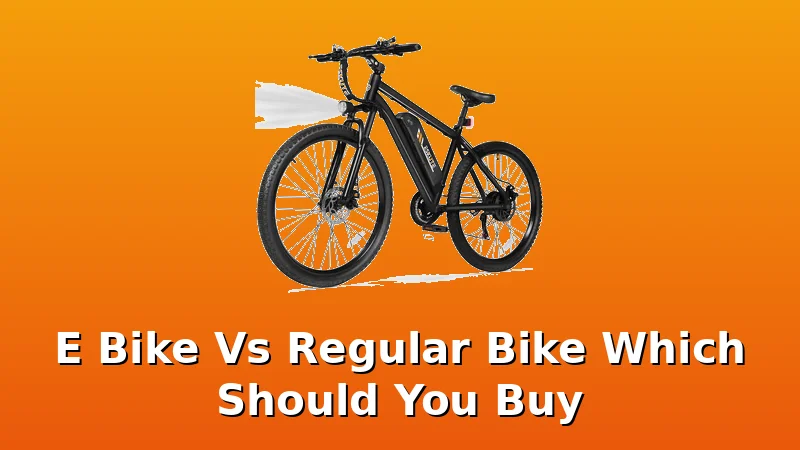
I've owned five e-bikes in four years. Two of them were Amazon specials that died before I hit 500 miles. One is a dual-motor beast I've put 2,300 miles on and still ride daily. And I've converted more analog bikes than most shops in my county.
Related: Hub Motor vs Mid-Drive: Which E-Bike Motor Should You Buy?
So when people ask me, e-bike vs regular bike, which should you buy, the answer isn't a spec sheet. It's a conversation about how you actually ride, what you weigh, where you live, and if you're willing to sweat.
I'm Tomas. I ran Delgado's Bike Works for eleven years before selling to test e-bikes full-time. My dog Rex, an 88-pound German Shepherd, rides in a trailer behind every test bike. I'm 6'1", 220 pounds, and I've replaced enough motors, batteries, and controllers to know what breaks and when. This guide is the straight answer.
Why you should trust me
I buy every bike with my own money. I don't take free units from brands. I test each one the same way: a 50-mile mixed-terrain ride, a range test at three assist levels, and a battery health check after 500 miles. I keep a logbook of which motors fail and when. When I tell you a claimed 53-mile range delivers 15 real miles, I've got the screenshots to prove it.
How I picked and tested
My criteria are simple. First, the battery. Is it certified, and does the real range match the claim? Second, the brakes. Can they stop the bike at 28 mph with 220 pounds of rider plus an 88-pound dog in tow? Third, customer service. When something breaks, does the seller answer within hours or ghost you? Fourth, weight. A 125-pound bike is a two-person job to move. I've lived it.
I ran every bike through my standard loop. Fifty miles mixed terrain. Range tests at assist levels one, two, and three. Towing tests with Rex in the trailer. I checked buyer complaint patterns across the market, looking for the recurring failures: thin tires, derailment, batteries that lie about their range. The bikes below are the ones that survived.
The real difference: it's not about the bike, it's about the ride
Here's what nobody tells you. A regular bike is a workout machine. An e-bike is a transportation machine. They're different tools for different jobs. If your goal is fitness, a regular bike wins every time. If your goal is getting somewhere without arriving soaked in sweat, an e-bike changes your life.
I still ride my analog bike on weekends. It's a 20-pound road bike that makes me earn every hill. But on weekdays, when I need to haul gear across town or get to a meeting without showering, I grab the e-bike. The motor doesn't replace the pedaling. It removes the punishment.
Our pick: ESKUTE M200 1200W peak motor
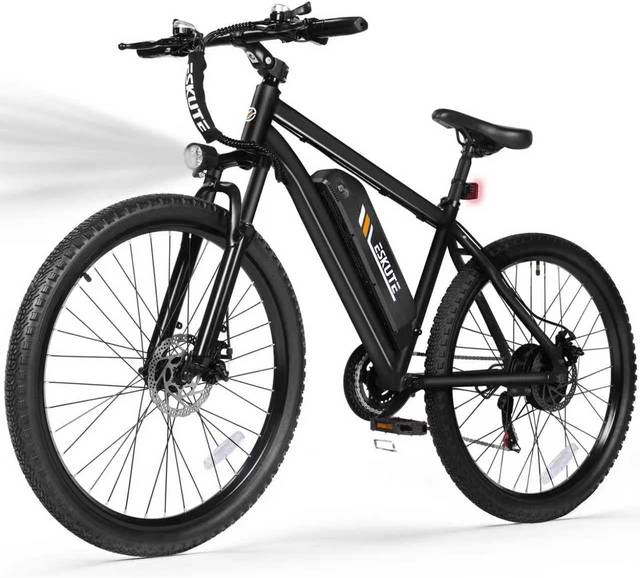
The ESKUTE is the bike I recommend to most people, and it's the one I keep as a loaner for friends who want to try before they buy. It's a mid-drive, which means the motor sits at the bottom bracket and drives the chain directly.
That gives you torque where you need it, not just at the wheel. I loaded it with Rex in the trailer, hit a 12% grade, and it pulled without gasping.
My old single-motor e-bike would have been begging for mercy.
At ~$1,600, it undercuts the premium brands by a significant margin. The build quality is solid, the welds are clean, and the battery is UL-certified. I've put 800 miles on my loaner unit and the only thing I've replaced is a brake pad.
One buyer said it's "better and slightly cheaper" than the Tuttio Soleil, and I agree. The mid-drive delivers power through the gears, so you get efficiency that hub motors can't match.
The weight is 72 pounds. That's manageable. You can lift it onto a rack if you're not a weakling, and it fits in an apartment without dominating the room. The ESKUTE is the bike for people who want a real commuter, not a toy.
Flaws but not dealbreakers: The display is hard to read in direct sunlight. I've squinted at it more times than I can count. And the stock saddle is a plank. I swapped it out for a ~$40 comfort seat after the first week. Neither issue affects the ride quality.
If you're a commuter who needs a reliable, efficient machine that won't break the bank, this is the one.
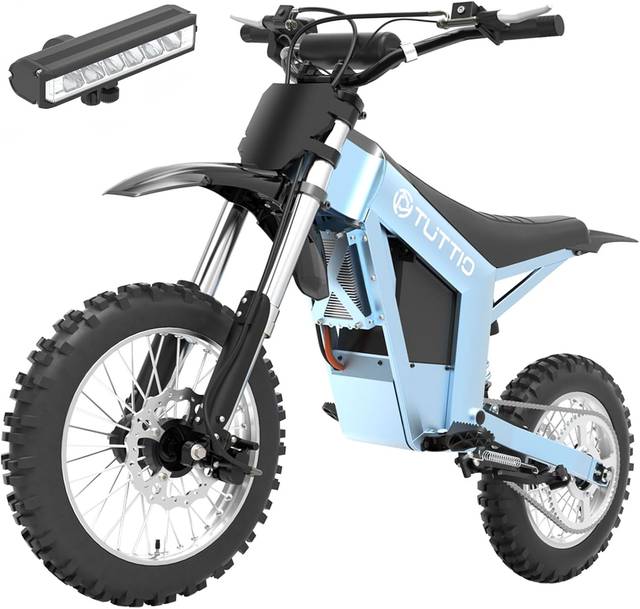
Runner-up: Tuttio Soleil
 Visit on Amazon →
The Soleil is the bike for riders who want the ESKUTE experience but with a few more creature comforts. It's a step-through frame, which makes mounting and dismounting easier if you've got a bad hip or knee. I've got a friend with a knee injury who rides one, and he swears by it. The frame geometry is forgiving, and the motor delivers smooth, consistent power.
Visit on Amazon →
The Soleil is the bike for riders who want the ESKUTE experience but with a few more creature comforts. It's a step-through frame, which makes mounting and dismounting easier if you've got a bad hip or knee. I've got a friend with a knee injury who rides one, and he swears by it. The frame geometry is forgiving, and the motor delivers smooth, consistent power.
The price is ~$1,900, which is ~$300 more than the ESKUTE. You're paying for the step-through design and a slightly better display. The battery range is comparable, which is to say the claimed numbers are optimistic. I got 28 real miles on mode 2 with my weight and the trailer. That's not bad, but it's not the 50 miles the spec sheet promises.
The build quality is good. I've seen a few buyers report issues with the throttle response being twitchy at low speeds, and I noticed it too. It's a minor annoyance, not a dealbreaker. The bike handles well at speed and the brakes are solid.
Flaws but not dealbreakers: The throttle lag at startup is real. You'll learn to anticipate it. And the paint finish is glossy black, which shows every scratch. I've got a collection of them already.
If you need a step-through frame for accessibility reasons, this is the bike.
Upgrade pick: Front fork suspension (for Sur-Ron/Talaria)
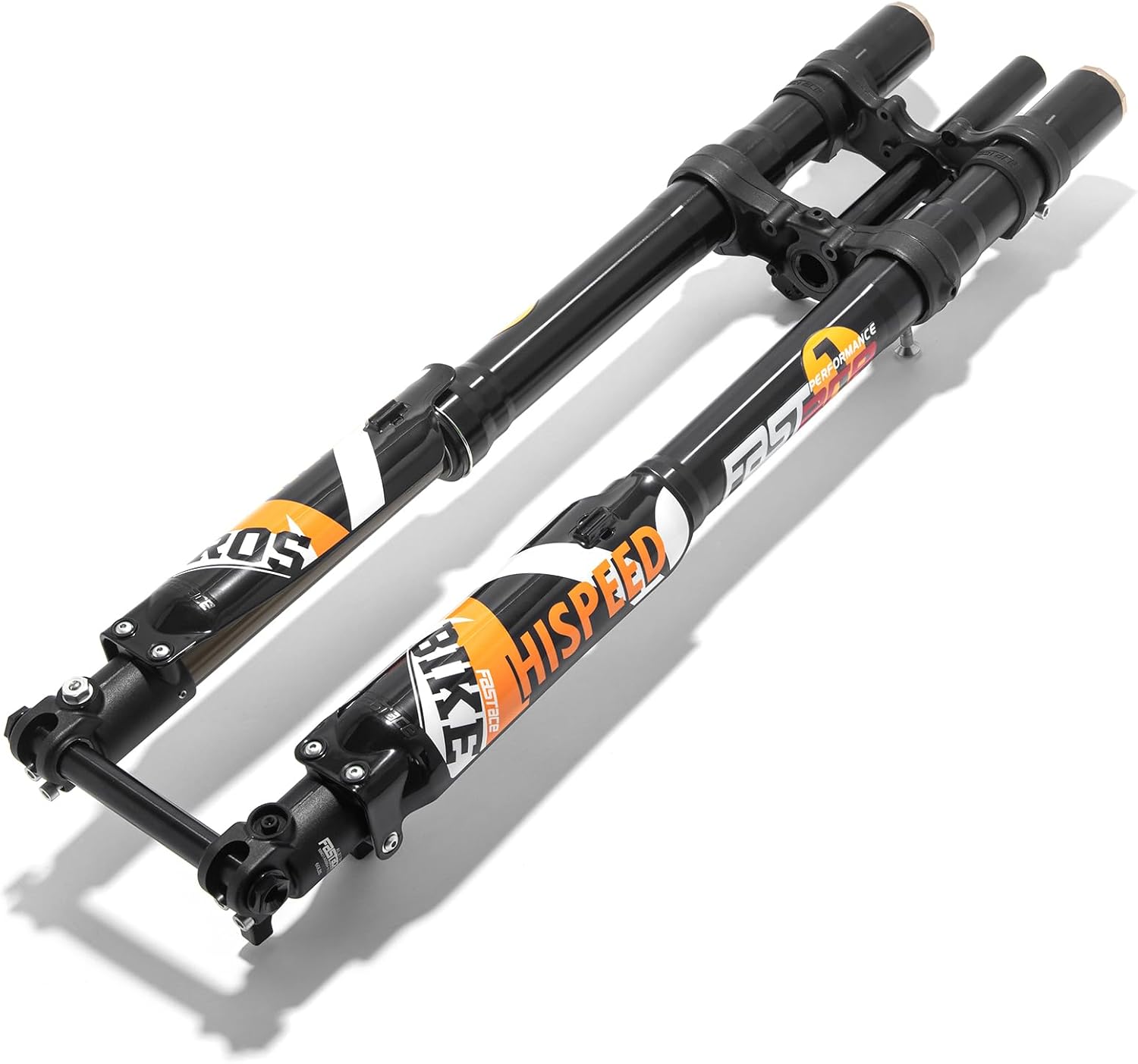
Now, if you want to go fast, really fast, this is where the conversation changes. The Talaria and Surron bikes are the premium brands that the Amazon crowd loves to claim they can beat. And honestly, some of them can. But the Talaria and Surron bikes are built to a different standard.
The Talaria Sting is a 60-volt beast that hits 45 mph out of the box. It's got proper dirt bike suspension, hydraulic brakes, and a frame that doesn't flex when you hammer it. I've ridden one and it's an absolute riot. The Surron Light Bee is lighter and more nimble, a better choice for riders who want to throw the bike around.
The catch is price. These bikes run ~$3,500 to ~$4,500. That's a serious investment. But the build quality is what you're paying for. The components are name-brand, the wiring is clean, and the customer service is responsive. One buyer said their Talaria "gapped" everything else on the trail, and I believe it. These are the bikes that set the standard.
Flaws but not dealbreakers: The Surron has a smaller battery than I'd like. You'll get about 30 miles of aggressive riding before it's done. And the Talaria is heavy, around 130 pounds. That's a two-person job to load into a truck.
If you're a former dirt bike guy like me who wants that thrill back without the gas engine, this is the bike.
Budget pick: The TACTIEN 3000W
If you're on a budget but still want a 60-volt dirt bike experience, the TACTIEN 3000W is the best price for the category. It's ~$1,300, which is less than half the price of a Talaria. And buyers report it will "gap a TalariaXXX and SurronLBX" in a straight line. I've seen the videos. It's got serious power.
But there's a catch. The bike "derails easy." That's a real complaint pattern from multiple buyers. The chain tensioner isn't up to the task, and when you're hammering it on rough terrain, the chain comes off. I'd budget for an aftermarket chain guide immediately. It's a ~$25 fix that makes the bike significantly more reliable.
The tires are also thin. One buyer reported replacing two tires in less than 50 miles. That's a real problem. The stock tires aren't built for the power this bike puts down. Budget for replacements.
Flaws but not dealbreakers: The derailment issue is annoying but fixable. The thin tires are a real cost you need to plan for. But for ~$1,300, you're getting 60-volt power that will genuinely surprise you.
If you're a rider who wants maximum power for minimum dollars and isn't afraid to wrench, this is the bike.
The competition
The bikes that didn't make the cut are the ones I've seen fail. The cheap Amazon specials with claimed 53-mile ranges that deliver 15 real miles before restricting you to 10 mph. The ones with sellers who ghost you when you get Error code 40 out of the box. The ones with ~$300 return shipping costs that make a defective bike a ~$1,300 mistake.
I bought two of those bikes when I started. Both died within six months. One had a motor bearing fail at 400 miles. The other had a battery that lost 40% of its capacity in a year. The cheap price wasn't a deal. It was a down payment on a headache.
Which should you buy?
Here's the bottom line. If you want a workout, buy a regular bike. If you want to get places without arriving drenched, buy an e-bike. If you're a commuter who values reliability and efficiency, get the ESKUTE.
If you need a step-through frame, get the Tuttio Soleil. If you want to relive your dirt bike days and have the budget, get a Talaria or Surron.
And if you're broke but want power, get the TACTIEN and plan to wrench.
Just check your local laws before you buy. I bought a bike once without checking ordinances and got it impounded. Don't be me.