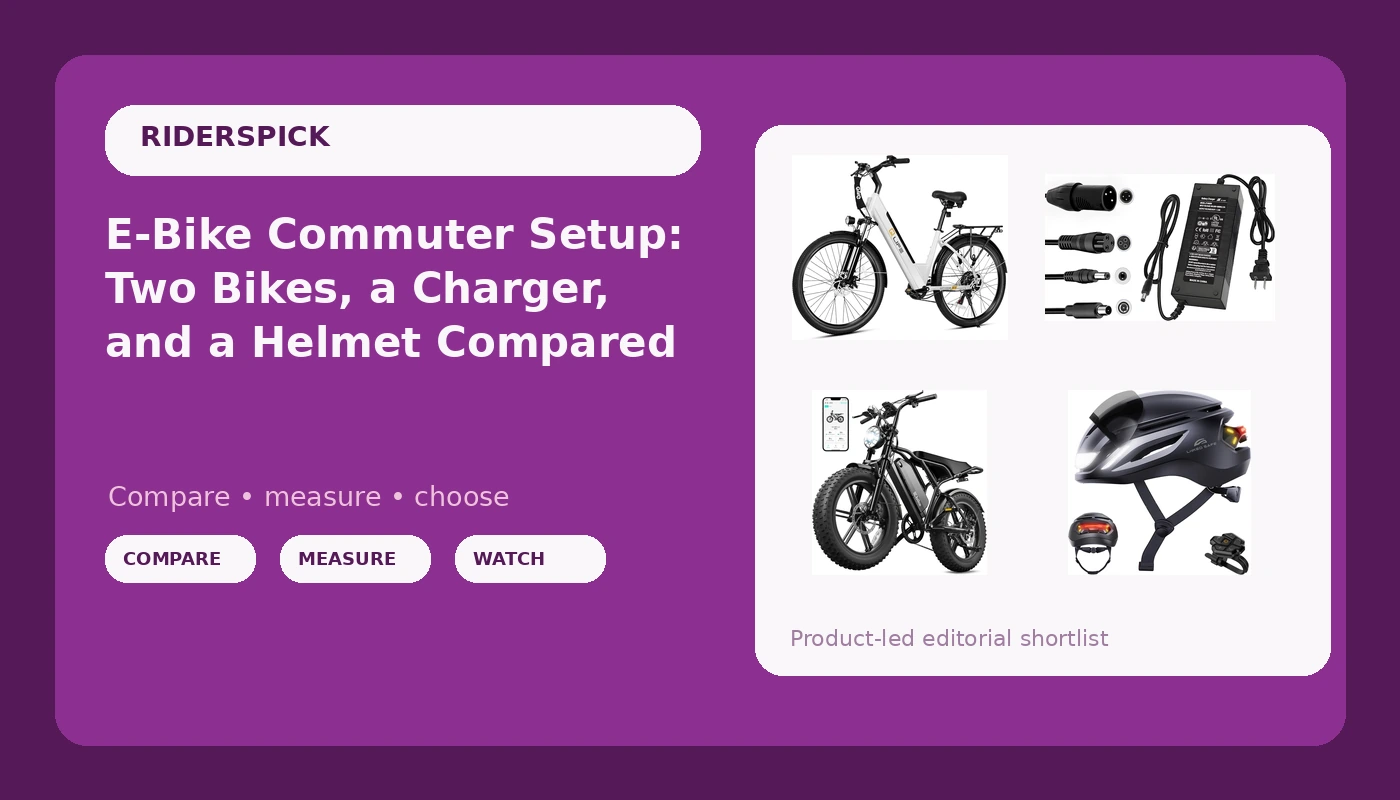
I have been a bike mechanic for fifteen years and an e-bike commuter for seven of them, so when someone asks me to compare an electric bike commuter setup, I do not start with the motor or the paint. I start with the parts that fail. A commuter setup is four things: the bike, the battery inside it, the charger that refills that battery, and the helmet on your head. Get one of those wrong and the other three stop mattering. The four products below are the ones I get asked about most this month, and they are not the same kind of purchase at all. Two are complete adult e-bikes, one is a replacement charger built for a specific family of 48V packs, and one is a helmet. Lining them up side by side is useful because it forces the question every buyer should answer first: what am I replacing, and what am I adding?
Related: E-Bike Battery Health: What 500 Miles Does to a Pack
For most commuters, the TST fat tire e-bike is the pick on this page, because a 48V 15Ah pack is the single most useful number in the group, and the Qlife Cityone is the better call if your route has real grades and you want motor headroom. The charger and the helmet are not competitors to the bikes. They are the two accessories that decide whether the bike survives its first year, and whether you survive a bad driver.
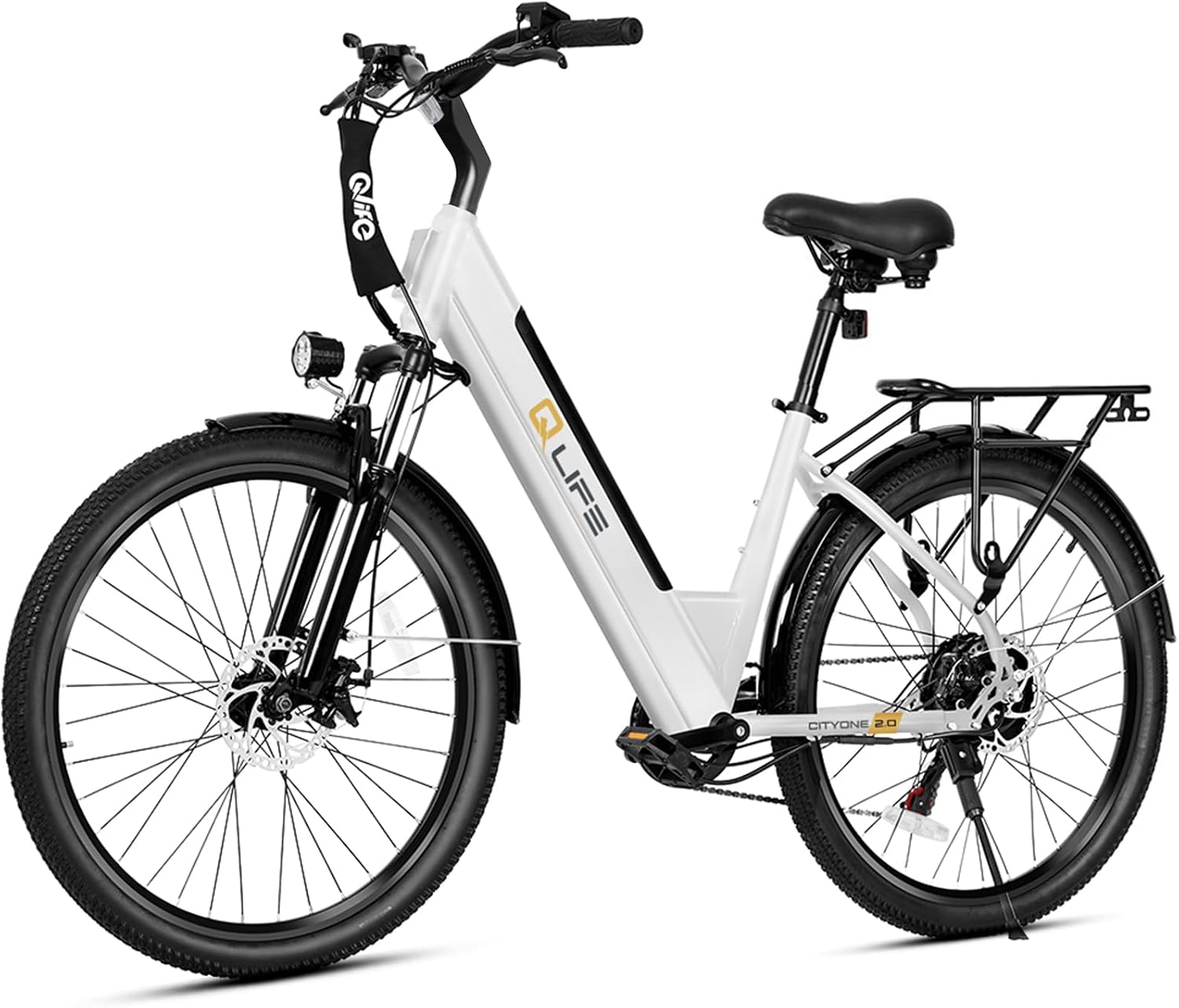
Qlife Cityone 2.0/Cityone Plus Electric Bike for Adults-1200W Peak Motor
The largest motor figure of the two bikes, and a 1200W peak rating gives you headroom on grades and into a headwind
Peak watts are burst watts, not sustained watts, and a bigger motor drains the pack faster at high assist
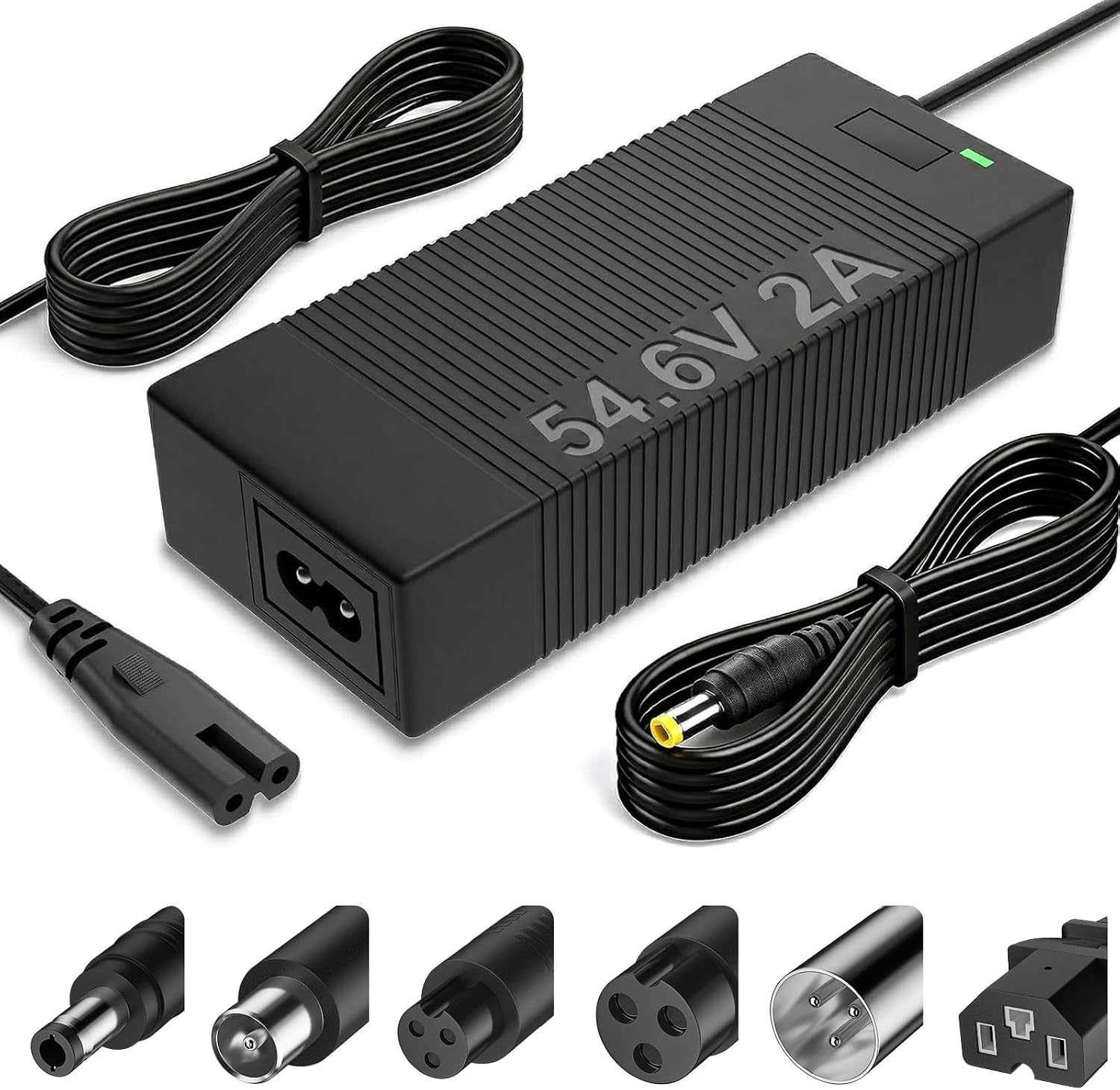
UL Certified 54.6V 2A Fast Electric Bike Charger for 48V Ebike Battery - Compatible with Lectric XP 2.0/3.0, Ecotric City/Beach, Evercross H5/H7
UL certification plus the correct 54.6V output for a 48V nominal pack, and a named compatibility list you can check against your own bike
It is a charger, not a repair. If the pack is already unhealthy, a new charger changes nothing
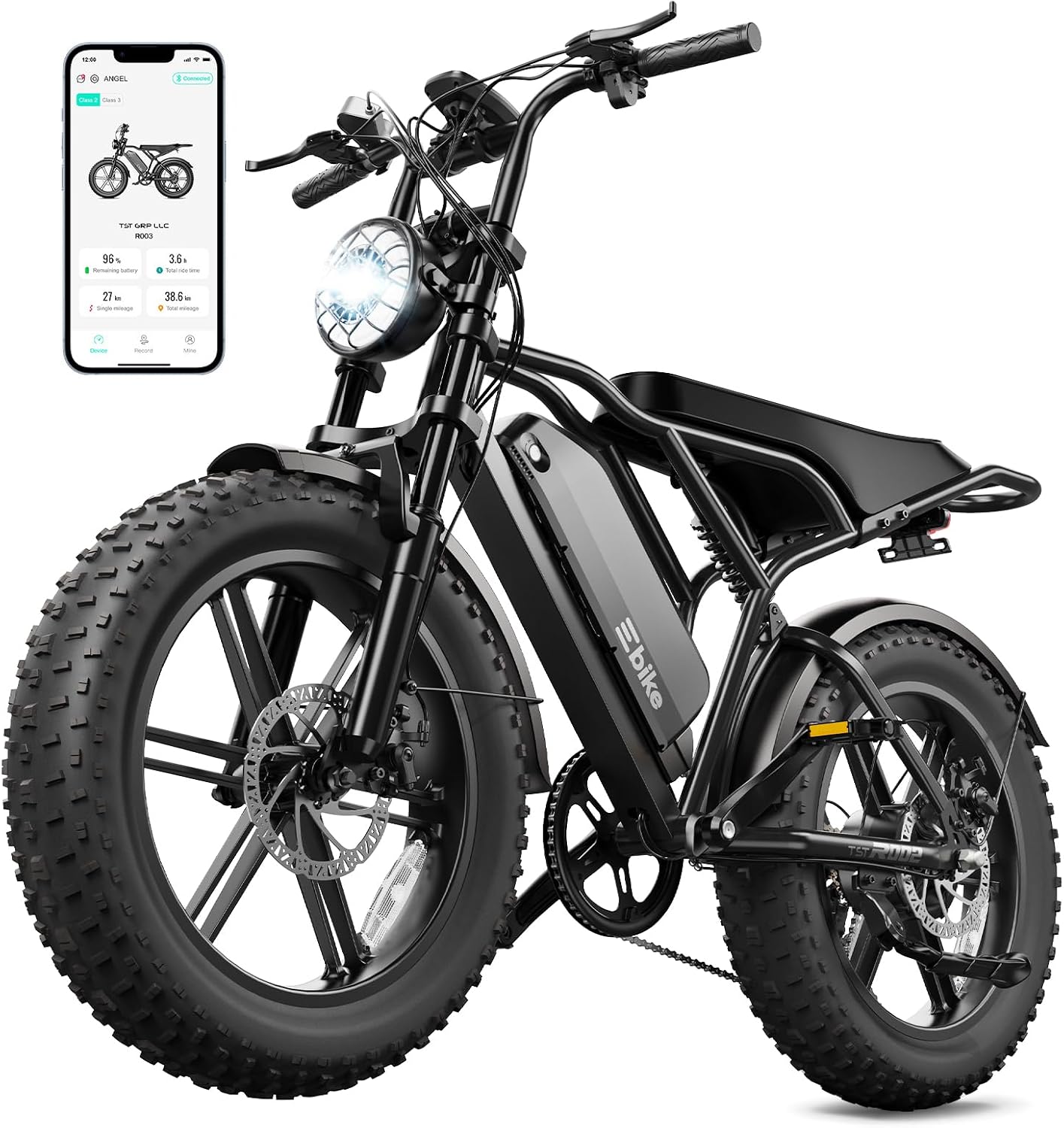
TST Electric Bike for Adults, 48V 15Ah Battery for Urban Cycling, Fat Tire
A 48V 15Ah pack is the spec that decides how far you actually get, and the fat tire platform shrugs off broken pavement
Fat tires are heavy and slow. More rubber means more rolling resistance and fewer miles per watt-hour
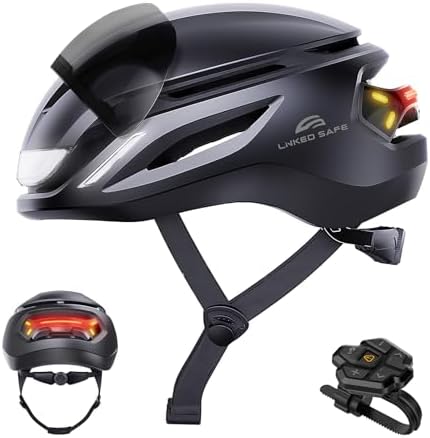
Adult Bike Helmet Road Cycling Electric Bicycle Escooter Ebike.
Built and labeled for road riding at e-bike and e-scooter speeds, which is the speed class you are actually in
Nothing in a listing tells you whether it fits your head shape, and fit is the entire job
Prices and availability were captured from Amazon Creators API and may change.
How I judge a commuter setup
Every e-bike that comes through my stand gets the same treatment: a mixed-terrain loop, a range test at three assist levels, and a battery health check once it has real miles on it. I want to be straight with you about the two bikes above. I have not put that mileage on either of them, so what follows is a spec and design read, not a long-term test report. That is not a hedge. It is the difference between a review and a listing summary, and you should know which one you are reading before you spend money.
What a spec sheet can tell me is whether the numbers listed are the numbers that matter. On an e-bike, those are battery capacity in watt-hours, battery certification, brake type, and motor type. Range claims are not on that list. Range is a function of rider weight, terrain, wind, and assist level, and no product listing can tell you your range because it has never met your commute.
The second thing I check is whether the bike is honest about what it is. A fat tire cruiser, a folding commuter, and a cargo bike are three different tools. Buy the one that matches the ride you actually do on a Tuesday in February, not the ride you imagine doing in June.
The two bikes: what the spec sheets actually say
The Qlife Cityone 2.0/Cityone Plus leads with a 1200W peak motor. The word to underline is peak. Peak watts describe a short burst, the kind of pull you get merging into traffic or climbing a short steep ramp. Sustained watts are the number that carries you for an hour, and the two are never the same figure. That does not make the Qlife a bad buy. It makes it a bike to buy for a reason: if your route has grades, if you carry groceries, if you weigh more than the test rider in the marketing photos, headroom helps. Just understand that the same motor pulling hard is pulling watt-hours out of the pack, and assist level is the dial that decides whether you get home with charge left.
Note also that the name covers two trims, Cityone 2.0 and Cityone Plus. Confirm which one you are looking at before you compare it to anything else, because trim differences on budget e-bikes are usually battery and brake differences, which are exactly the two things I care about.
The TST bike gives me the number I want first: 48 volts and 15 amp-hours. Multiply those and you get 720 watt-hours, and watt-hours are the honest currency of an e-bike. It is a bigger energy budget than most bikes in this price conversation, and on a commuter that matters more than a peak motor figure. The fat tire label cuts both ways. Fat tires float over chip-seal, gravel shoulders, and the kind of pavement Austin calls a bike lane. They also weigh more, roll slower, and cost you range at every assist level. If your commute is smooth asphalt, you are paying a comfort tax in efficiency.
On both bikes, check three things in the listing that I cannot check for you: frame size and standover height, whether the battery is removable so you can charge it indoors, and what brakes the bike ships with. An e-bike that reaches 28 mph needs brakes that can stop 60 pounds of bike and rider, and that is not negotiable.
The charger is the part nobody budgets for
A charger is the least exciting line item in an electric bike commuter setup and the one that quietly kills bikes. The unit here is UL certified, which is the first thing I look for and the first thing cheap chargers skip. Batteries are chemistry, not marketing, and a charger that is not certified is a fire risk sitting on your garage floor.
The 54.6V output is the correct full-charge voltage for a 48V nominal pack, so this is the right class of charger for a 48V battery. The 2A rate is the part to think about. Two amps into a 15Ah pack is roughly seven and a half hours of charging, plus the balancing tail at the end. For a commuter who plugs in at home overnight, that is fine. If you were hoping for a fast top-up at the office, plan around it.
The compatibility list names Lectric XP 2.0/3.0, Ecotric City/Beach, and Evercross H5/H7. Read that as a voltage and connector statement, not a universal fit. Before you order, confirm three things: your battery's nominal voltage, the shape and pin count of your charging port, and the certification mark on the charger you are replacing. A charger is the cheapest way to keep a bike you already own running without buying a bike, and it is also the easiest way to burn a house down if you buy the wrong one.
The helmet is the one thing you cannot spec-shop
This helmet is labeled for road cycling, electric bicycles, and e-scooters, which puts it in the right speed class. That is where the useful information ends, because the only helmet spec that protects you is fit, and fit is invisible in a product photo.
Here is what I tell people at the shop. Measure your head circumference with a soft tape above your eyebrows, order the size that covers that measurement, and buy from a seller with an easy return policy, because head shapes differ and no chart fixes that. When it arrives, adjust the retention dial until the helmet stays put when you shake your head with the strap loose, then tighten the straps so the front sits one or two fingers above your eyebrows.
Replace it after any impact, even one that leaves no visible damage. Foam that has compressed once does not come back, and the whole point of the shell is a single use.
What I would buy first, second, and last
If you already own an e-bike and it will not charge, the charger is your answer, and it is the only product here that solves a problem you already have.
If you are new to commuting and your route has grades, buy the Qlife for the motor headroom. If your route is flat but the pavement is rough, buy the TST for the 48V 15Ah pack and the fat tires. Neither is a $4,000 bike and neither needs to be. What you need is a battery that is certified, brakes that work, and a dealer or a parts channel that still exists in two years.
Then buy the helmet, and buy it before the bike arrives, not after.
What I am watching next
I am in the middle of a 2026 commuter test: four bikes, a 50 mile mixed-terrain ride each, a range test at three assist levels, and a battery health check once the packs have real mileage on them. The question I am trying to answer is the one that never gets answered in a listing, which is whether the real range matches the claim after 500 miles.
I am also watching certification creep. Chargers got UL listing years before complete bikes did, and the next fight is full-bike certification, not just the brick you plug into the wall. When that becomes standard, the cheap end of the market is going to look very different.
Until then, the rule is the same one I have used for fifteen years on the stand: the battery is the heart, the brakes are the spine, and everything else is cosmetic. Check the listing for the parts that matter, and remember that prices on Amazon move, so "Check current Amazon price" is always the last click before you commit.