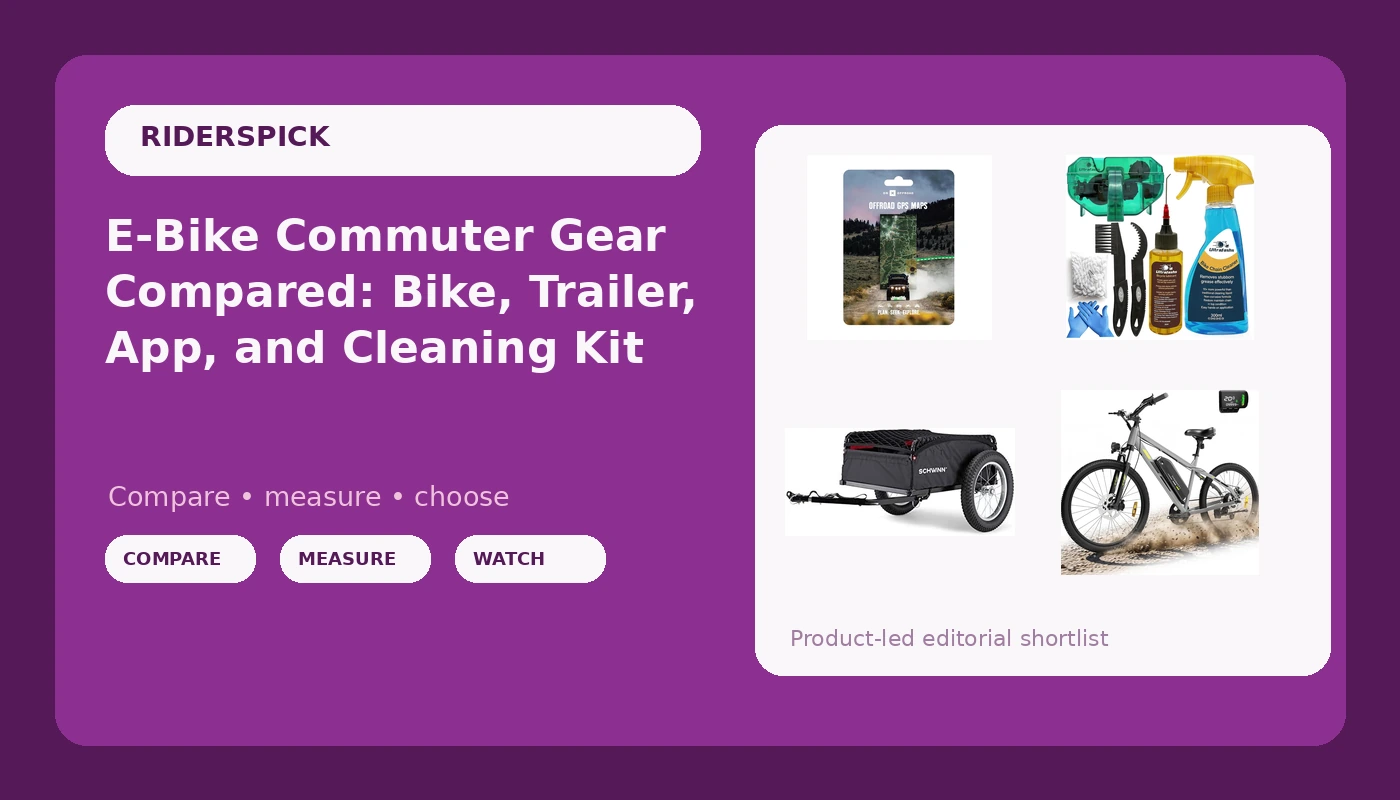
I have spent fifteen years fixing bikes in Austin and seven of those years commuting on one with a motor. In that time I have learned that the question new riders ask is almost never the question they need answered. They ask which e-bike to buy. What they should be asking is what the rest of their e-bike commuter gear is supposed to do, because the accessories decide whether the bike survives its first Texas summer. A chain that never gets cleaned will eat a cassette in a year. A bike with nowhere to carry groceries becomes a toy by month three.
Four items landed on my bench in the same week, and they are not really competing with each other. They are competing for the same limited budget, and they only make sense in a specific order. One of them is the machine that moves you. The other three either extend its life, expand what it can carry, or tell you where it is legal to ride.
The best e-bike commuter gear purchase for most riders in 2026 is the bike itself, and among these four the INVANTI Electric Bike for Adults is the only item that gets you to work under power. The trailer, the app, and the cleaning kit are multipliers, not alternatives. That is the short answer. The longer answer is about batteries, brake spec, and why a $20 box of brushes protects a drivetrain that costs ten times that to replace.
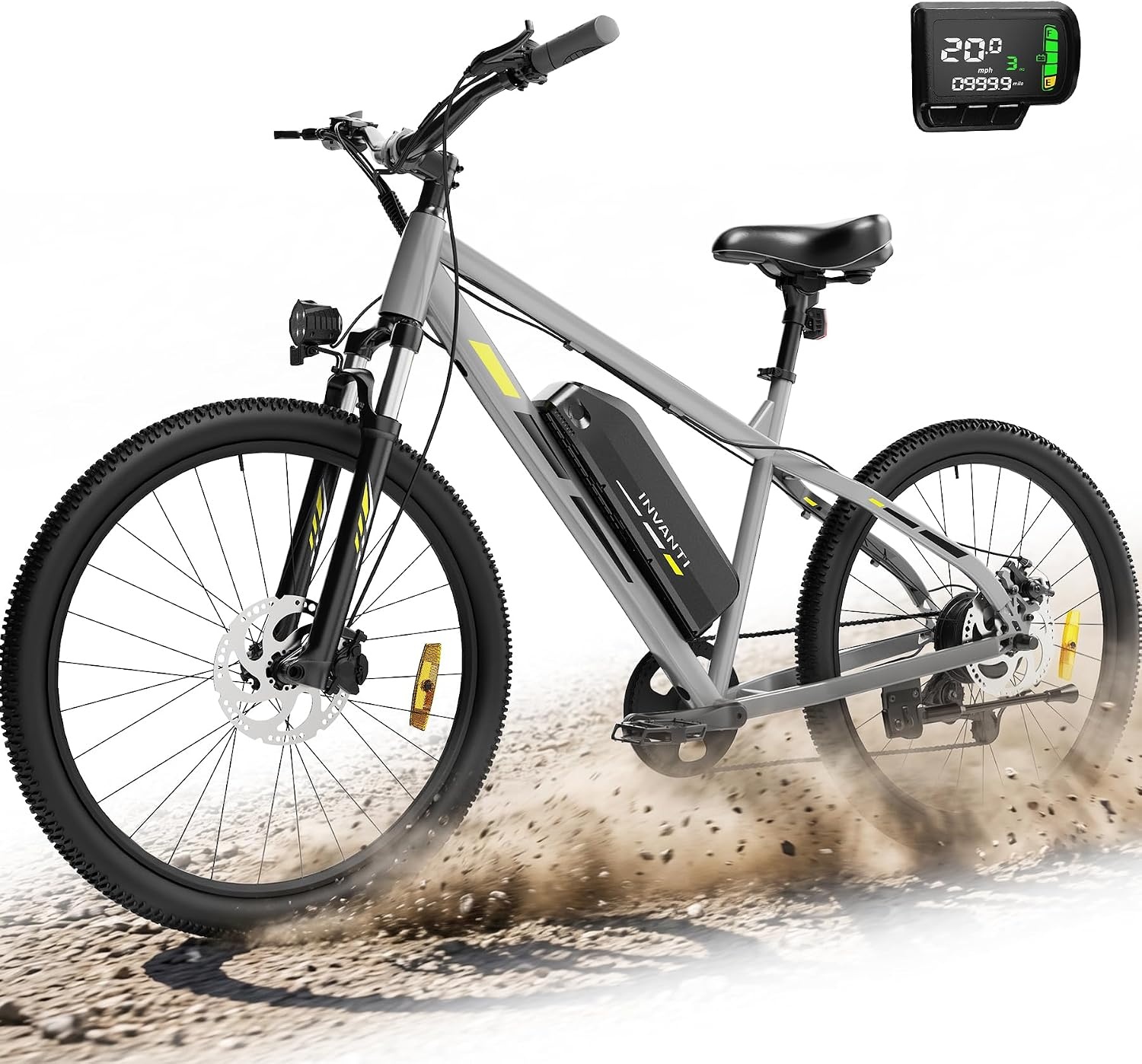
INVANTI Electric Bike for Adults
The only item here that moves you: removable battery, 26 inch tires, front fork suspension, 7 speeds, and a claimed 55 mile range
Direct-to-consumer budget tier, so battery certification, brake spec, and parts support are on you to verify
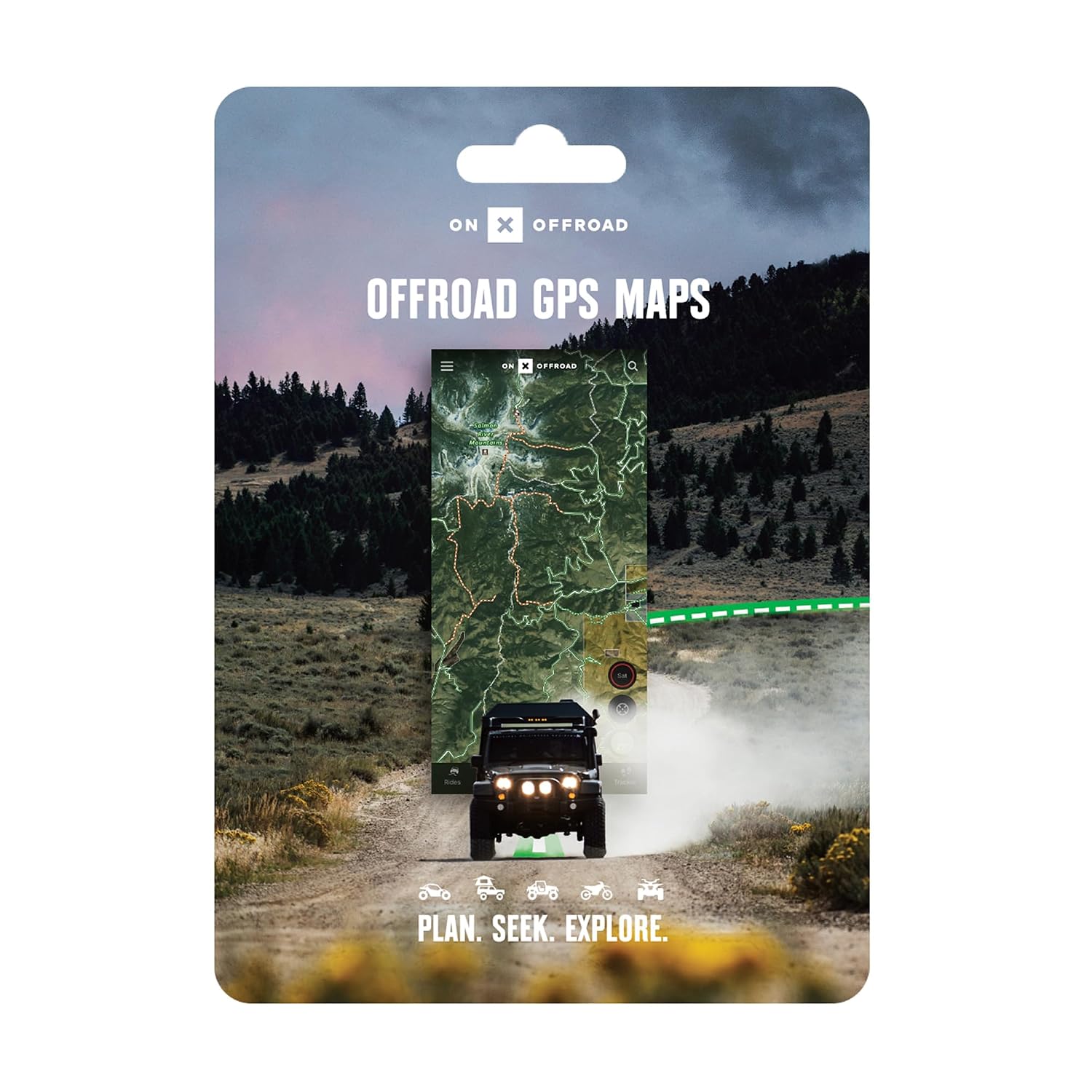
onX Offroad App - Nationwide Digital Trail Map Membership
375K+ miles of mapped trails with open and closed status, Google imagery, and offline maps for all 50 states
A recurring membership that does nothing at all for a rider who never leaves pavement
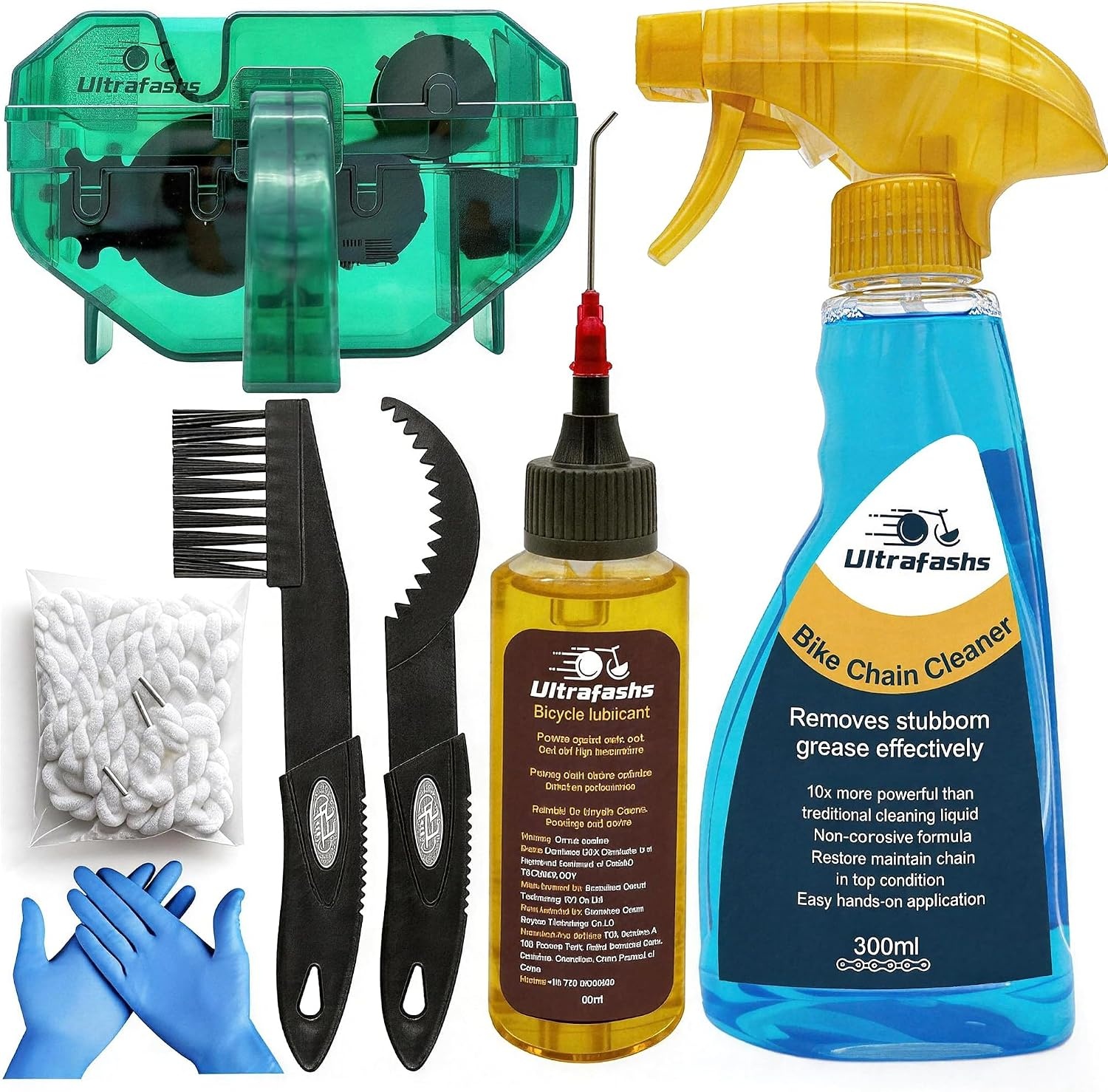
Bike Cleaning Kit - Complete Bicycle Maintenance Set
The cheapest way to protect a drivetrain: degreaser, lubricant, chain scrubber, and brushes in one box
It only works if you actually use it, and the wrong degreaser can dull a frame finish
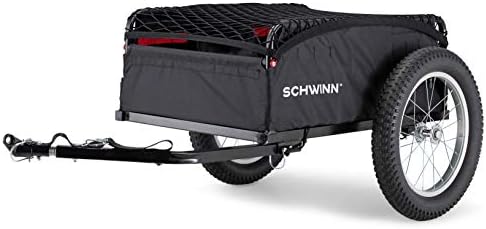
Schwinn Porter Cargo Trailer for Bikes, 100 lb Capacity, Foldable
100 lb of capacity that folds flat, so a one-bedroom apartment can still store it between grocery runs
Adds weight and length behind the rear axle, which changes braking distance and eats into range
Prices and availability were captured from Amazon Creators API and may change.
How I judged these four items
I want to be straight with you before we go further. I have not put 100 miles on any of these specific units. My rule is that a review needs at least a hundred real miles behind it, and these are new to the bench, so this is a fit-and-purpose comparison rather than a long-term verdict. What I can tell you is what each item is for, what its own listing claims, and what I would check before money changes hands.
The checklist I run on any e-bike and its supporting gear has four questions. Is the battery certified and healthy? Do the brakes stop a loaded bike from commuting speed? Does the real range match the claim once you account for rider weight, terrain, and assist level? And would I trust the whole setup for a year of daily commutes? Everything below is organized around those four questions.
The e-bike: INVANTI Electric Bike for Adults
This is the item that matters, so it gets the most scrutiny. The INVANTI is a 26 inch wheel commuter and light trail bike with a peak 750W motor, a top speed listed at 20 MPH, 7 speeds, an LCD display, front fork suspension, and a removable battery. The name claims 55 miles of range.
Start with the battery, because the battery is the heart of any e-bike and the single part most likely to strand you. A removable pack is the right design for anyone in an apartment or a second-floor walk-up, since you can carry the pack inside to charge instead of running an extension cord down a stairwell. The question the listing does not answer for you is certification. On a direct-to-consumer bike in this price tier, I would want to see the pack certified to a recognized safety standard before I plugged it in overnight, and I would want to know what a replacement pack costs and whether it will still exist in two years. That is not a knock on this specific bike. It is the tax on the entire budget Amazon category, and it is the reason I tell people to buy from sellers with a warranty process that answers email.
Range is where I get skeptical of every brand. A 55 mile figure assumes a light rider, flat ground, low assist, and a fresh pack. Add a loaded trailer, a headwind on the way home, and a rider who uses full assist to keep up with traffic, and real range drops hard. Plan your commute around roughly two thirds of any advertised number until you have ridden the route yourself at the assist level you actually use.
Brake type is not spelled out in the product name, and that is the first thing I would confirm before ordering. Twenty MPH on a 60 pound bike and rider is not a place to save money. If the brakes cannot haul that mass down reliably in the wet, nothing else on this list matters.
The cargo trailer: Schwinn Porter
A trailer is the honest answer to the question "how do I carry things on a bike I did not buy for cargo?" The Schwinn Porter is rated for 100 lb, mounts at the rear axle, and folds for storage. That folding part is what makes it viable for city riders. A rigid trailer in a 700 square foot apartment is furniture. A folded one lives behind a door.
Here is the trade-off nobody mentions on the product page. Everything bolted behind the rear axle changes how the bike behaves. Braking distance grows, cornering gets wider, and the motor works harder on every climb, which means your range shrinks in proportion to what you are hauling. If you already have marginal brakes, a loaded trailer is the test that exposes them.
I would use a trailer like this for groceries, a work bag, or hardware store runs, not for a daily 15 mile commute on mixed terrain. The tires are small, they wear, and they need air like any other tire. Budget for that maintenance and check the hitch hardware monthly. A trailer that comes loose at speed is a bad afternoon.
The app: onX Offroad
Most e-bike accessories are hardware. This one is information, and it earns its place if you ride anywhere that is not a paved trail. The membership covers 375K+ miles of off-road trails across all 50 states, shows open and closed status, uses Google imagery for route planning, and downloads maps for offline use.
That last feature is the one that matters to me. Cell service dies exactly where you need a map, and a phone with no signal and no cached map is a paperweight. Having the route stored locally is the difference between a planned ride and a long push home.
The caveat is legal, not technical. A trail being open to motor vehicles does not automatically mean it is open to your bike. E-bike rules vary by land manager, by state, and by class, and "open" status in an app reflects the motor vehicle designation, not necessarily your bike's classification. Check the local land manager's rule before you ride, every time. An app is a planning tool, not a permission slip.
It also does nothing for a rider who stays on pavement. If your commute is a bike lane and a greenway, put this money into the maintenance kit instead.
The cleaning kit
An e-bike pushes more torque through its chain than your legs ever did alone, which means the drivetrain wears faster and the cost of neglect arrives sooner. A chain, cassette, and chainring replacement is the most common repair ticket I write, and almost all of it is preventable with a brush, a degreaser, and twenty minutes.
This kit bundles the full job: degreaser, lubricant, a chain scrubber, and brushes for the frame, the cassette, and the tight spots. That combination is what you need to strip old lube and grit out of the links and put fresh lubricant back in. Cleaning a chain without a scrubber is a rag and hope. Cleaning it with one is a five minute job you will actually repeat.
Two cautions. First, match the lubricant to your conditions, because a wet lube attracts grit in dry dust and a dry lube washes off in a real rain. Second, test any degreaser on a hidden part of the frame before you spray the whole bike, and never let it sit on paint or on brake surfaces. The kit is cheap. The mistake is not.
The honest downside is that a cleaning kit fixes nothing on its own. It is a habit in a box, and if you will not use it, it is a shelf decoration.
What I would buy first, and in what order
If you have one budget line and four items in front of you, the order is straightforward.
The bike comes first, because nothing else on the list does anything without it. After that, the cleaning kit, because it is the smallest spend that protects the largest spend and it starts paying back on the first chain you do not have to replace. Third, the trailer, and only if you have a real carrying problem that a rack and a pair of panniers cannot solve. Last, the app, and only if you actually ride off pavement often enough to justify a membership.
That order is not about quality. It is about dependency. The trailer needs a bike. The cleaning kit protects the bike. The app is optional on top of both.
The trade-offs, stated plainly
Every item here asks you to give something up.
The INVANTI asks you to accept the risks of the direct-to-consumer tier: you are your own warranty department until you confirm otherwise, and you should verify battery certification, brake spec, and parts availability before you commit.
The Schwinn Porter asks you to accept more weight, longer stopping distances, and reduced range in exchange for 100 lb of capacity that stows flat.
The onX membership asks for a recurring fee in exchange for trail data and offline maps, and it returns nothing to a pavement-only rider.
The cleaning kit asks for your time and attention, roughly twenty minutes every couple of weeks, in exchange for a drivetrain that lasts years instead of months.
None of these are bad trades. They are just trades, and the rider who knows which one they are making ends up with a setup that still works in year three.
What I am testing next
I am in the middle of a 2026 commuter e-bike comparison: four units, a 50 mile mixed terrain ride each, a range test at three assist levels, and a battery health check at the 500 mile mark. The number I care about most is capacity retention after 500 miles, because that is where cheap packs separate themselves from good ones, and it is the figure no listing ever prints.
If the INVANTI or a bike like it comes through that test with its capacity intact, it changes the budget conversation entirely. If it does not, you will read about it here with the numbers attached. Either way, the accessories above stay relevant, because a good chain and a clean drivetrain outlive whatever motor you happen to be riding this year.