Related: E-Bike Battery Health After 500 Miles: What Actually Fades
I have spent fifteen years as a bike mechanic and seven of them commuting on a battery, and every spring the same customer walks into my shop: an e-bike bought online last summer, a pack that will not hold a charge, and no dealer within two hundred miles who stocks a replacement. This electric bike buying guide is my attempt to stop that from happening to you. The bike was rarely the problem. The battery was, and the battery is the one component almost nobody researches before clicking buy.
So here is how I read a listing. The battery is the heart. The brakes are the spine. Everything else, the motor, the drivetrain, the fenders, the paint, is cosmetic by comparison. If a bike gets those first two right and the price is honest, the rest is details. If it gets the battery wrong, nothing else on the page can save it.
The four rides below cover the whole spread of what people actually ask me about, from a three-year-old on a balance bike to a teenager on an off-road machine, plus the book I hand to anyone who wants to stop paying shop rates. I have not put a mile on any of them, and I will not pretend otherwise. What I can do is read a spec sheet the way a mechanic reads it, tell you which lines carry weight, and tell you which questions the listing leaves unanswered.
Best All-Around for Adults: Funhang Electric Bike for Adults
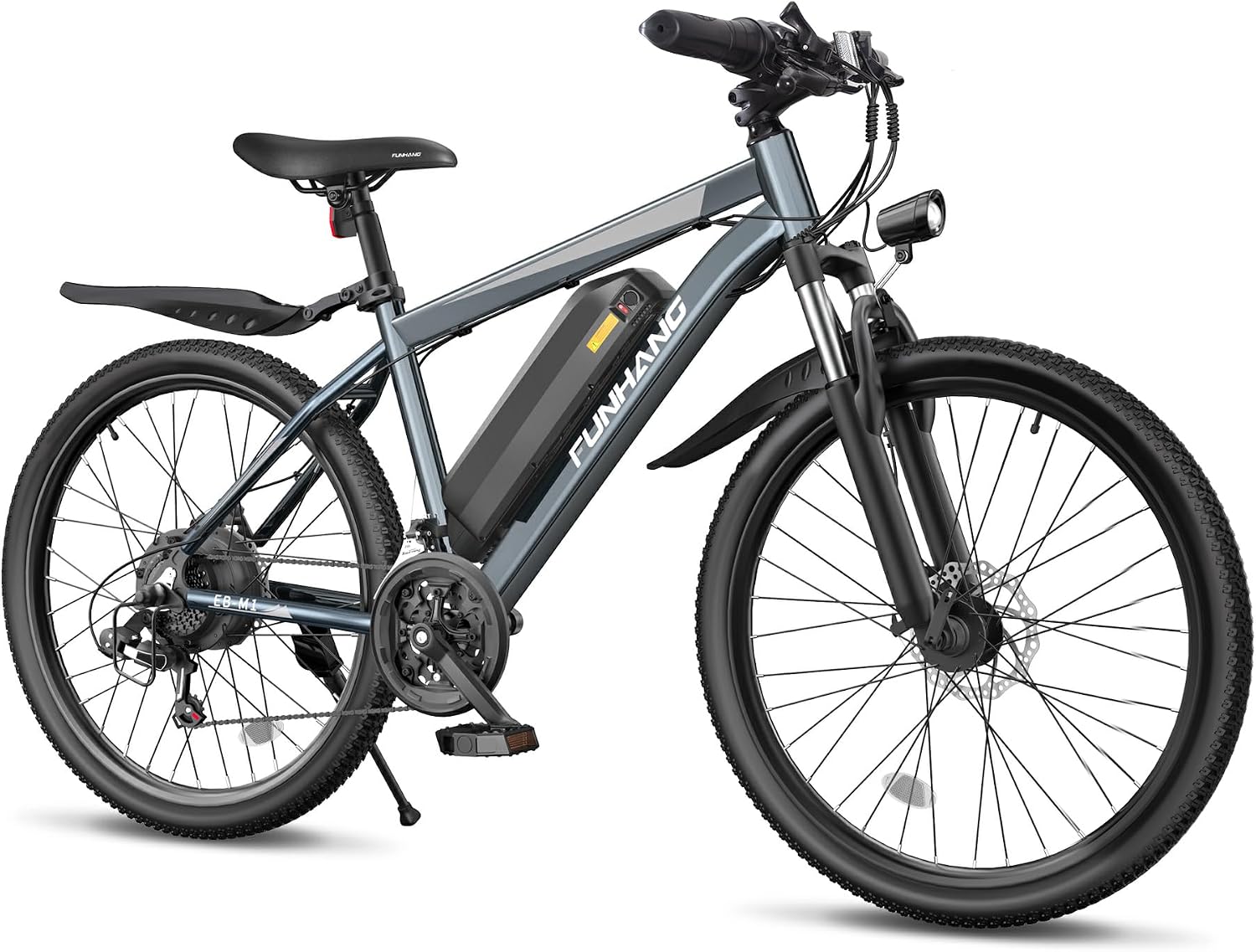
This is the most complete adult spec sheet of the group: 48V removable battery, 1000W peak motor, 26-inch wheels, seven speeds, front suspension, fenders, and UL 2849 certification. That last line is the one I would underline twice. UL 2849 covers the electrical system as a unit, meaning the pack, the charger, and the controller were tested together by a recognized lab rather than assembled from whoever was cheapest that week. It is not a marketing badge. It is the difference between a battery and a fire risk, and it is the first thing I check on any bike that plugs into a wall.
The removable 48V pack is the second thing I like. Removable means you can carry the battery upstairs to charge it instead of running an extension cord down three flights, and it means you can store the pack at room temperature through a Texas summer or a northern winter. Both of those habits are what make a battery last. It also means that when the pack eventually fades, you replace a battery instead of a bicycle. Ask any shop owner what they dread most about online e-bikes and the answer is a sealed pack with no replacement available.
Now the motor number. A 1000W peak rating describes what the controller can dump into the motor for a few seconds, usually from a standstill or on the steepest pitch. Peak is a spike, not a habit. The number that decides whether you make it up your hill every day is the continuous rating, so ask for it before you buy. A hub motor with honest continuous output is fine for a flat city commute, and that is what most buyers actually ride.
The 50-mile range claim is a claim, not a measurement. Range is a function of rider weight, terrain, assist level, tire pressure, wind, and temperature. Fifty miles is a best case built from a light rider, flat ground, low assist, and a warm day. I test range at three assist levels on a mixed-terrain loop because one number tells you nothing about your commute. Plan for less than the box says, and plan for the least on the coldest morning of the year, because cold chemistry is slower chemistry.
The rest of the spec list reads like someone who has commuted in the rain. Fenders mean the bike was designed for weather. Seven speeds is a normal derailleur drivetrain that any shop can service with parts on the shelf. Front suspension only, with a rigid rear, is exactly right for pavement and light gravel, because rear suspension at this price is mostly weight and maintenance.
What the name does not tell you is the brake model, and on a bike that can carry a rider to 28 mph that is the spec I would confirm before clicking buy. Look for hydraulic disc brakes, or at minimum mechanical discs with a rotor large enough to shed heat on a long descent. Sixty pounds of bike and rider takes real stopping power.
Best for Teens and Off-Road: Electric Dirt Bike for Teens and Adults
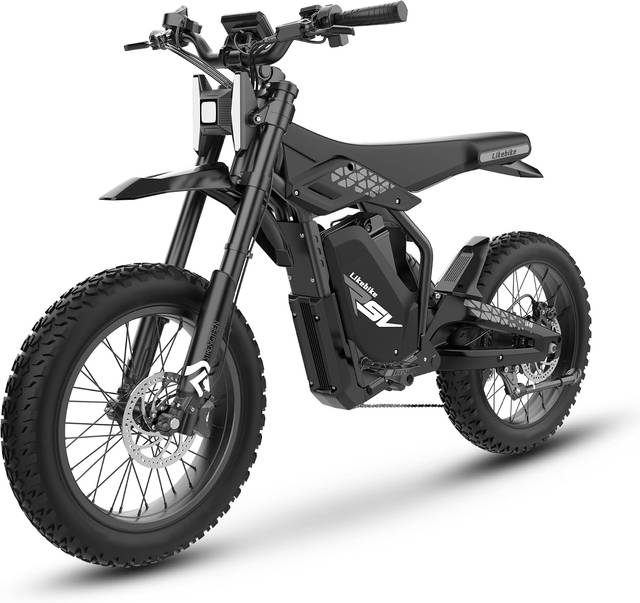
This one is a different animal, and I want to be straight with you about it. An off-road electric machine sized for teens through adults is not a commuter, and it is not a mountain bike. In most places it is not legal on paved roads, and it is not welcome on singletrack built for human-powered riding. Where it belongs is private land, a farm, a ranch, or a designated off-road vehicle area, and you should confirm your access before you confirm your order.
The listing here is thin. That is not a knock on the bike so much as a warning about how you buy it. When a spec sheet does not spell out the motor rating, the battery voltage, the brake type, and the weight, those are the exact places a cheap pack or a weak brake can hide. So ask, in writing, for the battery certification, the brake spec, and the motor rating. A seller who cannot answer those questions is telling you something.
Sizing is the other trap. A bike that a fourteen-year-old can handle and a bike that fits a grown adult are rarely the same bike, even when the listing says both. Seat height and total weight decide that, not the age range on the box. And a heavier machine with real torque deserves real brakes, because a teenager will find the limit of whatever you give them.
Best First Bike for a Kid: STACYC 12eDRIVE
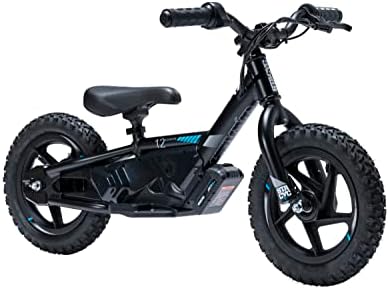
Every kid I have taught to ride learned balance before pedals, and that is the entire argument for a balance bike. A child on a 12-inch balance machine sized for ages three to five learns to steer, lean, and stop with their feet, which is the hard part. Pedaling is the easy part that comes later. Skip this stage and you spend a season holding a seat while a kid fights the pedals.
Three things to check before you buy. Seat height against your child's actual inseam, because a bike they cannot put both feet flat on is a bike they will not trust. Total weight, because a three-year-old has to pick it up when it falls over, and they will fall over. And how the power is delivered, because a beginner should be learning balance, not throttle control. Ask how the assist is limited for a new rider.
A helmet is not optional here, and neither is a driveway or a park with no traffic. This is the age where the habits get built.
Best for Learning the System: E-BIKE BOOKS 1
I have converted more bikes than most shops have sold, and the honest reason is that understanding the system saves you money forever. This book covers maintenance, builds, custom work, hub motors, controllers, and the manufacturing side, which is more ground than a typical repair manual. If you want to know why a controller cuts out under load or how a hub motor is wound, this is the kind of reference that pays for itself the first time you diagnose a problem instead of replacing a part.
One caveat: it leans toward building and understanding rather than a step-by-step torque spec for your specific bike. It is a companion to a stand and a set of tools, not a replacement for them.
How I evaluate an e-bike
Four questions, in this order. Is the battery certified and healthy? Do the brakes stop the bike loaded at speed? Does the real range match the claim at the assist level you actually ride? And would I trust this thing for a year of daily commutes? If a bike fails the first question, the other three do not matter, because a bad pack is both a safety problem and a money pit.
Certification is a paper question, so you can answer it from the listing. Brakes, motor rating, and range are not, which is why the questions I keep telling you to ask the seller are the same ones a spec sheet usually skips.
Analysis: what the specs actually tell you
Battery first. Voltage tells you the class of the system, and 48V is the current commuter standard. Certification tells you whether the pack, charger, and controller were tested together. Removability tells you whether you can charge and store the pack properly. What no listing tells you is battery health, which is a function of time and cycles, so buy from a seller with a real return window and check capacity after the first few hundred miles. If your range drops off a cliff in the first year, that is a warranty conversation, not a you problem.
Motor second. Hub motors sit in the wheel, cost less, and need less maintenance. Mid-drive motors run through the pedals and use the bike's gears, which is what you want if your commute has real climbs. For flat ground and moderate hills, an honest hub motor is not a compromise. It is the sensible buy.
Brakes third. This is the line item buyers ignore and shops never do. Hydraulic discs give you more stopping power with less hand effort than mechanical, which matters when the bike weighs what an e-bike weighs. Bed the pads in when the bike is new, check pad thickness every few hundred miles, and never let a brake lever travel to the bar.
Range last, because it is the number most likely to be written by the marketing department. Weight, terrain, assist level, tire pressure, and temperature all move it. There is no single honest range figure for any e-bike, only a range for your route, your body, and your settings.
The electric bike comparison chart
| Model | Best for | Specs that matter | What the listing does not tell you |
|---|---|---|---|
 Visit on Amazon → Funhang Electric Bike for Adults |
Adult commuters and light trail riding | UL 2849 certified, 48V removable battery, 1000W peak motor, 26-inch wheels, 7 speed, front suspension, fenders | Brake model, continuous motor rating, and what the 50-mile range figure assumes |
 Visit on Amazon → Electric Dirt Bike for Teens and Adults |
Off-road riding on private land or designated OHV areas | Sized for teens through adults, built for mountain and off-road use | Motor and battery ratings, brake spec, weight, and where you can legally ride it |
 Visit on Amazon → STACYC 12eDRIVE |
Kids ages 3 to 5 learning balance | 12-inch balance bike geometry, sized for ages 3 to 5 | Seat height against your child's inseam, total weight, and how power is limited for a beginner |
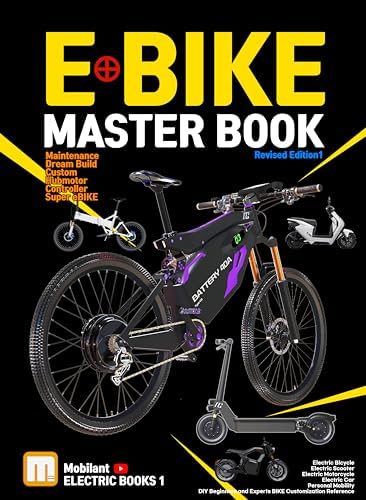 Visit on Amazon → E-BIKE BOOKS 1 |
DIY builders and owners who want to understand the system | Maintenance, builds, custom work, hub motor, controller, and manufacturing coverage | Whether you want a repair manual or a design book, because this leans toward the latter |
Read the fourth column twice. In my experience, the questions a listing avoids are the ones that decide whether you are still riding the bike in three years.
Should you buy the Funhang Electric Bike for Adults?
Yes, with one phone call first. The UL 2849 certification and the removable 48V pack are the two specs I would want on a first adult e-bike, and the commuter details, fenders, seven speeds, front suspension, are the choices a mechanic would make. Confirm the brake model before you buy, and treat the range claim as a ceiling rather than a promise. If the brakes check out, this is the sensible adult pick in this group.
Should you buy the Electric Dirt Bike for Teens and Adults?
Only if the answer to the land question is yes. Off-road electric machines are brilliant on the terrain they were built for and a liability everywhere else, legally and practically. Then get the certification, the brake spec, and the motor rating in writing. A thin listing plus a big battery is the combination that ends up on the news.
Should you buy the STACYC 12eDRIVE?
Yes, for the right kid. If your child is between three and five, fits the seat height, and can pick the bike up, a balance bike is the fastest path to a real bicycle. This is the age where the foundation gets poured, and a machine sized for exactly that window does the job better than a heavy pedal bike with training wheels.
And if you are the type who wants to understand the hub motor and the controller instead of paying someone else to, the E-BIKE BOOKS 1 reference is the cheapest tool in this entire article.