Related: E-Bike Battery Health: What 500 Miles Does to a Pack
I have been a bike mechanic for 15 years and an e-bike commuter for seven. When someone asks me to recommend a commuter e-bike, they usually want a brand name. What they get instead is four questions: is the battery certified and healthy, will the brakes stop a loaded bike, does the real range match the claim, and would I trust the thing for a year of daily rides. Everything else, the paint, the display, the phone app, is cosmetic.
The range number on the box is marketing. Real range is a function of your weight, the terrain, the temperature, and the assist level you leave it in. A bike that claims 45 miles might give you 20 into a headwind on a cold morning, and that is not a defect, it is chemistry and physics. So before you compare spec sheets, decide what your commute actually is: how far, how hilly, where the bike sleeps at night, and whether you have to carry it up stairs. That last question eliminates more bikes than any other.
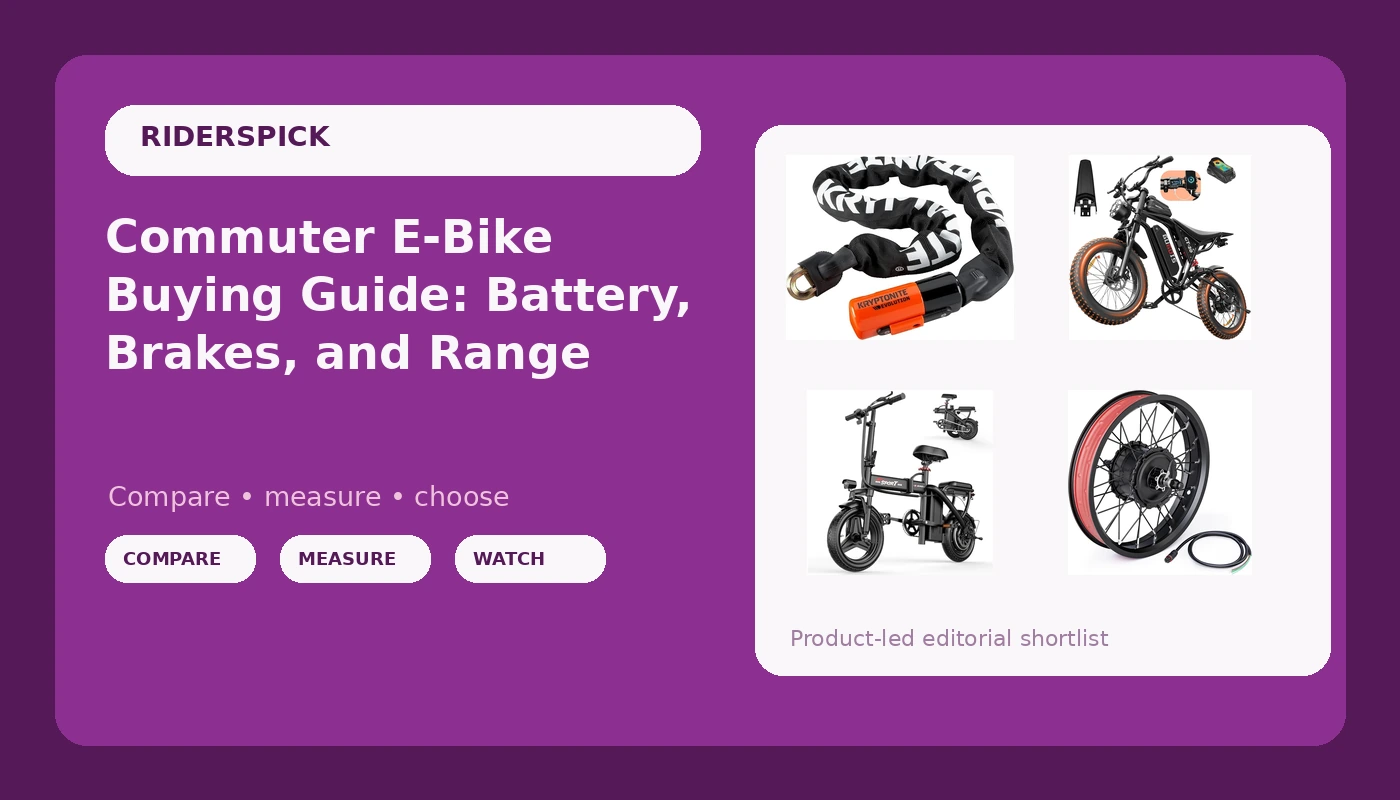
Best for small spaces and mixed commutes: the 14-inch folding mini e-bike
The spec sheet on this one reads like a checklist for apartment living: a 1200W peak motor, 22 to 25 MPH depending on mode, a claimed 30 to 45 mile PAS range, 6-point full suspension, and 14-inch tires on a frame that folds. It is a mini bike in the literal sense, and that is the whole point.
Small wheels are the tradeoff that listing photos never show. A 14-inch tire drops into potholes that a 27.5-inch wheel rolls straight over, and the steering is quicker, which feels playful in a parking lot and twitchy in a bike lane at 22 MPH. Six points of suspension is doing real work here, softening a wheel size that would otherwise beat you up on chip seal.
Two things I would check before handing over money. First, the folding hinge and its latch. That is the part that develops play if it is not adjusted, and a wobbly hinge on a 25 MPH bike is a safety issue, not an annoyance. Second, the brakes. A small-wheel bike at 25 MPH needs more stopping power than the wheel size suggests, and folding frames often get the cheapest calipers in the catalog.
If your commute is a train ride plus two miles, or a third-floor walk-up, this is the shape of bike that makes sense. If your commute is 12 miles of open road, you want bigger wheels.
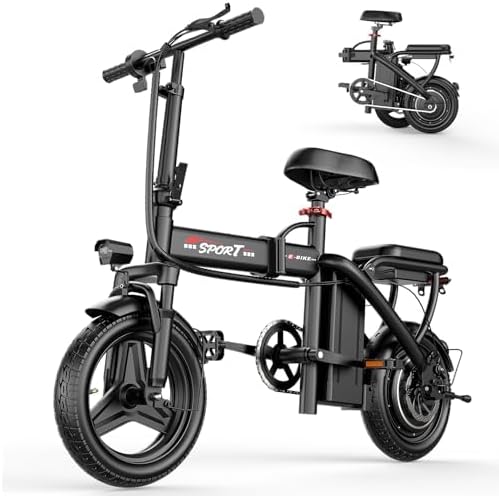
Best for distance and bigger riders: the all terrain fat tire e-bike
This is the other end of the spectrum: full suspension, all terrain fat tires, motor options listed at 6000W, 2500W, and 2000W, battery options spanning 60V 35Ah, 52V 25Ah, 48V 20Ah, and 48V 15Ah, and a frame sized for riders from 5'2" to 6'8".
Let me be honest about the top of that range. A 6000W peak motor is not a commuter motor, it is a light motorcycle, and the 60V 35Ah pack that feeds it is a big, heavy battery. Weight is the spec nobody puts in the bullet list, and it matters more than watts do when you are lifting the bike onto a rack or muscling it through a doorway. If your route is flat and short, the smallest battery option is the smarter buy. If you are 6'4" and riding 15 miles each way with a hill in the middle, the bigger pack earns its keep.
What I like about this category for commuting is the tire volume. Fat tires at lower pressure absorb broken pavement, curb cuts, and gravel shoulders without asking you to steer around them. The height range is unusually wide, which is rare and useful if you are tall or short and tired of bikes that were clearly designed around a 5'9" test rider.
What I would verify in person: the brakes again, because full suspension plus fat tires plus speed means a lot of momentum, and the axle hardware, because fat tire bikes put more torque through the dropouts than a standard frame.
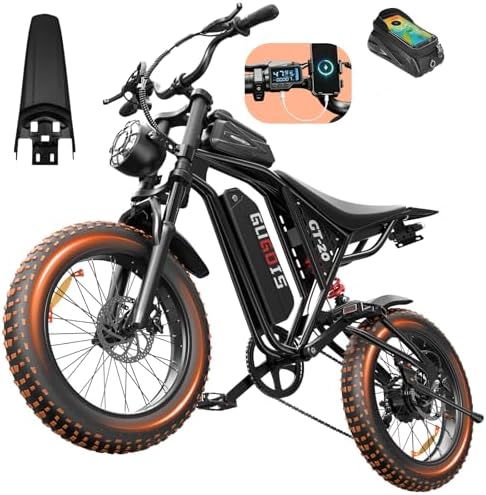
The lock is not an accessory: Kryptonite Evolution 1090 chain lock
I have watched people spend four figures on an e-bike and twenty-five dollars on a cable lock, then act surprised when the bike is gone. The lock is the cheapest insurance you will ever buy, and it is the one purchase where going heavy is the right instinct.
The Evolution 1090 is 3 feet of 10mm steel chain. Three feet is the length that actually matters, because it is enough to go around a real pole or rack and still pass through the frame and a wheel. Short chains force you to choose between locking the frame or locking the wheel, and thieves know it. Ten millimeters of steel is a serious cut, which is why chain locks of this class resist hand tools in a way cables simply cannot. Nothing is grinder-proof, and I will not pretend otherwise. The goal is to make your bike the least attractive target on the rack, and a heavy chain next to a cable lock does exactly that.
Two practical notes. A chain this size has real weight, so plan how you carry it: wrapped around the seatpost for short trips, in a bag for longer ones. And lock through the frame and a wheel, not just one of them, because a wheel costs money too.
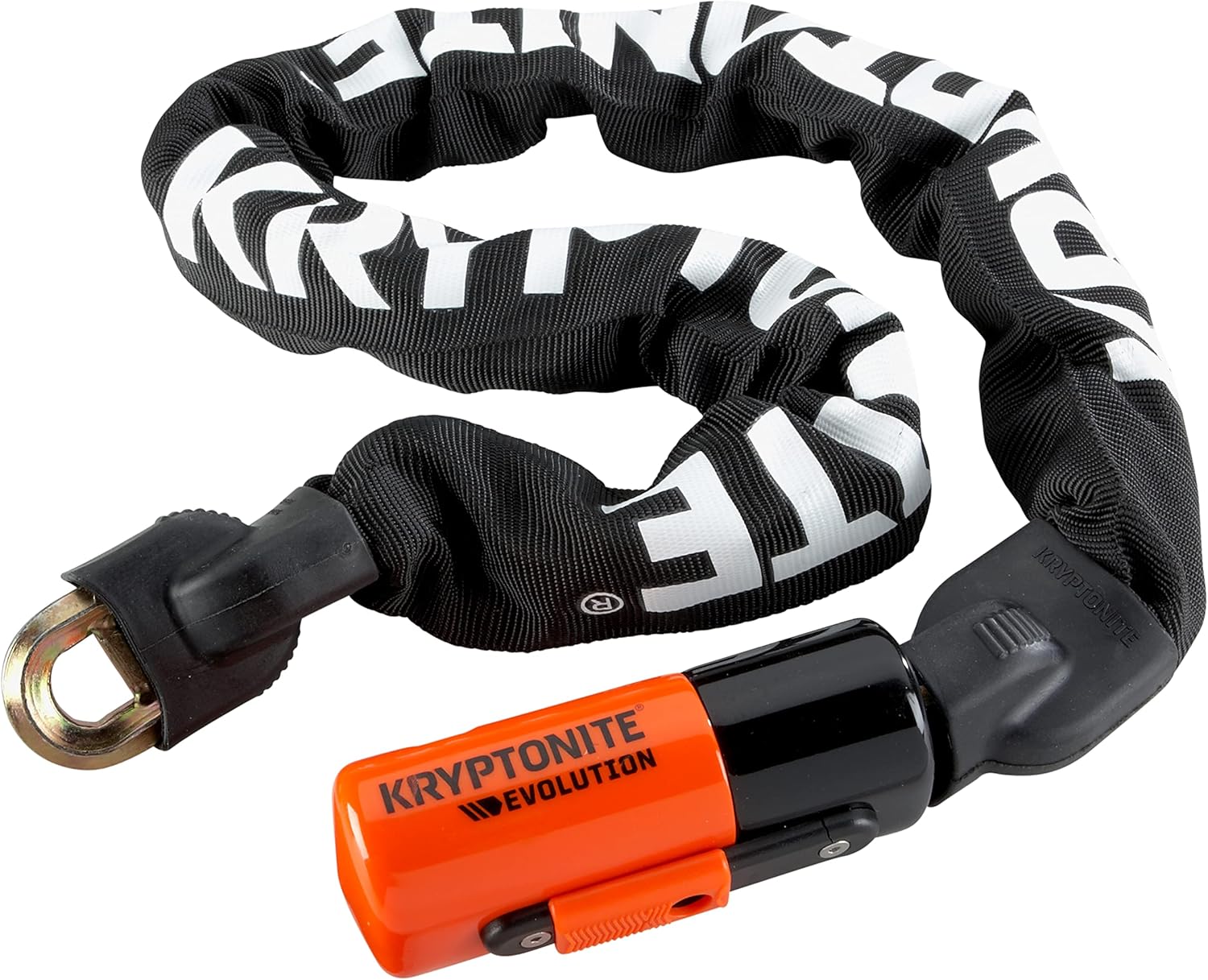
If you already own a bike: the 48V 1000W rear wheel motor
A 20 by 4.0 inch fat tire rear wheel with a 48V 1000W hub motor inside it is the conversion path. If you already own a fat bike that fits you, and the frame is sound, this is often the cheapest way to end up with an electric commuter you actually like, because you keep the geometry you are used to.
A hub motor is the simple design. It is in the wheel, it drives the wheel, and there is no extra drivetrain wear to think about. On flat city routes it is all the motor most people need. It is not the right answer for long, steep climbs, where a mid-drive that uses your gears does better.
Before you order one, measure. You need to know your frame's rear dropout spacing, and fat bikes vary. You want a torque arm so the motor does not twist out of the dropouts under load. You will need a battery and a controller as separate purchases, and you should budget for better brakes, because a converted bike is heavier and faster than the one the original brakes were designed for. If any of that sounds like too much work, buy a complete bike instead.
How I judge a commuter e-bike
Four questions, in order.
Is the battery certified and healthy? Certification matters. An uncertified pack is a fire risk, and that risk lives in your home, not in a warehouse. Capacity matters too, but so does how the pack is treated. Ask any seller how the battery is rated and how many charge cycles it is expected to survive. If they cannot answer, that tells you something.
Will the brakes stop a loaded bike? An e-bike plus a rider plus a bag can run well past 250 pounds, and the bike goes 25 or 28 MPH. Hydraulic disc brakes with decent rotors are the standard I want. Mechanical discs can work if they are set up well, but they need more hand strength and more adjustment.
Does the real range match the claim? The only way to know is to test at three assist levels on your own route. Range at the lowest assist on flat ground is a fantasy number for most commuters. Range at your actual assist level, with your actual hills, is the number that matters.
Would I trust it for a year of daily rides? That question covers the hinge, the welds, the controller, the display, and whether replacement parts exist. A bike you cannot get parts for is a bike you throw away.
What the spec sheets actually tell you
Motor watts are peak numbers, not continuous ones, so a 1200W peak motor and a 1200W continuous motor are not the same thing. Volts multiplied by amp hours gives you watt hours, which is the honest measure of how much energy the pack holds. Two bikes with the same claimed range can differ wildly in watt hours, and the one with more energy in the pack is usually the one telling the truth.
Top speed depends on how the bike is limited and where you ride it. Many areas cap e-bike motor assistance at 20 MPH on throttle and 28 MPH with pedal assist, and rules differ by state and by trail. Know your local law before you buy something that only makes sense at 35.
Tire size decides comfort and stability. Fat tires float and absorb. Fourteen-inch tires fold and fit in a trunk. Neither is better, they solve different problems.
Suspension points are a rough proxy for how much the frame is trying to compensate for the wheels. Six points on a mini bike is doing the job that a 27.5-inch wheel does for free.
The commuter e-bike reference table
| Product | Motor and battery | Claimed range | Best for | Price |
|---|---|---|---|---|
 Visit on Amazon → Foldable mini e-bike, 14-inch tires |
1200W peak, 22 to 25 MPH, 6-point full suspension | 30/45 miles PAS | Train plus bike commutes, apartments, small trunks | Check current Amazon price |
 Visit on Amazon → All terrain fat tire e-bike |
6000W/2500W/2000W options, 60V 35Ah down to 48V 15Ah | See the listing | Long rides, rough pavement, riders 5'2" to 6'8" | $469.00 |
 Visit on Amazon → Kryptonite Evolution 1090 chain lock |
10mm steel chain, 3 ft | Not applicable | Locking any e-bike you cannot bring inside | $117.49 |
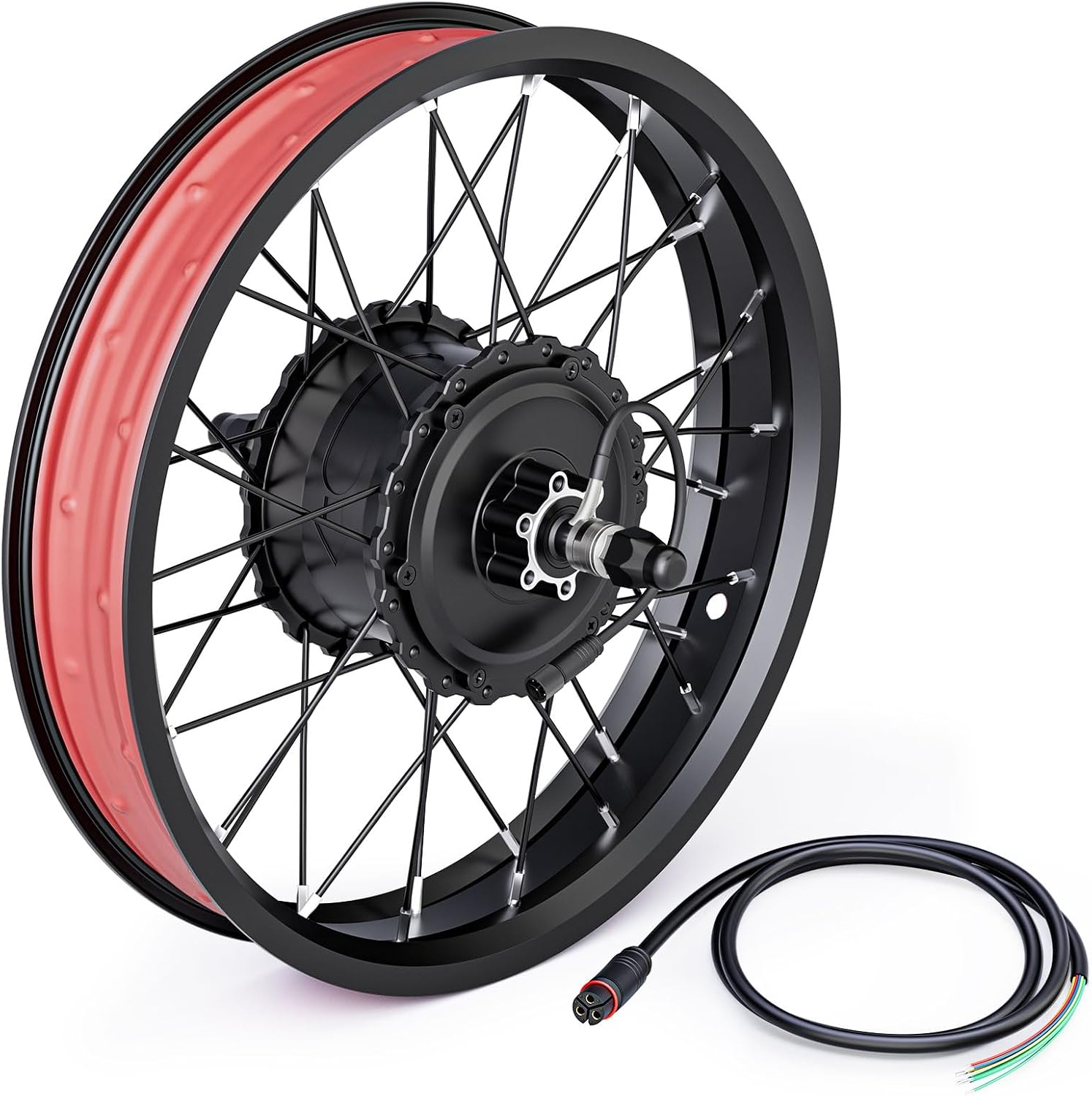 Visit on Amazon → 20 by 4.0 fat tire rear wheel motor |
48V 1000W hub motor | Not applicable | Converting an existing fat bike you already like | $313.01 |
Should you buy the folding mini e-bike?
Yes, if your commute has a seam in it. A train, a bus, a car trunk, an elevator, a stairwell. The 1200W peak motor and the 6-point suspension exist to make 14-inch wheels livable at 22 to 25 MPH, and the fold is the feature you are actually paying for. Check the hinge for play and the brakes for bite, then enjoy the fact that this thing lives in a closet instead of a hallway.
Should you buy the all terrain fat tire e-bike?
Yes, if you are tall, heavy, or riding long distances over bad pavement. The frame fits a wider range of riders than most, the battery options let you trade weight for range, and the fat tires turn a rough route into a comfortable one. Buy the smaller battery if your commute is short and flat. Buy the bigger one only if you have the miles and the hills to justify carrying the weight.
Should you buy the Kryptonite chain lock?
Yes. It is the least glamorous purchase in this guide and the one that protects all the others. Three feet of 10mm chain lets you lock the frame and a wheel to something solid, and it makes your bike look like more trouble than the one next to it. That is the entire job.
Should you buy the rear wheel motor?
Only if you are comfortable turning wrenches and measuring your own frame. If you already own a fat bike that fits you and the dropouts check out, this is the cheapest route to an electric commuter. If you want to unbox something and ride it the same afternoon, skip it and buy a complete bike. Neither choice is wrong, but only one of them matches your temperament.
The battery is the heart of an e-bike. The brakes are the spine. Everything else is cosmetic, and that includes the badge on the downtube.