Related: E-Bike Battery Health: What 500 Miles Actually Tells You
I have been fixing bikes in Austin for fifteen years and commuting on them for seven, and the question I get has changed. It used to be "which e-bike should I buy?" Now it is "what does a working electric bike commuter setup actually look like?" That is a better question, because a commuter setup is not one purchase. It is a bike, a battery you trust, a charger that shuts itself off, and brakes that can stop sixty pounds of rider and machine when the pavement is wet.
My rule from the stand: the battery is the heart, the brakes are the spine, everything else is cosmetic. A whining motor, a display with twelve menus, a colorway you love, none of it saves you if the pack is uncertified or the brakes fade on the second hill. I keep a logbook of which motors fail and when, and the pattern has not moved in seven years. The cheap ones fail at the battery and the brakes first.
So this is the setup I would hand a friend, in the order I would buy it.
The Bike Most Commuters Should Start With: VARUN Electric Bike
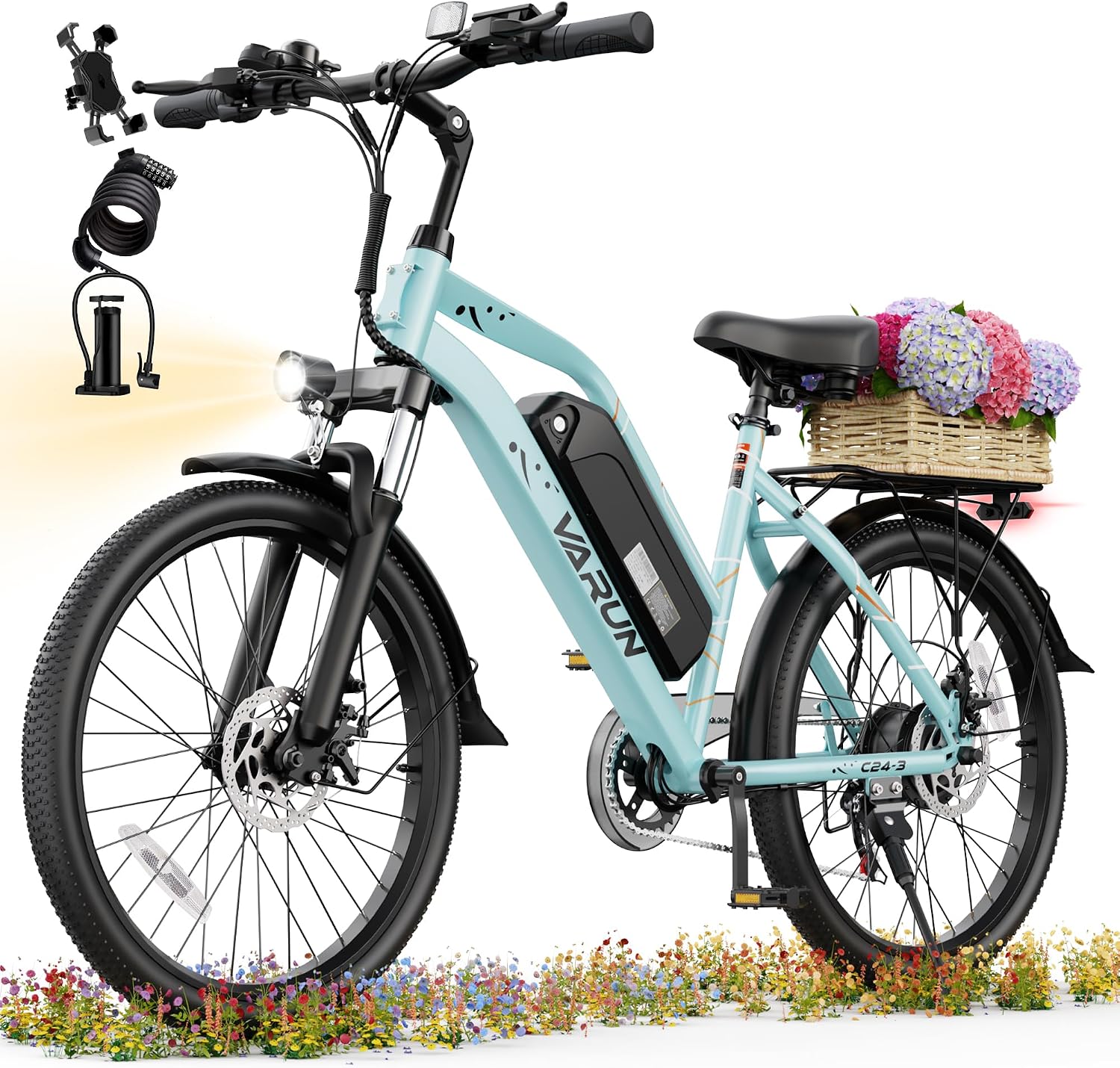
The VARUN is a 26 inch cruiser with a peak 750W motor, a 48V removable battery, a front shock absorber, 7 speeds, and dual disc brakes. That list is not exciting, and that is exactly the point. For a first commuter bike, boring is a feature.
Two things on that spec sheet matter more than the motor number. First, the battery comes off. That means you carry it inside and charge it at room temperature, not in a freezing garage or a 110 degree shed, which is where packs age fastest and where fires start. Second, dual disc brakes. I have written this a hundred times and I will write it again: an e-bike is heavier and faster than the bike you grew up on, and rim brakes on a loaded cruiser with a laptop bag is a bad trade.
The "up to 40+ miles" figure is the manufacturer's number, and I would treat it the way I treat every range claim, as a ceiling measured under conditions you do not ride in. Flat ground, a light rider, the lowest assist level. Real range is a function of your weight, your terrain, and the assist level you actually use.
Peak watts deserve the same skepticism. Peak is what a controller allows for a few seconds. It tells you something about acceleration. It does not tell you how the bike climbs your commute every day.
The 7-speed drivetrain is the underrated part. A single-speed e-bike is a scooter with pedals. Gears mean you can still contribute when the battery is low, and that is the difference between riding home and pushing home.
The One That Fits in a Closet: URLIFE Folding Electric Bike
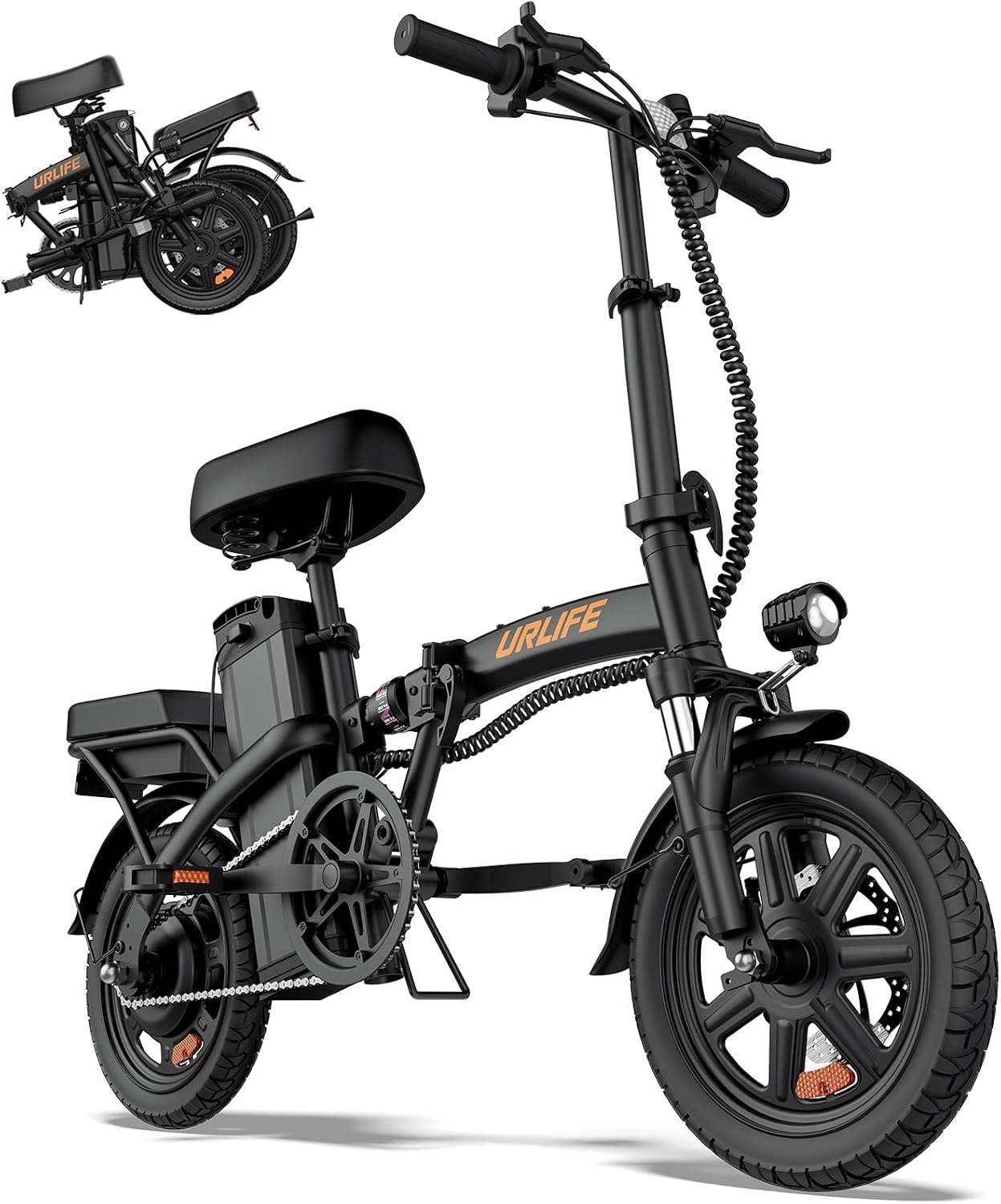
This is a 14 inch folding e-bike with a 500W peak motor, a 20 mph top speed, a claimed 20 to 40 mile range, and UL 2849 certification. The folding part is the whole pitch. It goes in a closet, under a desk, in a trunk, or onto a train.
Fourteen inch wheels are a different animal. They are quicker to turn, less forgiving of potholes, and they ask you to read the road further ahead than you would on a 26 inch bike. That is not a defect. It is a trade for the footprint.
The UL 2849 certification is the line item I would point at first. It covers the electrical system of the whole e-bike, not just a sticker on a charger. Batteries are chemistry, not marketing, and certification is the only fire-related claim I pay attention to. Anyone who tells you a pack is "fireproof" is selling you something.
If your commute is 3 to 6 miles and your apartment has no bike room, a folder beats a full-size bike you never ride because you cannot store it. At 20 mph this one is built for bike lanes and side streets, not for keeping up with traffic. That is honest about what it is, and I respect that more than a spec sheet promising 35 mph on 14 inch wheels.
The Upgrade Path: Torque Sensor Tong-Sheng Mid Drive Motor Kit
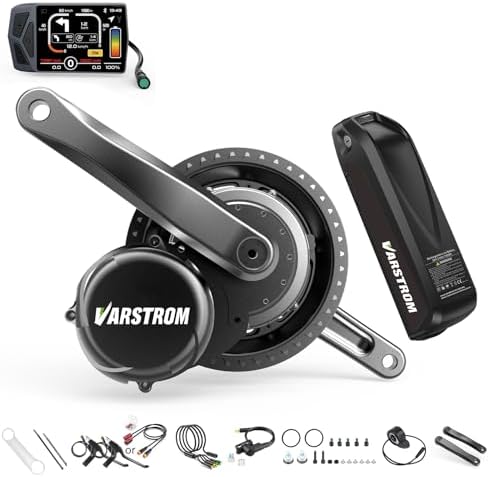
If you already own a bike you love, this is the other road to a commuter e-bike: a 48V 750W Tong-Sheng mid-drive conversion kit with a torque sensor, an EKD01 display, and a bottom bracket fit of 68 to 73mm. The battery is optional, which means you choose it, and that is where most people go cheap and regret it.
Mid-drive versus hub is the oldest argument in e-bikes, and my answer has not changed. A hub motor is fine for flat cities. A mid-drive is for hills. A mid-drive runs through your gears, so it uses the same mechanical advantage your legs do. On a 12 percent grade with groceries on the rack, that difference is the entire ride.
The torque sensor matters as much as the motor. A cadence sensor only asks "are the pedals turning?" A torque sensor asks "how hard are you pushing?" That is the difference between assist that feels like a hand on your back and assist that feels like a light switch. If you have ridden both, you already know which one you want.
Check your bottom bracket width before you order. The 68 to 73mm range covers most mountain, road, and hybrid frames, but measure yours instead of assuming. And be honest about your toolbox. This is not a Sunday afternoon job with one hex key. Pulling a crank, routing cables, and mounting a display is real work, and if you are not comfortable with it, pay a shop. The labor is cheaper than the frame you crack.
The Part Everyone Forgets: 48V Lithium Battery Charger
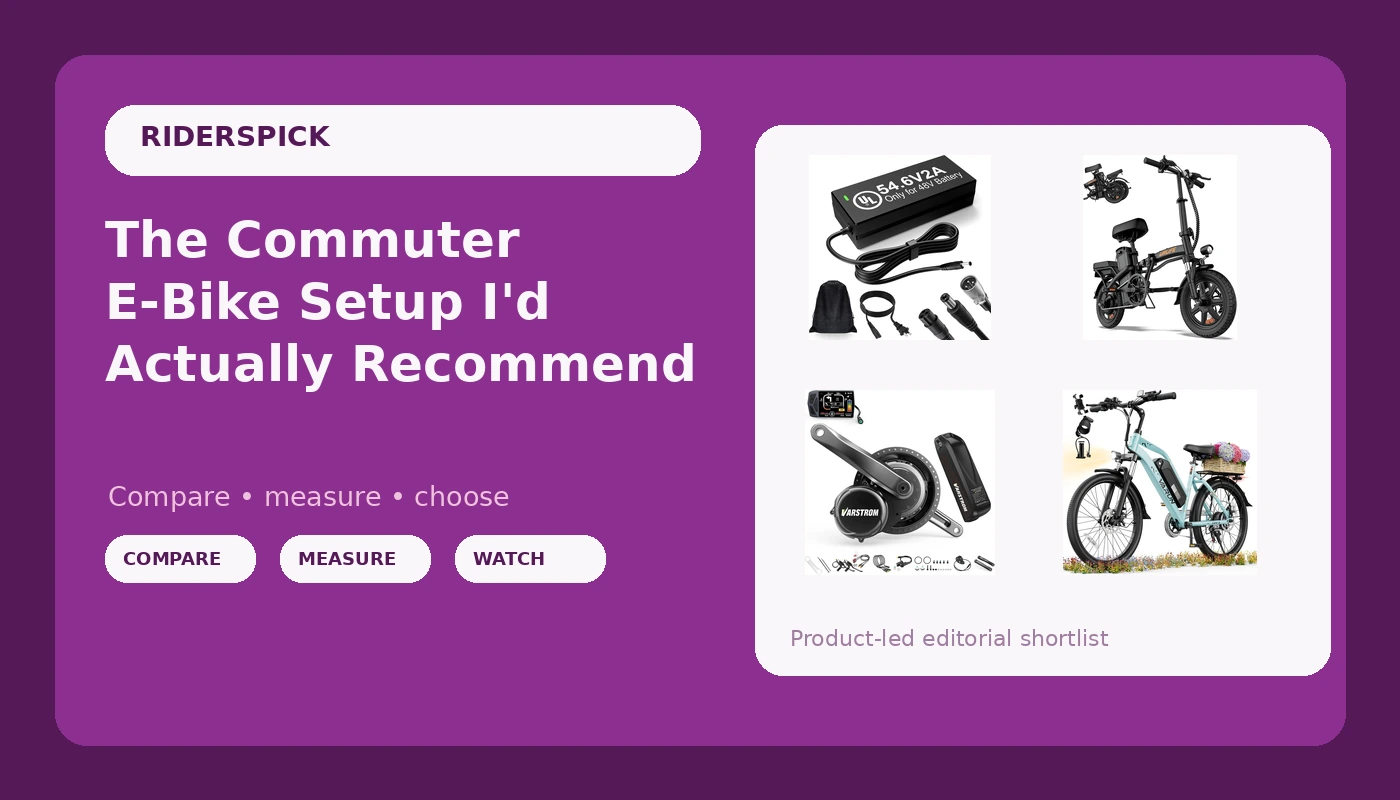
This is a UL certified 54.6V 2A charger with auto shutoff, temperature control, and a fire-resistant case. It is the least exciting item in this article and the one I would not skip.
54.6V is the correct full-charge voltage for a 48V lithium pack, so this is the right charger for the bikes above and for most 48V kits. Buy the charger that matches your pack voltage. A 54.6V charger is for a 48V pack and nothing else, and mismatching them is how people turn a battery into a story.
A 2A charger is not fast, and that is not a flaw. Slower charging is easier on the cells, and most commuters charge overnight anyway. The feature I actually care about is auto shutoff, because the most common charging mistake I see is a pack left on a live charger for three days.
Temperature control matters in an Austin summer, where a garage can sit at 110 degrees. A hot pack should never go straight onto a charger. Let it rest for half an hour after a ride, charge it at room temperature, and unplug it when the light says done. That routine will do more for battery life than any spec on the box.
How I evaluate a commuter setup
Four questions, in order. Is the battery certified and healthy? Do the brakes stop it at 28 mph? Does the real range match the claim? Would I trust it for a year of daily commutes?
The battery question comes first because it is the only one that can burn your house down. I want UL 2849 on the bike or UL certification on the pack and charger. I want the battery to come off so it can live indoors at a sane temperature. And I want to know what capacity is left at 500 miles, not what it was on day one.
Range is a three-level test: lowest assist, middle, full. Same route, same rider, same weather. Any number that comes from one ride on flat ground is not a range, it is a hope.
Brakes get a loaded test, because a commuter bike carries a bag, a lock, and sometimes a change of clothes. Stopping distance changes when you add 15 pounds to the rack, and it changes again in the rain.
The last question decides it. Would I still be riding this in October of next year?
What the numbers on the box actually mean
Peak watts sell bikes. They do not describe how a bike feels at mile 12 of your commute.
Range is measured at a weight and on a terrain you did not choose. The industry's flattering test is a light rider on flat ground. You are not that rider, and your commute is not that road.
"UL certified" on a charger and "UL 2849" on a bike are two different things, and both are worth having. A charger certificate does not certify the bike. A bike certificate does not make the pack inside immortal. Both are floors, not ceilings.
Top speed is a legal question as much as a mechanical one. 20 mph is a class 1 or class 2 ceiling in most places. Know your local rules before you buy something faster than the law allows on your route.
Commuter e-bike setup reference table
This is the table I would hand someone building a setup from scratch. It is not a ranking. It is what each piece is for, and which piece to buy first.
| Part | What it is | Best for | Notes |
|---|---|---|---|
 Visit on Amazon → VARUN Electric Bike |
Complete 26 inch cruiser, peak 750W, 48V removable battery, 7-speed, dual disc brakes | One bike for commuting and errands | Removable battery charges indoors; 40 plus mile claim is a ceiling |
 Visit on Amazon → URLIFE Folding Electric Bike |
14 inch folding e-bike, 500W peak, 20 mph, UL 2849 certified | Apartments, trains, car trunks, short commutes | Small wheels demand attention on rough pavement |
 Visit on Amazon → Torque Sensor Tong-Sheng Mid Drive Motor Kit |
48V 750W mid-drive conversion kit with torque sensor and EKD01 display | Riders with a good bike and real hills | Fits 68 to 73mm bottom brackets; battery sold separately |
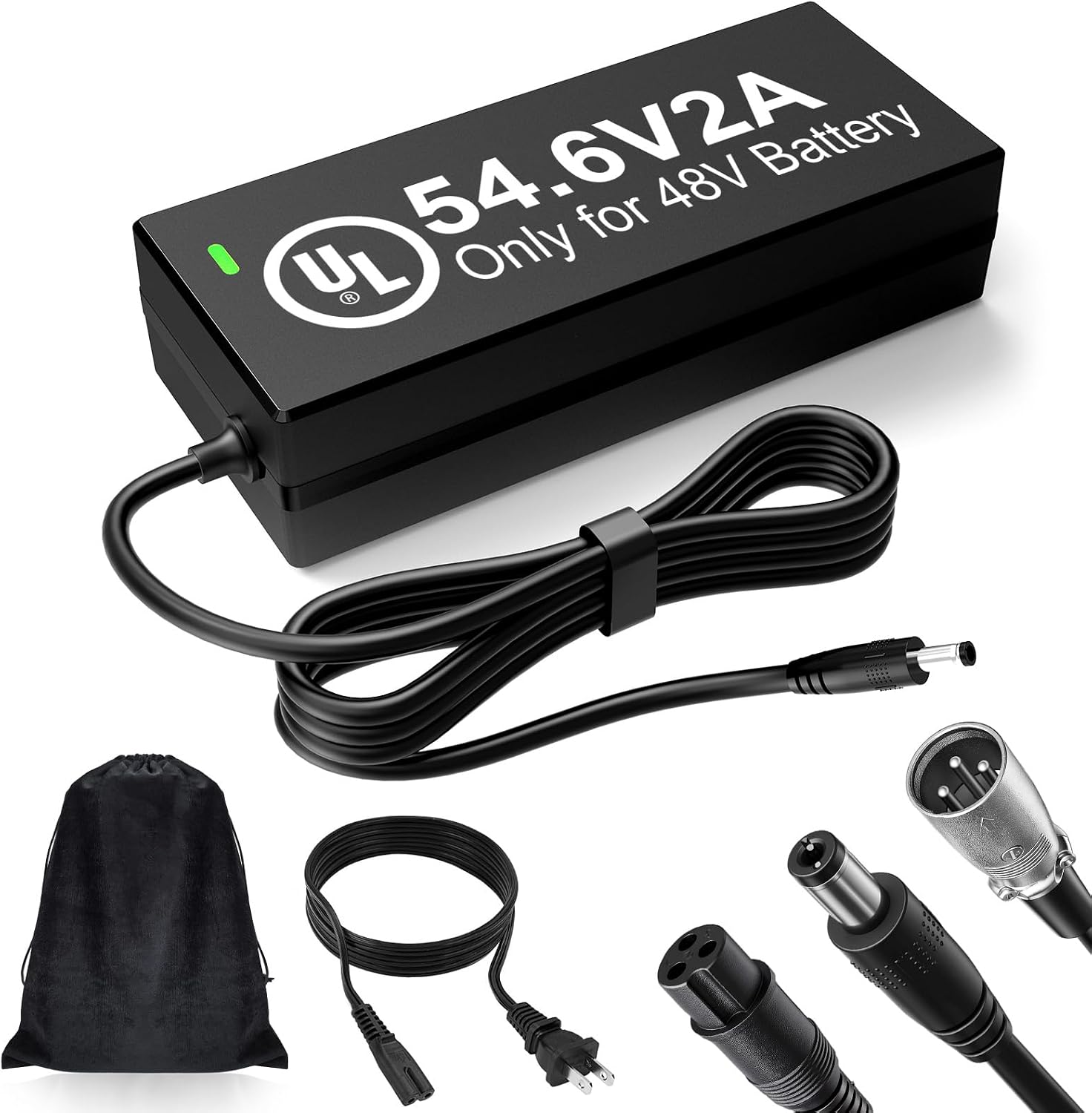 Visit on Amazon → 48V Lithium Battery Charger |
UL certified 54.6V 2A charger with auto shutoff and temperature control | Any 48V pack in the house | Correct full-charge voltage for a 48V lithium pack; match it to your battery |
The order in that table is also the order I would spend money. Bike first, then brakes and battery health, then a charger you trust. The motor kit is for people who already own a frame worth keeping.
Should you buy the VARUN Electric Bike?
If you want one bike that covers the commute and the grocery run, this is the shape I would start with. Removable battery, dual disc brakes, 7 speeds, and a cruiser frame that does not punish you for riding in regular clothes. The 750W peak figure is a marketing number, but the battery and brake spec is the part that decides whether you are still riding it next fall.
Ride it first, check the brakes at speed with a loaded bag, and treat the range claim as a ceiling rather than a promise. Do that and it is a sensible first commuter bike.
Should you buy the URLIFE Folding Electric Bike?
Buy it if storage is your real problem. The fold and the 14 inch wheels are the entire argument, and UL 2849 certification is the reassurance I would want on a bike this small and this cheap. It is a 20 mph bike for short, flat-ish commutes, not a highway machine.
Skip it if your route is 15 miles of broken pavement or steep grades. Small wheels and a 500W peak motor are not the tools for that job, and pretending otherwise is how people end up selling a bike after three months.
Should you buy the Torque Sensor Tong-Sheng Mid Drive Motor Kit?
Buy it if you already own a solid frame, you have hills, and you are comfortable with a wrench or willing to pay someone who is. A mid-drive through your gears plus a torque sensor is the best-feeling assist you can put on a bike, and it will out-climb a hub motor of the same rating.
Skip it if your commute is flat, your budget is tight, or your donor bike has a rusty bottom bracket shell. Measure the bottom bracket first. Remember the battery is not in the box, and that is not the place to save forty dollars.
Should you buy the 48V Lithium Battery Charger?
Yes, if you own a 48V pack and your current charger is an unknown brick with no certification and no shutoff. The charger is the cheapest safety upgrade in this entire setup, and it is the one people never think about until something goes wrong.
Match the voltage to your battery, charge at room temperature, and let the auto shutoff do its job. That is the whole routine, and it is the reason the battery in your commuter bike will still hold a useful charge two years from now.