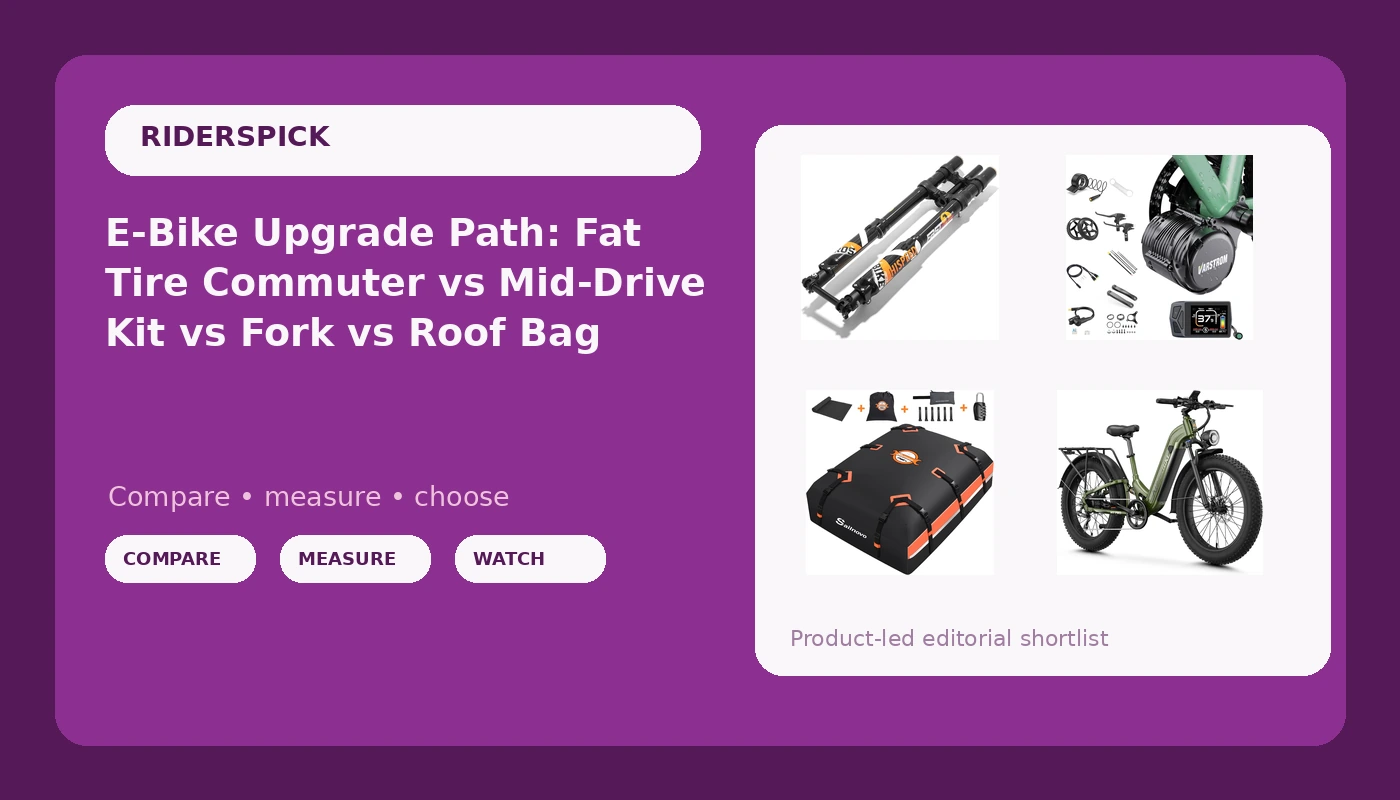
I have spent fifteen years as a bike mechanic in Austin and seven of those years commuting on electric bikes, and the question I get most often is not which e-bike to buy. It is whether the bike already in the garage can be made better for less money. This comparison covers four e-bike upgrade parts and platforms that answer that question in completely different ways: a complete fat tire electric bike, a mid drive conversion kit, a front suspension fork, and a roof cargo bag. Three of them change how the bike rides. One changes how much you can carry while you ride it.
I have not installed all four of these on my own bench, and I am not going to pretend otherwise. What I can do is tell you what each one actually solves, where the spec sheet hides the real cost, and which questions to ask before money changes hands. Every recommendation in my shop starts in the same place: the battery is the heart, the brakes are the spine, and everything else is cosmetic.
The short answer: the complete fat tire e-bike is the right first purchase for most people, because a bike that exists and rides beats a project that does not. The mid drive kit is the best value for a rider who already owns a solid donor frame.
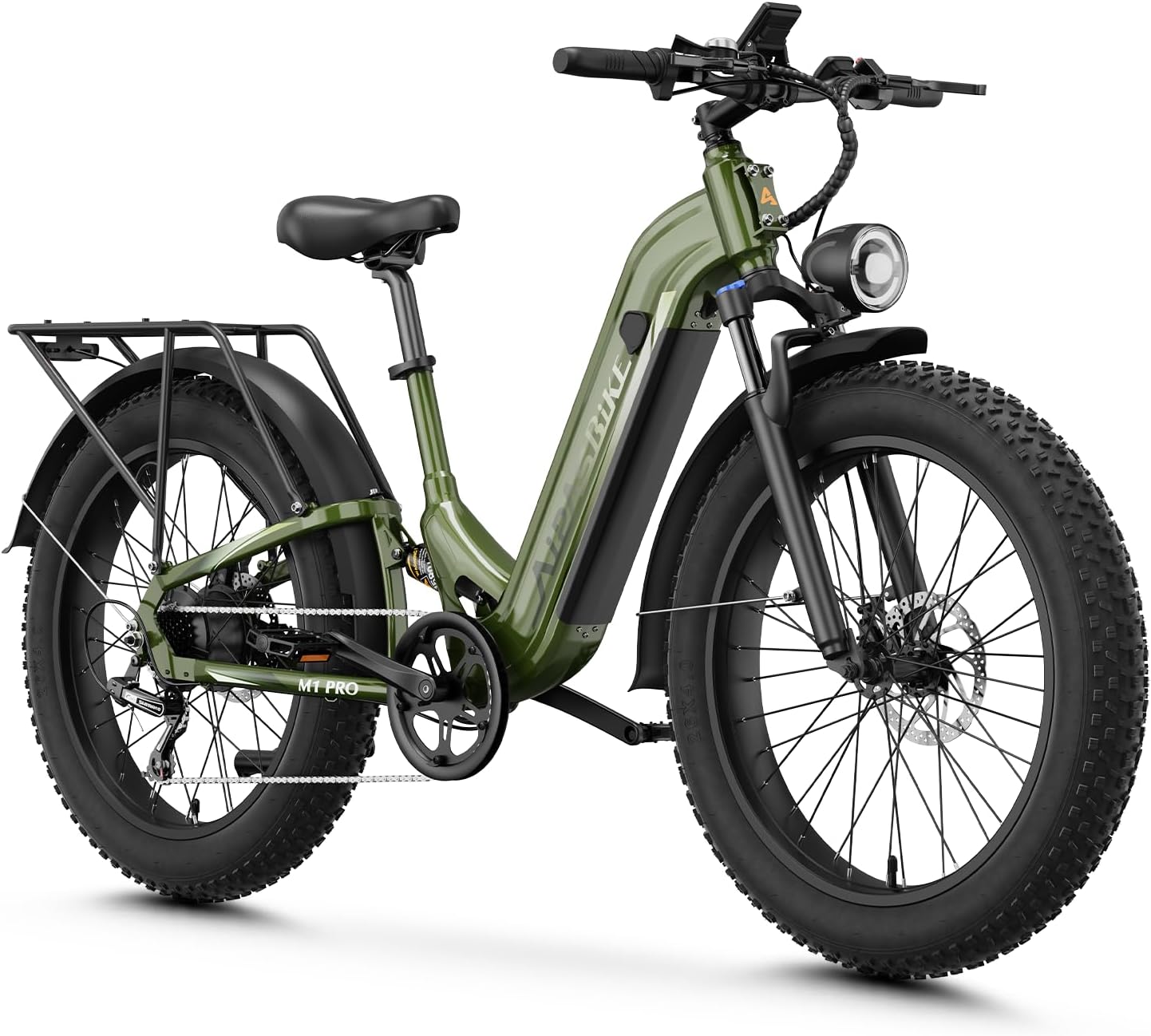
Aipas M1 Pro Electric Bike
Ships complete with 26 x 4 fat tires and a 48V 17.5Ah battery, so it is rideable on day one and stable under a load
You live with the builder's choices; fat tires and a big pack are heavy, and the brake spec needs checking before you commit
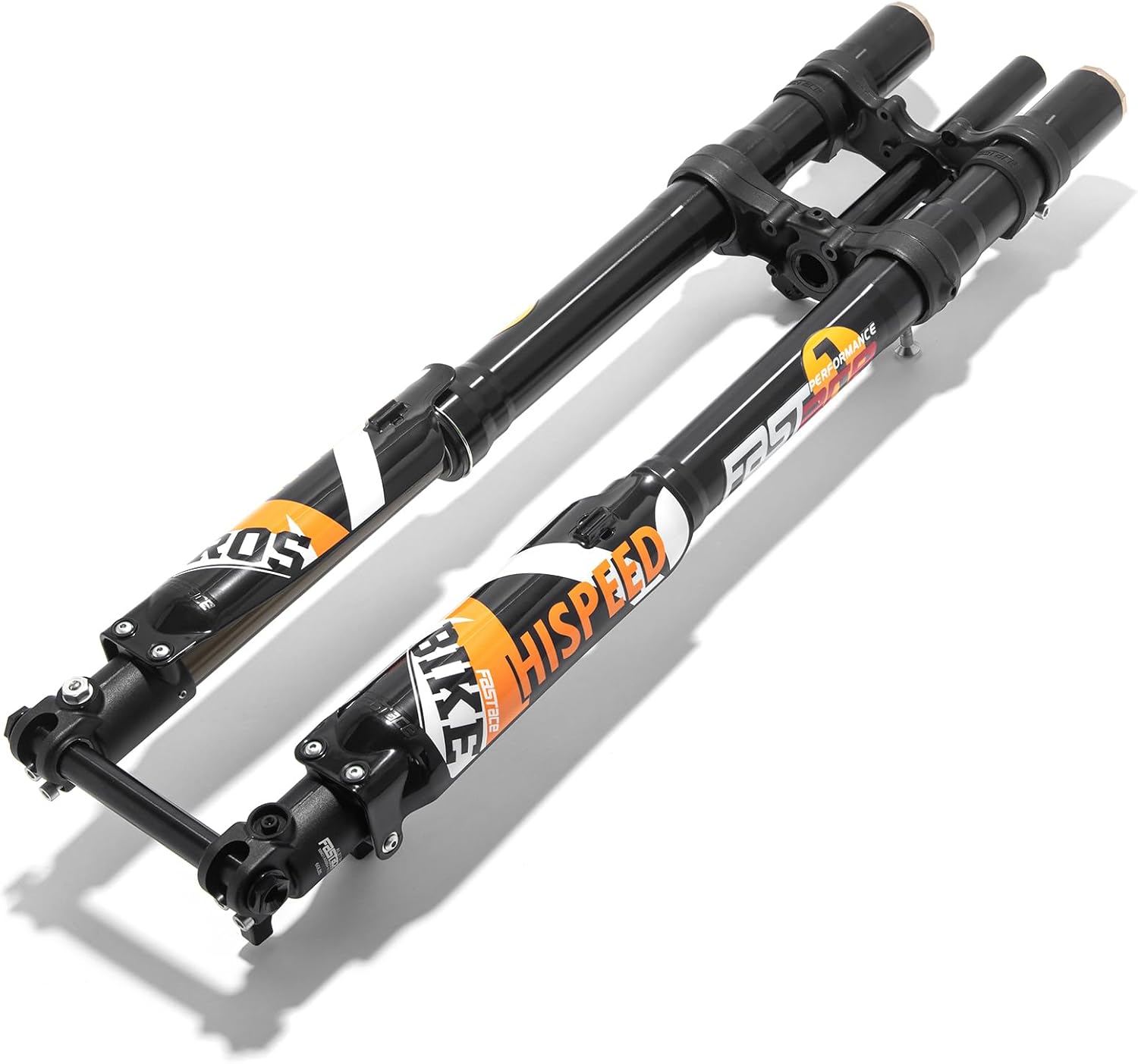
TOFR Front Fork Suspension
Fixes a specific, expensive problem on Sur-Ron, Talaria, Segway X160 and X260, and Eride Pro class machines without buying a new bike
Fitment is narrow and model specific; a fork swap is a real job with headset, brake line, and torque specs
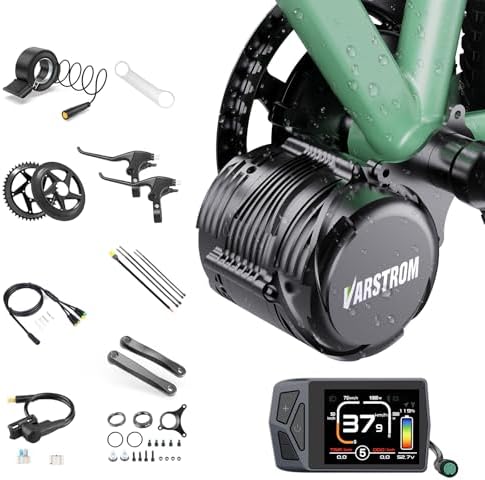
48V 750W Mid Drive Kit
Torque sensing plus a 1056W peak makes a loaded climb feel flat, and it is the cheapest route to a mid drive if the donor bike is good
It is a project, not a purchase; bottom bracket standard, chainline, battery, and installation are all on you
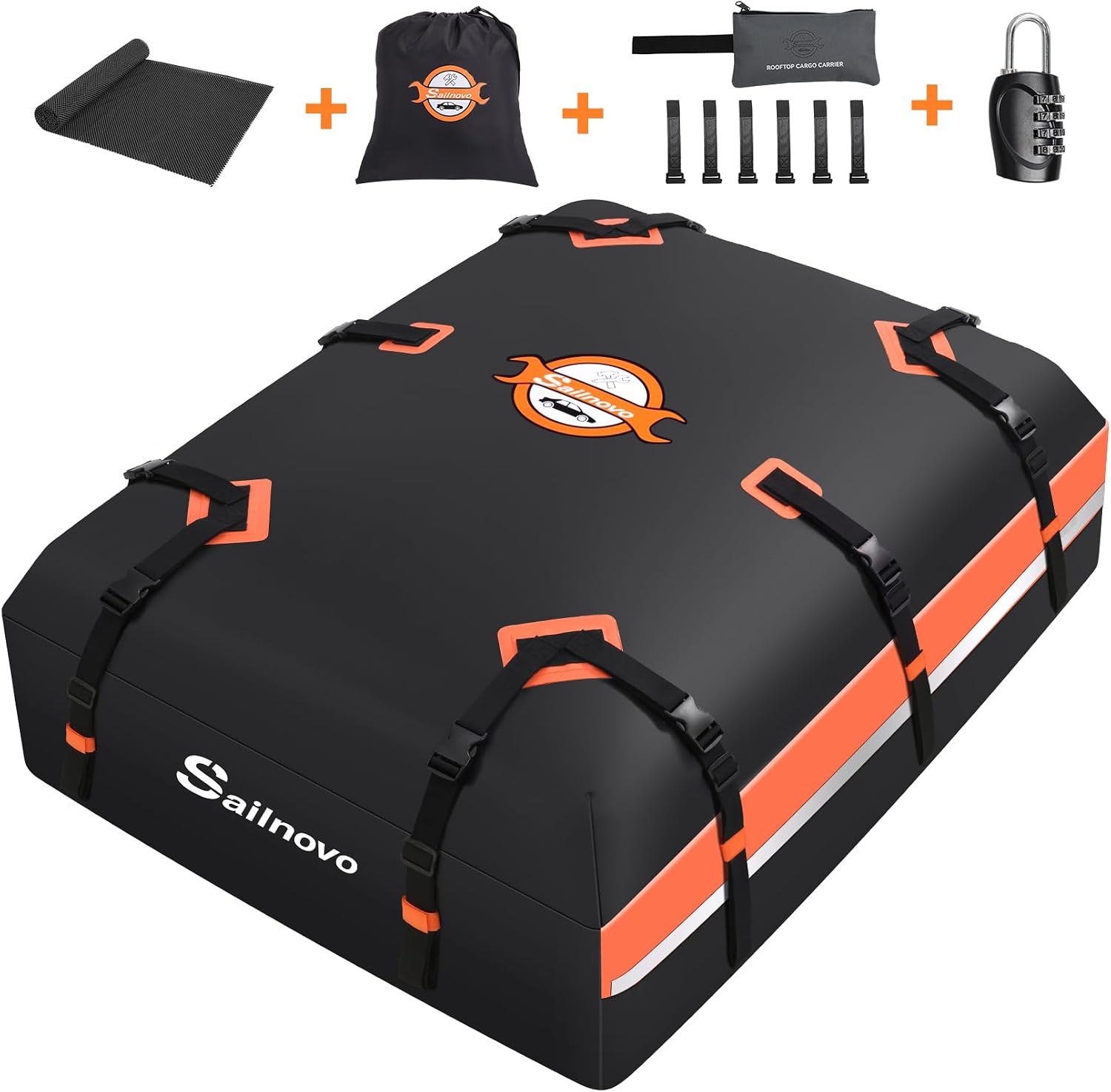
Sailnovo Rooftop Cargo Carrier
Adds 21 cubic feet of weatherproof storage to the car you already own, with no rack, hitch, or wiring
It is a bag, not a bike part; a loaded soft bag costs fuel and needs strap checks at every stop
Prices and availability were captured from Amazon Creators API and may change.
How I judge gear like this
Every product that comes through my shop gets judged on four things, and none of them are marketing claims. First, battery health and certification. A pack without a recognized safety listing is a fire risk, full stop, and no feature list makes up for that. Second, brakes. An e-bike travels at speeds that turn a weak brake spec into an emergency, so rotor size, pad type, and lever feel matter more than the paint. Third, real range. Published range numbers are usually generated with a light rider on flat ground at the lowest assist level, which describes almost nobody I know. Fourth, durability over a year of daily use.
I apply the same four questions to parts and accessories. Does it solve a problem you actually have? Does it introduce a new failure point? Can you install it without a machine shop? And if it breaks in fourteen months, does a dealer exist who will answer the phone? That last one is the quiet reason cheap parts cost more than good ones.
Aipas M1 Pro: the complete fat tire commuter
The Aipas M1 Pro is the only item here that is a finished vehicle. The 26 x 4 fat tires are not a style choice. They are suspension you cannot break, plus traction on gravel, wet pavement, and the kind of broken asphalt that eats narrow tires. The 48V 17.5Ah battery is a genuinely large pack for this class, which matters because amp hours are what turn a fun toy into a bike that covers a commute without range anxiety.
What I would verify before buying any complete e-bike, this one included: the certification on the battery and the charger, whether the battery is removable so you can charge it indoors or in a garage, the brake rotor diameter and pad type, and the motor type. A hub motor is fine for flat cities and simple to live with. A mid drive is the answer for hills. The listing will tell you, and if it will not, that silence is information.
The trade-off is weight and the builder's choices. Fat tires and a big pack are heavy, and heavy bikes need brakes with real bite. If your commute is flat and paved, you are paying in pounds for capability you may not need.
The 48V 750W mid drive kit: performance per dollar, if you have a donor
This is the most interesting item in the group and the one most likely to end up half finished in a garage. A torque sensored mid drive with a 1056W peak is a different animal from a hub motor. It drives the pedals, which means it uses your bike's gears. On a climb, a mid drive can drop into a low gear and pull, while a hub motor fights gravity with raw current and heat. That is the whole argument for mid drive, and it is a good one.
The catch is that you are not buying a bike. You are buying the middle of a bike. Before you order, answer these: what bottom bracket standard does your frame use, and is it threaded or press fit? What is your chainline going to look like once the motor is in the way? Where does the battery mount, and is that mount strong enough for the pack you plan to run? Do your brakes and shifters survive the change? If you cannot answer all four, this kit is not a bargain, it is a semester.
Then there is the battery, which is the expensive half of the project and the part where people cut corners. A cheap pack on a 750W system is the worst place in this entire article to save money. Buy the donor bike first, ride it, and confirm you actually like the frame before you electrify it.
TOFR front fork suspension: the fix for a specific machine
This one is not for commuters. The TOFR front fork suspension is built for a specific family of light electric machines: the Sur-Ron Light Bee X and LBX, the Talaria Sting MX3 and R MX4, the Talaria XXX, the Segway X160 and X260, and the Eride Pro SS. If your machine is not on that list, stop reading this section, because a fork that does not fit is a very expensive paperweight.
For the owners who are on that list, this is the most honest upgrade in the article. Those bikes get ridden hard, and a blown or underdamped front fork turns every landing into a negotiation with your wrists. Replacing the fork costs less than replacing the machine, and it keeps you on a platform you already understand.
Installation is not a Saturday afternoon with a hex key set. You are dealing with headset bearings, steerer length, axle spacing, brake caliper mounting, and travel and axle-to-crown measurements that change the geometry and therefore the handling. Get the travel wrong and you have built a bike that steers like a shopping cart. If you have not done suspension work before, budget for a shop.
Sailnovo rooftop cargo carrier: the trip enabler
The Sailnovo carrier is the odd one out, and I mean that as a compliment. It does nothing for your bike. It adds 21 cubic feet of waterproof soft storage to the roof of the car you already own, with no rack, no hitch, and no wiring. If you have ever tried to fit four people, four helmets, and a week of gear into a car that already has two bikes hanging off the back, you understand the problem it solves.
The honest limitations: a soft bag on a roof is not a hard box, so load it flat, keep heavy items low and centered, and check the straps every time you stop for fuel. It costs you fuel economy, especially at highway speed, and it needs to come off when the trip is over. Do not run it over a sunroof you intend to open.
For e-bike owners specifically, this is the accessory that makes a riding trip possible rather than a puzzle. It does not make you faster or safer on the bike. It makes the drive to the trailhead survivable, which is a real category of upgrade that nobody puts on a spec sheet.
The trade-offs nobody puts in the listing
Here is where these four stop being comparable and start being a budget question. The complete e-bike is the largest single outlay in this group, and the roof bag is the smallest. The fork and the kit sit in the middle, and neither of them includes a battery.
That last point is the one that sinks conversion projects. A mid drive kit price looks reasonable until you add a quality battery, a charger, mounting hardware, and the labor or the weekends you will spend installing it. By the time a conversion is done properly, you may be close to the cost of a complete bike that came with a warranty and a support phone number. That is not an argument against converting. It is an argument against pretending the kit is the whole cost.
There are also the costs that follow any e-bike purchase: a second charger for work, a real lock, a helmet rated for the speeds you actually ride, and tires that will not flat every third week. I have watched people spend their entire budget on the motor and then ride on twenty dollar tires. The bike is a system. The weakest part decides how the whole thing performs.
Fit, compatibility, and what to verify first
- Battery safety listing. For a complete e-bike, look for certification on the whole system; for a pack, look for certification on the pack itself. If a listing is vague about this, that is your answer.
- Brakes. Ask for rotor diameter and pad type. A heavy bike at speed needs more than a rim brake and optimism.
- Removable battery. It changes where and how you charge, and it changes what happens when the pack eventually degrades.
- Frame standards, for any conversion. Bottom bracket type, dropout spacing, and cable routing decide whether a kit fits before you spend a dollar.
- Exact model year, for suspension. A fork that fits one revision of a machine may not fit another. Confirm your specific model before ordering.
- Weight limits and rack mounts, if you plan to carry cargo on the bike itself rather than the car.
My picks by rider
If you want to be riding this weekend, the Aipas M1 Pro is the pick. It arrives as a bike, with the fat tires and the large pack already matched to the frame.
If you own a hardtail you love and your commute has hills, the 48V 750W mid drive kit is the best performance per dollar here, provided you go in with a real battery budget and a plan for the install.
If you ride a Light Bee, Sting, X160 or X260, or an Eride Pro and the front end has gone soft, the TOFR fork is the one upgrade that pays you back in control.
If the problem is cargo, not the bike, the Sailnovo carrier is the cheap fix, and it is the only item here that helps the car rather than the ride.
The battery is the heart and the brakes are the spine. Whatever you choose, spend there first, and let the cosmetic decisions wait until you have logged real miles.