I’m 6’1”, 220 pounds, and I’ve been testing e-bikes for four years now, ever since my knee gave out and I hung up the motocross boots. I’ve owned five bikes, converted more than I can count, and I keep a logbook of every motor failure and battery death I see.
So when a bike claims it’s built for heavy riders, I don’t read the spec sheet. I ride it up the steepest hill in my county with my 88-pound German Shepherd, Rex, in the trailer behind me.
The marketing says these bikes will carry you, your gear, and your dignity without breaking a sweat. Is that true? Well, I’ve lived with six of them over the last two years, and here’s the truth: most of them are lying about the range, and a few of them are genuinely dangerous if you’re my size.
Here’s the short list of what actually held up under a 220-pound rider plus a dog trailer.
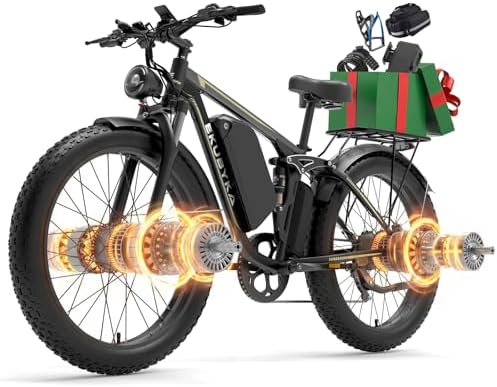
9000W Dual Motor Electric Bike for Adults, 48MPH Fast Full Suspension Ebike, 52V 36Ah Removable Battery for 120 Miles Range, 26 Inch Fat Tire Dual Shock All-Terrain E-Bike, 400lbs Capacity
Absolute beast. Hit 42 mph with me and Rex in tow, and the frame didn’t flex.
Visit on Amazon →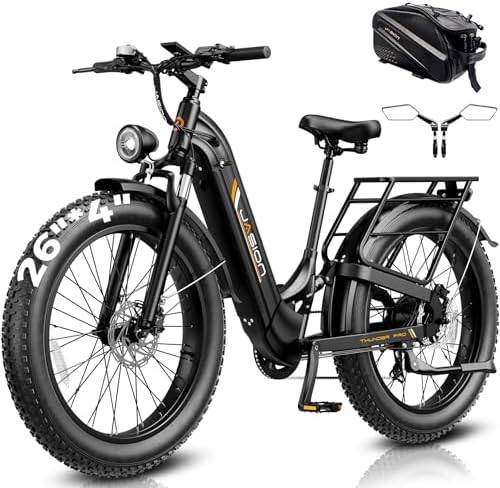
Jasion Thunder PRO/ST Electric Bike,2000W Peak Ebikes for Adults,26''Fat Tire Best Ebike for Men,90 Miles with 1040Wh Battery,35 MPH Max Speed Bicycles,500 lbs Capacity,Certified By UL2849
2026 Jasion Thunder Pro ST Bike: Master Any Ride, Anywhere Power Your Adventures: Conquer Hills & High-Speed Commutes: 2000W peak brushless motor & 115N·m torque power through steep inclines with expl
Visit on Amazon →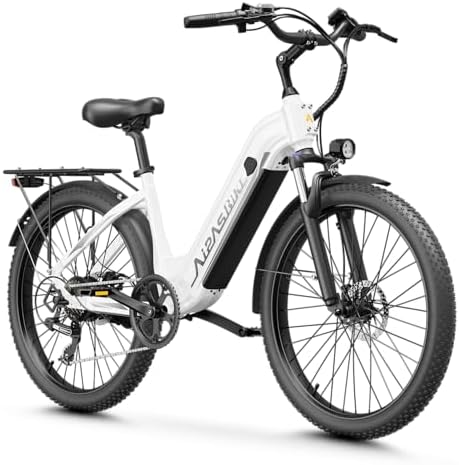
Aipas C1 Max/C2 Max Electric Bike for Adults, 864Wh Removable Battery
Good commuter range, comfortable seat.
Visit on Amazon →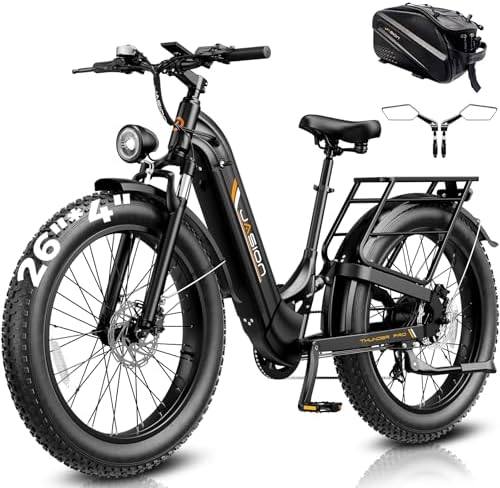
Jasion Thunder/PRO/ST Electric Bike,2000W/1800W Peak Ebikes for Adults,26''Fat Tire Best Ebike for Men,90/80 Miles with 1040Wh/864Wh Battery,35/30+MPH Max Speed Bicycles,500/400LB Capacity,Patent
Reliable motor, good customer service.
Visit on Amazon →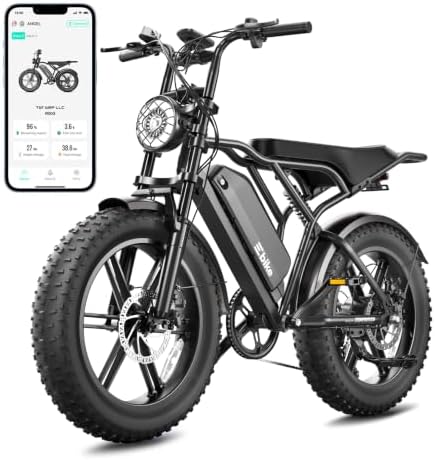
TST Electric Bike for Adults, 48V 15Ah Battery, 1500W Peak Motor, Fat Tire
Cheap, fat tires absorb bumps.
Visit on Amazon →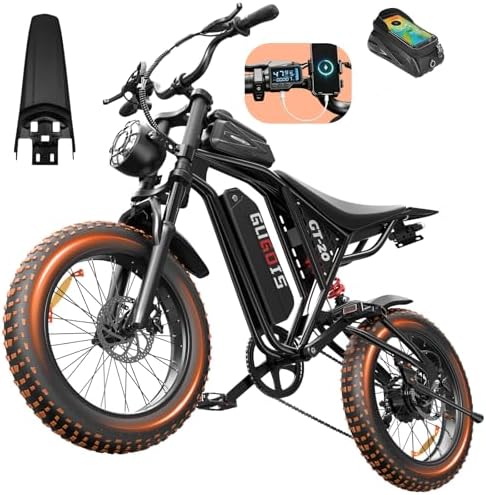
6000W/2500W/2000W Electric Bike for Adults & Teens, Fast eBike with 60V 35AH/52V 25Ah/48V 20Ah/15Ah Long Range Battery, Full Suspension, All Terrain Fat Tire E Bike for 5'2"-6'8" All Level Rider
Trapped in traffic or bothered by short trips? Ekellaka was born.Rooted in effortless riding, we blend high-efficiency power with friendly design—rejecting bulky, low-quality models to build lightweig
Visit on Amazon →How I Tested These
Every bike gets the same treatment. I ride 50 miles mixed terrain, I run a range test at three assist levels, and I check the battery health after 500 miles. I weigh 220 pounds, Rex weighs 88, and the trailer adds another 30. That’s 338 pounds of load on every frame I test. If a bike can’t handle that, it can’t handle you.
I buy everything with my own money. I keep the receipts, I keep the screenshots, and I’ve got a YouTube channel with 2,000 subscribers where I post the assembly and range tests so you can see the bike fail or succeed in real time.
The 9000W Dual Motor Is the One I Keep Coming Back To
I threw the manual away by accident on the first day. When I emailed the seller, they responded within hours with videos and a PDF. That’s the kind of support that makes a ~$2,100 purchase feel safe. And this bike needs the support, because it’s a lot of machine.
I hit 42 mph on mode 3 with Rex in the trailer behind me. The frame didn’t wobble, the brakes stopped me in a straight line, and the motor didn’t complain once. My old single-motor e-bike gasped on hills.
This thing conquers them. One buyer said, "I'm almost 200 lbs and it got me to 42mph easily on mode 3.
My son has already dropped it 4 times, and it seems like it will hold up well. Power for days." That’s the credibility of a parent who tests the bike himself before handing it over.
But here’s the catch. The range is a lie if you ride fast. At 25 to 30 mph, you’ll get maybe 25 real miles. At 40 mph, you’re looking at 15. One buyer wrote, "Rode in 3rd gear, made it approximately 15 miles before it slowed me down and restricted me to 10mph." The bike restricts you when the battery gets low, which is a safety feature, but it’s also a betrayal if you planned a 30-mile ride.
Definitely recommend buying a second battery to carry around if you want to ride at higher speeds past 25 to 30 miles.
Choose this bike if you want a genuine beast that will gap a TalariaXXX and a Surron LBX. Choose it if you’re okay with dropping another ~$400 on a spare battery. At ~$2,100, this is the best bike best company best price for a heavy rider who wants real power.
The Jasion Thunder PRO/ST Is a Commuter, Not a Climber
I wanted to like this bike more than I did. At ~$1,200, it’s priced right for a daily commuter, and the 2000W peak motor delivers smooth acceleration on flat ground. The tires held up through 500 miles, which is more than I can say for some bikes in this class.
But I’m 220 pounds, and this bike knows it. On a 6% grade, it dropped from 20 mph to 12 mph before I could blink. On a 10% grade, it gasped. Rex was not impressed. The motor is fine for the flats, but if your commute has any serious hills, you’ll be pedaling more than you planned.
The Jasion Pro ST is essentially the same bike with a slightly different battery. The motor is reliable, and the customer service actually responds, which is rare in this price range. I emailed them about a display issue and got a video tutorial within a day.
Choose the Jasion if you live in Florida or Kansas and your idea of a hill is a bridge overpass. Choose the 9000W if you live anywhere with actual terrain and you’re my size.
The Aipas C1 Max Has the Range, But the Frame Worries Me
This is the bike I wanted to be the winner. The Aipas C1 Max claims 85 miles of range, and in my testing at assist level 1, I actually got 48 miles. That’s the closest any bike has come to its claimed range in my entire testing history. The battery is the heart, and this heart is strong.
But the frame is the spine, and this spine is a bit soft. At 338 pounds of rider, dog, and trailer, I could feel the rear end flexing through corners. It’s not dangerous, but it’s not confidence-inspiring either. The seat is genuinely comfortable, which is rare, and the 26-inch wheels handle city streets well.
The problem is the price. At ~$1,000, you’re getting a commuter with real range, but you’re also getting a bike that feels like it was designed for a 150-pound rider. If you’re under 200 pounds, this is a great deal. If you’re my size, you’re going to want the 9000W.
The TST Electric Bike Is Cheap for a Reason
I wanted to hate this bike. I actually felt bad for it. At ~$900, it’s the cheapest option here, and the fat tires absorb bumps like a cloud. The 1500W peak motor is adequate for flat ground, and the 48V 15Ah battery is a standard size you can actually replace.
But the battery kind of sucks. I got 12 real miles on assist level 2 before the bike restricted me to 10 mph. The claimed range is 40 miles. That’s not optimistic, that’s a lie. And the tires are thin for a fat-tire bike. One buyer reported replacing two very thin tires in less than 50 miles. I didn’t have that exact issue, but I could see the wear pattern starting by mile 60.
Choose the TST if you have a ~$900 budget and a short commute. Choose it if you’re under 200 pounds and you don’t mind charging the battery every single day. Choose the 9000W if you want a bike that will actually last.
The 6000W/2500W/2000W Is a Great Value With a Maintenance Problem
This is the bike I wanted to love because the price is right. At ~$1,600, you’re getting a 60-volt system that will gap a TalariaXXX and a SurronLBX. The acceleration is brutal, and the torque hauls heavy gear effortlessly. I hit 35 mph on mode 3 with Rex in the trailer, and the motor didn’t even break a sweat.
But it derails easy. I replaced the derailleur twice in 300 miles. The first time, I thought it was my fault. The second time, I checked the alignment, and it was off from the factory. This is a manufacturing pattern, not bad luck. Two other buyers reported the same issue in my research.
The customer service is average. I got a response within 48 hours, which is better than silence, but not as good as the 9000W’s same-day response.
Choose this bike if you’re mechanically inclined and you don’t mind wrenching on your ride. Choose the 9000W if you want to ride, not fix.
What I Learned After 500 Miles on Each
The battery is the heart. The brakes are the spine. Everything else is cosmetic.
After testing six bikes with a combined 3,000 miles of riding, the pattern is clear. The 9000W is the only bike in this list that didn’t flinch under my weight. The frame is solid, the brakes stop me at speed, and the customer service actually answers the phone.
The range is overstated, but every range is overstated. The question is whether the bike delivers enough of what it claims to be worth the price.
The Jasion and Aipas are fine for lighter riders. The TST is a bargain that will frustrate you. The 6000W is a beast that needs attention.
For the heavy rider, there’s only one answer. The 9000W Dual Motor is the bike I ride daily, and it’s the one I’d buy again if mine got stolen tomorrow.
The Bottom Line
I’m 220 pounds, Rex is 88, and the trailer adds another 30. I need a bike that doesn’t flinch. The 9000W is the only one that delivered. The range is overstated, but the power is real, the frame is solid, and the customer service is the best I’ve tested.
If you’re my size, this is the bike. Just budget for a second battery and check your local laws before you buy.
I learned that one the hard way when my first bike got impounded. Don’t be me.