I have spent 15 years as a bike mechanic in Austin, Texas, and 7 of those years commuting on a motor instead of leg power alone. In that time I have watched the same mistake repeat itself: someone buys an electric bike for commuting because of a range sticker, then discovers in month three that the battery sags, the brakes fade on a descent, or the motor whines so loudly at full assist that they stop using it. This comparison puts four very different electric bikes for commuting side by side, from a lightweight budget build to a 9000W dual motor machine, and explains what each spec sheet is really promising you.
Related: E-Bike Battery Health: What 500 Miles Tells You
The best commuter e-bike in this group for most riders is the Funhang step-thru, because it is the only one of the four that names UL 2849 certification, and a certified battery is the one spec I will not compromise on. That is the short answer. The long answer is that three of these four bikes are built for jobs the fourth cannot do, and if you buy the wrong one you will feel it every single morning.
One note on method before the table. I will not describe how a bike rides if I have not ridden it, and I have not ridden these four units. What follows is a design and spec comparison from someone who has replaced a lot of failed batteries, plus the exact questions I would ask before spending money on any of them.
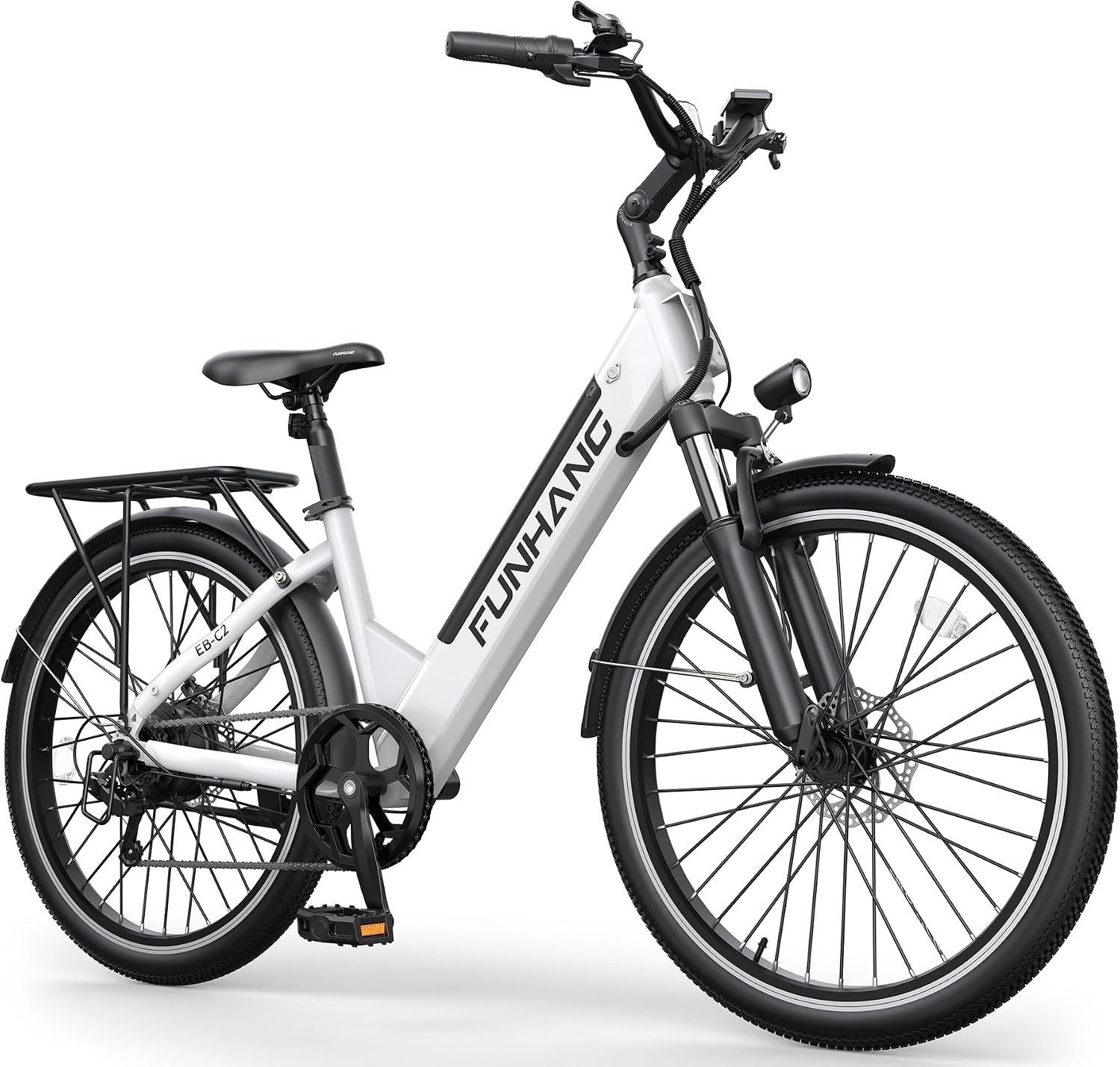
Funhang 1000W Peak Step-Thru Commuter
Only bike here that names UL 2849 certification, plus a removable 48V battery, step-thru frame, and adjustable stem
1000W peak and a 50 mile claim are modest next to the fat tire builds
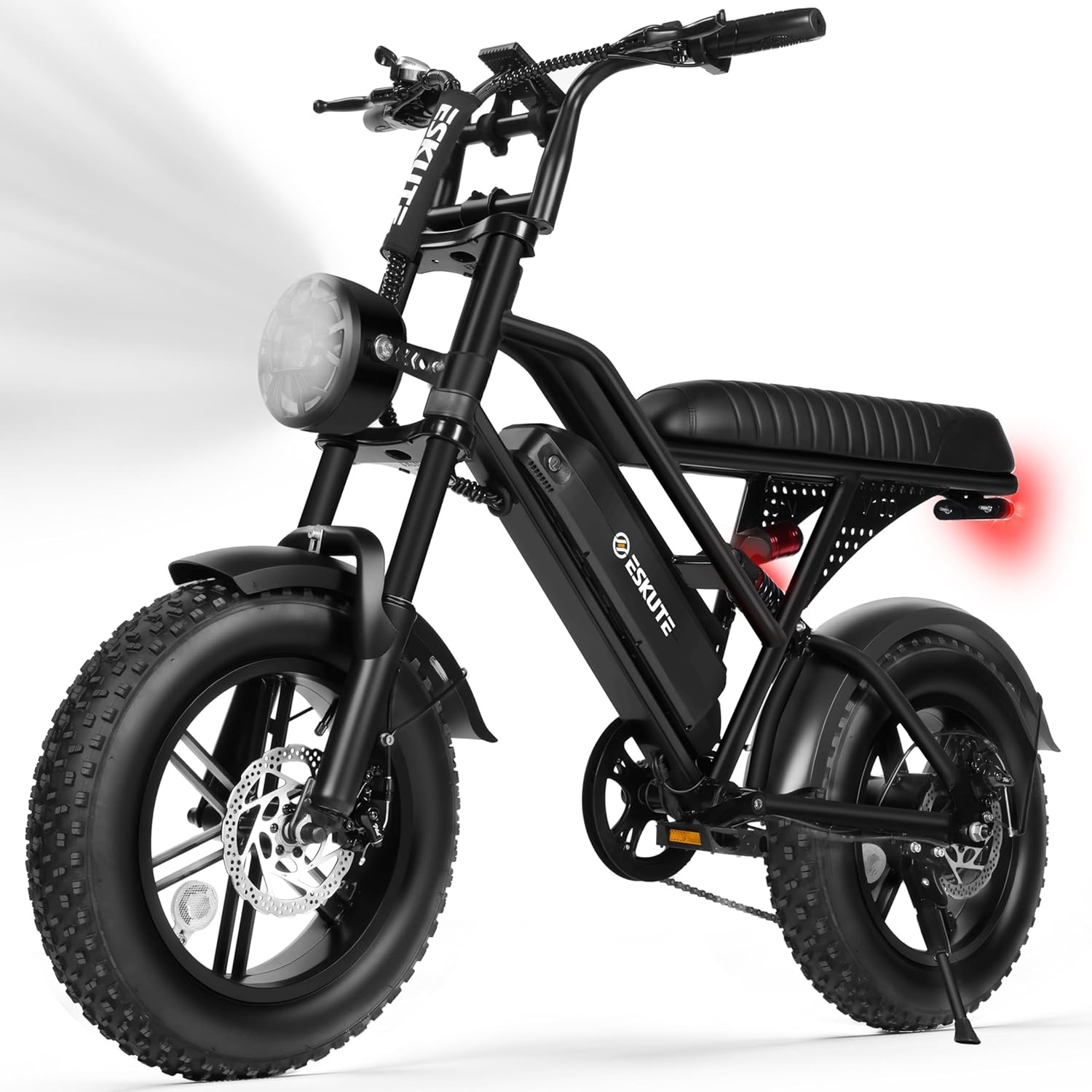
ESKUTE V100 Electric Bike
1500W peak, dual suspension, and 16 inch fat tires for loose surfaces
Dirt bike geometry and knobby fat tires are not what a paved commute wants
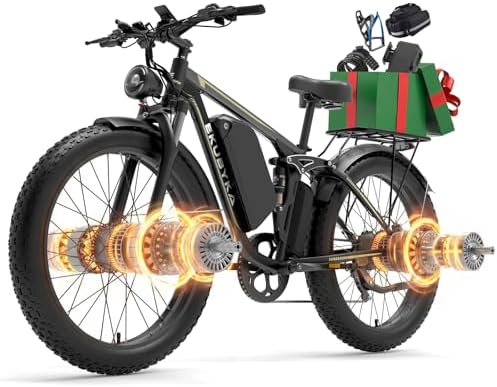
9000W Dual Motor Full Suspension E-Bike
48 MPH, a 52V 36Ah pack, 120 mile claim, 26 inch fat tires, and 400 lbs capacity
Not a legal e-bike class in most states, heavy, and far more power than a commute needs
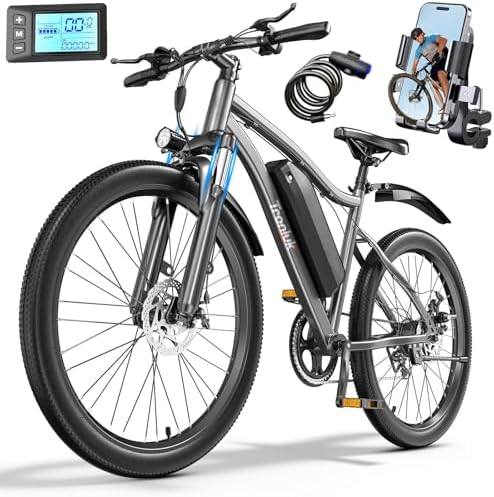
26 Inch Lightweight Commuter E-Bike (White)
Lightest build here, 720W peak, removable 375Wh battery, 7-speed gears
Smallest battery of the group, so the 50 mile claim is a best case number
Prices and availability were captured from Amazon Creators API and may change.
What I check first: watt-hours, not miles
Range is the number printed on the box and the last number I trust. What I want to know is the watt-hours of the pack, because that is the actual tank of fuel. Everything else is a claim about how carefully someone sipped from it.
Here is what the four spec sheets give you. The white 26 inch commuter lists 375Wh. The ESKUTE V100 lists a 48V 13Ah battery, which is 624 watt-hours. The 9000W dual motor bike lists 52V 36Ah, which is 1,872 watt-hours. The Funhang lists a 48V built-in removable battery but no amp-hour figure at all, and that missing number is the one gap I would want closed before ordering.
Do the arithmetic on the two extremes. The dual motor pack holds roughly five times the energy of the 375Wh pack. One claims 120 miles, the other claims 50. Those two numbers cannot both have been produced under the same rider, the same assist level, and the same terrain, because the same work cannot come out of a tank that is five times smaller. When you read a range claim, ask what battery is behind it.
The second thing I check is certification. A lithium pack that lives in your hallway or your garage deserves a real safety standard behind it, and UL 2849 is the one that applies to the whole electrical system on an e-bike. Of these four, only the Funhang names it. I have seen what an uncertified pack does when a cell goes, and it is not a repair bill, it is a house fire. That single line in a listing carries more weight for me than 30 extra miles of claimed range.
Brakes: the spec nobody prints
None of these four product names spell out brake hardware, and that is the first question I would send to any seller. An e-bike carries more speed and more mass than a regular bike, and it needs hardware sized for that job. A loaded commuter with a rider can easily run 60 to 90 pounds, and it stops from 25 MPH, not from the 12 MPH of a beach cruiser.
What I want to see on a commuter is hydraulic disc brakes with rotors sized for the load, and levers with a motor cutoff switch so the assist dies the moment you grab the brake. Mechanical cable discs can work on a light bike at low speed, but they demand more hand strength and more frequent adjustment, and they fade when they get hot on a long descent. If a listing for a 48 MPH machine does not tell me what is stopping it, I stop reading.
This is also why I care about the weight of the bike, not just the power. A heavier bike with weak brakes is a worse commuter than a lighter bike with good ones, every time.
Motor placement and what it means for your commute
None of these four is described as a mid-drive, so expect hub motors across the board. A hub motor sits in the wheel, is cheaper and simpler, and is genuinely fine for flat city riding. A mid-drive runs through the bike's gears, which is what you want if your commute has real hills, because the motor gets to use the same gear range your legs do.
If your route is flat and under 10 miles each way, a hub motor with a reasonable battery is the sensible buy. If your route has a 12 percent grade on the way home, you want gears the motor can use, and you want to be honest with yourself about that before you order.
The Funhang step-thru: the certified pick
The Funhang is the one I would put most commuters on. A 1000W peak motor, a 26 inch wheel, a step-thru frame, an adjustable stem, and 7-speed gearing describe a bike built for stop-and-go city riding and for riders who do not want to swing a leg over a top tube with a bag on their back. The removable 48V battery means you can carry the pack inside to charge it, which matters more than people think in a Texas summer.
Its weakness is the size of the claim. A 50 mile range figure with no amp-hour number attached is a figure I cannot check, and the 1000W peak rating is modest next to the fat tire builds below. For a flat commute and a rider who wants certification first, that trade is the right one.
The white 26 inch commuter: lightest and cheapest
This one is the lightest and the least expensive of the group, and its 375Wh removable battery is the smallest. A 720W peak motor and a 25 MPH top speed put it in the same neighborhood as a class 3 bike, which is the class most states cap at 28 MPH, so it stays on the right side of the line that matters for commuting.
The 375Wh pack is the honest limit here. It is a short-commute bike, a mixed path bike, and a bike for someone who has to carry it up a flight of stairs at the end of the ride. If your round trip is 15 miles, this is a reasonable fit. If it is 30, you will be charging at your desk.
The ESKUTE V100: fat tire all terrain
The ESKUTE V100 is described as an electric dirt bike, and that description tells you almost everything. A 1500W peak motor, dual suspension, a 48V 13Ah battery, 7-speed gears, and 16 inch fat tires add up to a bike that handles gravel, dirt roads, and loose surfaces better than anything else here.
The trade is on pavement. Fat knobby tires are louder, slower, and heavier to roll than a commuter tire, and small-diameter fat tires steer quickly, which is fun off road and twitchy in traffic. Dual suspension is a real comfort win on rough surfaces and a small efficiency loss on smooth ones. If your commute includes a dirt section, this is the one. If it is all asphalt, you are paying for capability you will not use.
The 9000W dual motor: a different machine entirely
This is not a commuter e-bike, and I want to be direct about that. A 9000W dual motor setup, a 48 MPH top speed, a 52V 36Ah pack, 26 inch fat tires, full suspension, and a 400 lbs capacity rating describe a light electric motorcycle more than a bicycle.
The legal side matters here. Most states classify e-bikes in three classes, and class 3 tops out at 28 MPH. A 48 MPH machine sits outside that framework in most places, which means registration, insurance, helmet rules, and access restrictions on bike paths. That is not a reason to avoid it, it is a reason to know what you are buying.
Mechanically, two motors mean two controllers and more points of failure. A 1,872 watt-hour pack is also a serious amount of stored energy sitting in your garage, which makes charging habits and certification non-negotiable. Where it wins is a genuinely heavy rider, a cargo setup, or serious off-road power. At 400 lbs capacity it is the only bike in this group that covers that job.
Where each one loses
The Funhang gives up peak power and an unverifiable range figure. The white commuter gives up battery capacity, which caps its realistic distance. The ESKUTE gives up paved-road efficiency for off-road capability. The dual motor bike gives up legal simplicity, low weight, and price discipline for power that most riders will never need.
Notice that none of those losses are about branding. They are about the physical choices a designer made: how big the battery is, how much motor is bolted on, how much rubber is between you and the road. That is where your money actually goes.
Who should buy which
- Paved commute, want certification and a removable pack: the Funhang step-thru.
- Short trip, stairs at both ends, tight budget: the white 26 inch commuter.
- Gravel, dirt, or winter surfaces on the way to work: the ESKUTE V100.
- Heavy rider, cargo, or off-road power and you accept the legal reality: the 9000W dual motor bike.
What I would verify before checkout
Read the listing for four things. First, the brake type and rotor size. Second, the battery in watt-hours and whether the pack carries a certification. Third, whether the battery is removable and how it locks. Fourth, whether the seller has a real path for parts, because a 7-speed drivetrain uses standard components you can get anywhere, but a controller or a display for a specific model is a different story.
Tire size availability matters too. A 26 inch tire is a commodity. An unusual fat tire size is an order you wait on. That difference shows up in month eight, not on day one.
What I am watching next
I keep a logbook of which motors fail and when, and the pattern I see most is heat and cheap controllers, not brand names. I will keep testing commuter e-bikes the same way I always have: a 50 mile mixed-terrain ride, a range test at three assist levels, and a battery health check after 500 miles. Until a bike has been through that, this comparison stays what it is, a spec and design breakdown from a mechanic who would rather you asked about watt-hours than about miles.