I have been a bike mechanic for 15 years, an e-bike commuter for seven, and the guy friends call when the thing they bought online stops charging in month four. I keep a logbook of motor failures and battery health checks, and it has taught me one lesson that applies to every affordable commuter e-bikes comparison: the listing sells the bike, and the battery, brakes, and motor decide whether you keep it. These four show up in the same Amazon results with near-identical thumbnails. Two are genuine commuters, one belongs to a different category of machine, and one carries a range claim I want to unpack in public.
Related: E-Bike Battery Health After 500 Miles
The best pick here for most riders is the 26-inch commuter with the 7-speed drivetrain and the 720W peak motor, because gearing plus a removable 375Wh pack is a combination a shop can actually service. The Jasion is the value alternative if you want the bigger 528Wh battery and can live with the extra weight. The QuietEase is not a commuter at all, and I will explain why it is in the table anyway.
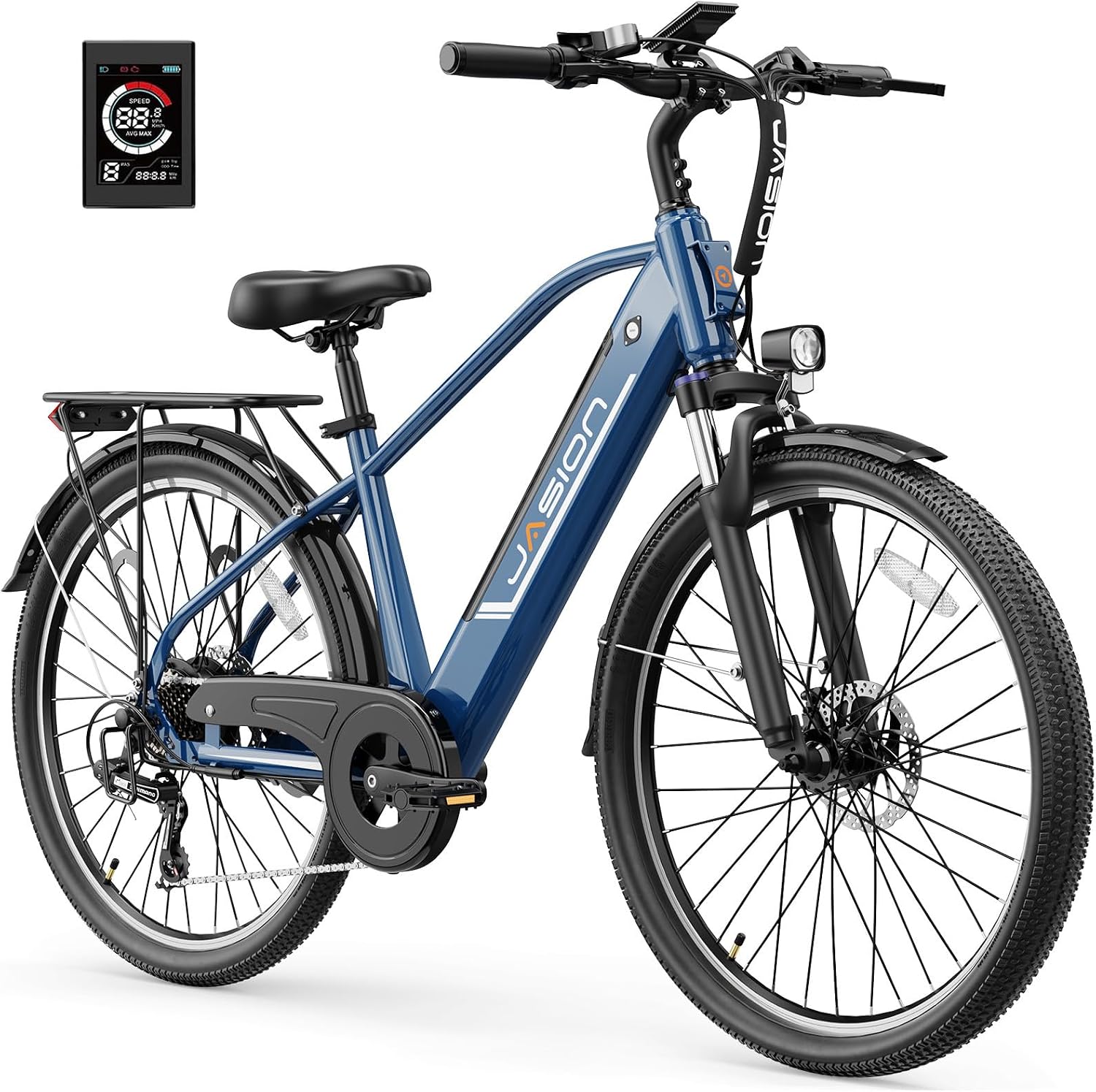
Jasion Roamer/ST eBike
Biggest pack in the group at 528Wh, 26-inch wheels, and an established budget brand with parts you can source
The listing leads with battery size and says almost nothing about brakes or gearing, and extra watt-hours mean extra weight when the motor cuts out
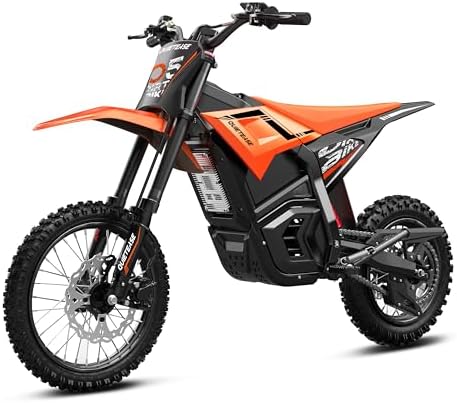
QuietEase Electric Dirt Bike
The only machine here designed for dirt rather than pavement, and quiet operation is a real advantage on trails
It is not a commuter. No rack, no commuting geometry, and where you can legally ride it depends on your state
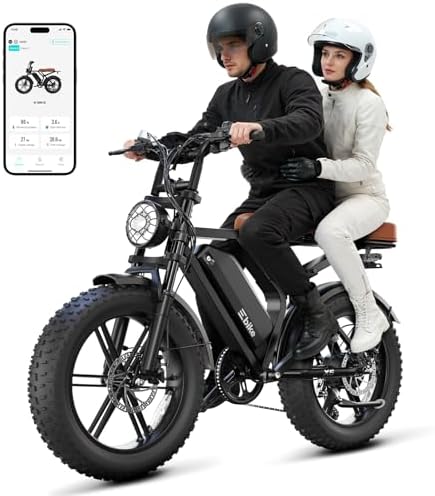
Retro Ebike, 48V 15Ah Removable Battery, Suspension
The 48V 15Ah pack works out to roughly 720Wh of nominal capacity, the largest energy number of the four, and the suspension plus removable battery is a sensible combination
Retro frames are typically heavy, and the upright, swept-back position is not built for a fast 12-mile commute
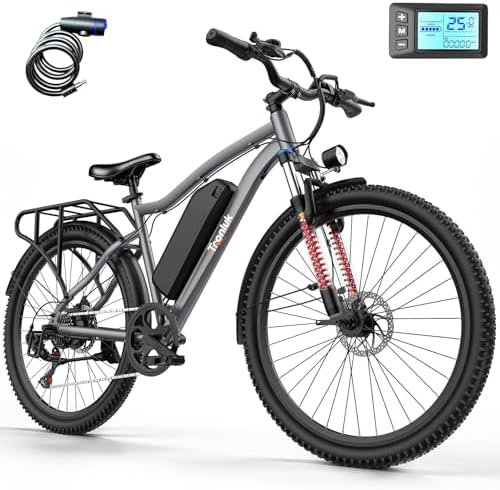
26" Commuter Ebike, 7-Speed, 720W Peak Motor, 375Wh Battery
Advertised as lightweight, with 7-speed gearing, a removable 375Wh pack, and a 25 mph top speed. That reads like an actual commuter
Smallest battery in the group, and the 50-mile range figure deserves hard scrutiny
Prices and availability were captured from Amazon Creators API and may change.
How I compared these four
My rule is no review without 100 miles of riding, and I have not put 100 miles on these four. I am not going to pretend otherwise. What I can do honestly is read the architecture: battery chemistry and capacity, motor type, drivetrain, brake spec, and whether the parts are serviceable by a normal shop. That is a spec-level comparison, not a long-term test, and you should weigh it accordingly.
The second thing I refuse to do is quote range as if it were a fixed number. Range is a function of your weight, your terrain, and your assist level. A 160-pound rider on flat ground at assist level one will see roughly double the distance of a 240-pound rider climbing at assist level four. Any comparison that does not say which of those it tested is telling you about marketing, not about the bike.
Battery capacity: 375Wh, 528Wh, and roughly 720Wh
The three numbers that matter here are 375Wh on the commuter, 528Wh on the Jasion, and the retro bike's 48V 15Ah pack, which multiplies out to about 720Wh. Bigger sounds better, and for pure distance per charge, bigger usually is better.
But watt-hours are only half the story. The other half is whether the pack is removable and whether it carries a recognized safety certification. A removable pack means you can charge it indoors at your desk instead of running an extension cord to a garage, and it means the bike is not scrap when the cells degrade. Certification is not optional. If a listing cannot tell you which standard the battery was tested to, walk away, because a cheap uncertified pack is a fire risk and a money pit in that order.
Weight is the trade-off nobody mentions. A 720Wh pack is heavy, and you feel every gram of it when you pedal with the motor off or carry the bike up a flight of stairs. The 375Wh commuter will be the easiest of the four to live with in an apartment, and the Jasion sits in the middle.
The QuietEase is not a commuter
I am including the QuietEase Electric Dirt Bike because it appears in the same searches, and someone reading this will consider it. It is a dirt bike. That means knobby tires, long-travel suspension, a riding position meant for standing, and no provision for a rack, fenders, or lights.
If your commute is pavement, this is the wrong tool, and it will be slower and less comfortable than the other three. If you want a quiet machine for trails and fire roads, it is the only one in this table built for that job. Check your state law before you buy, because where a machine like this can legally be ridden varies enormously, and the answer is often "nowhere except private land."
Motors and drivetrains
The commuter advertises a 720W peak motor. Peak is the number that sounds impressive, and it is not the number you should care about. Peak is what the controller allows for a few seconds on a climb. What matters is the continuous rating, because continuous power is what the motor can actually sustain without cooking itself on a long hill.
The commuter also has 7-speed gearing, and that is a bigger deal than the motor number. Gears let you help the motor on climbs and keep your cadence sane at speed. A single-speed e-bike with a big motor feels fine until the battery drops below 20%, at which point you are pushing a 60-pound machine up a hill with one gear ratio.
Hub motors are the norm at this price. That is fine. A hub motor is cheap, simple, and perfectly adequate on flat and rolling terrain. It is not what I would choose for a daily 500-foot climb, but it is the right engineering trade at this budget.
Brakes: the spec nobody lists
None of these four listings makes brake type the headline, and that is the single most frustrating thing about shopping for a budget e-bike. A 25 mph machine with a rider aboard is roughly 250 pounds of moving mass. Rim brakes on a heavy e-bike in the rain are not adequate, and I have seen the results in my shop.
Before you buy any of these, find the brake spec. You want hydraulic disc brakes, or at minimum mechanical disc brakes with decent rotors. If the listing will not tell you, ask the seller. If the seller will not tell you, that is your answer. This is the one place where I would happily pay more and lose battery capacity to get it.
What the 50-mile range claim really means
The commuter claims 50 miles from a 375Wh pack. Divide it out and you get 7.5 watt-hours per mile, which is a genuinely efficient figure. It is also a figure that assumes a light rider, flat ground, low assist, and probably a tailwind.
For a real commute, plan on something closer to half of the advertised number if you are running mid-level assist with stops and hills. That still covers a 10-mile round trip comfortably with margin. The Jasion's 528Wh pack buys you more buffer, and the retro bike's larger pack buys you more still, at the cost of weight.
The honest framing: range claims are a starting point for your own test, not a promise. Ride your actual commute at your actual assist level for a week before you trust any number, including mine.
Who each bike is for
If you want the lightest, most serviceable commuter and you ride 10 to 15 miles a day, take the 26-inch 7-speed model. The gearing and the removable pack are what make it a real bike rather than an appliance.
If you want maximum distance per charge and do not mind the weight, the Jasion's 528Wh pack is the sensible middle option, and the brand has a track record in the budget segment.
If you want style and a bigger energy reserve and your commute is short and flat, the retro bike's 48V 15Ah pack and suspension are appealing, provided you accept the weight penalty.
If you want dirt and not pavement, the QuietEase is the only honest answer here, with the legal caveat attached.
What to check before you click
Confirm the battery certification. Confirm the brake type. Confirm the pack is removable. Confirm the motor's continuous rating, not just its peak. Confirm the bike's weight, because that number will define your daily experience more than any other. And confirm that replacement parts, especially batteries and brake pads, are actually available, because a bike with no parts channel is disposable by design.
What I am testing next
I have a 500-mile battery health check running on a commuter in my shop right now, and the results will tell you which of these budget packs hold their capacity and which fade. That is the number the listings never publish, and it is the number that decides whether a $600 e-bike was a bargain or a rental.