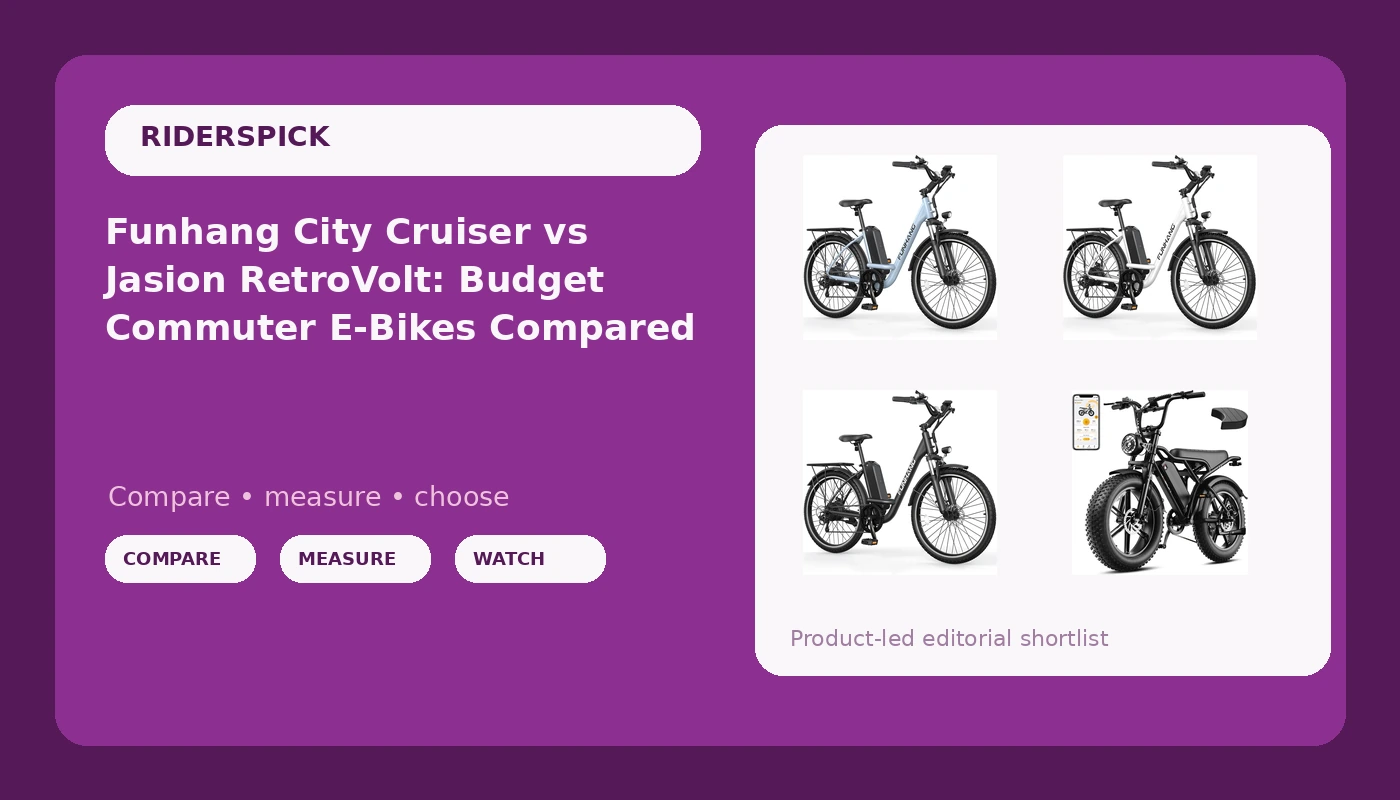
I have rebuilt more e-bike battery packs than I can count, and the conversation almost always starts the same way: a reader finds a cheap e-bike online, sends me the link, and asks whether it is real. Sometimes it is. Sometimes it is a heavy brick with a battery that has no business being charged overnight in a house where people sleep.
This comparison covers four listings that sit on exactly that fault line: three Funhang City Cruiser listings and one Jasion RetroVolt. All four are budget commuter e-bikes aimed at the same rider, the person who wants to get to work and back without spending four figures on a bike they will lock to a rack in the rain. I have spent 15 years turning wrenches and seven of those commuting on motors, and the questions I ask about a bike in this price range have not changed. Is the battery certified? Will the brakes stop it? Does the range claim survive contact with a headwind?
Related: E-Bike Battery Health: What 500 Miles Tells You
The short answer: for a flat pavement commute, one of the Funhang City Cruiser listings is the safer buy because the electrical system is stated as UL 2849 certified, and the Jasion RetroVolt is worth considering only if you actually need fat tires and a larger peak motor for loose surfaces. Everything below is the reasoning, plus the questions both spec sheets still leave open.
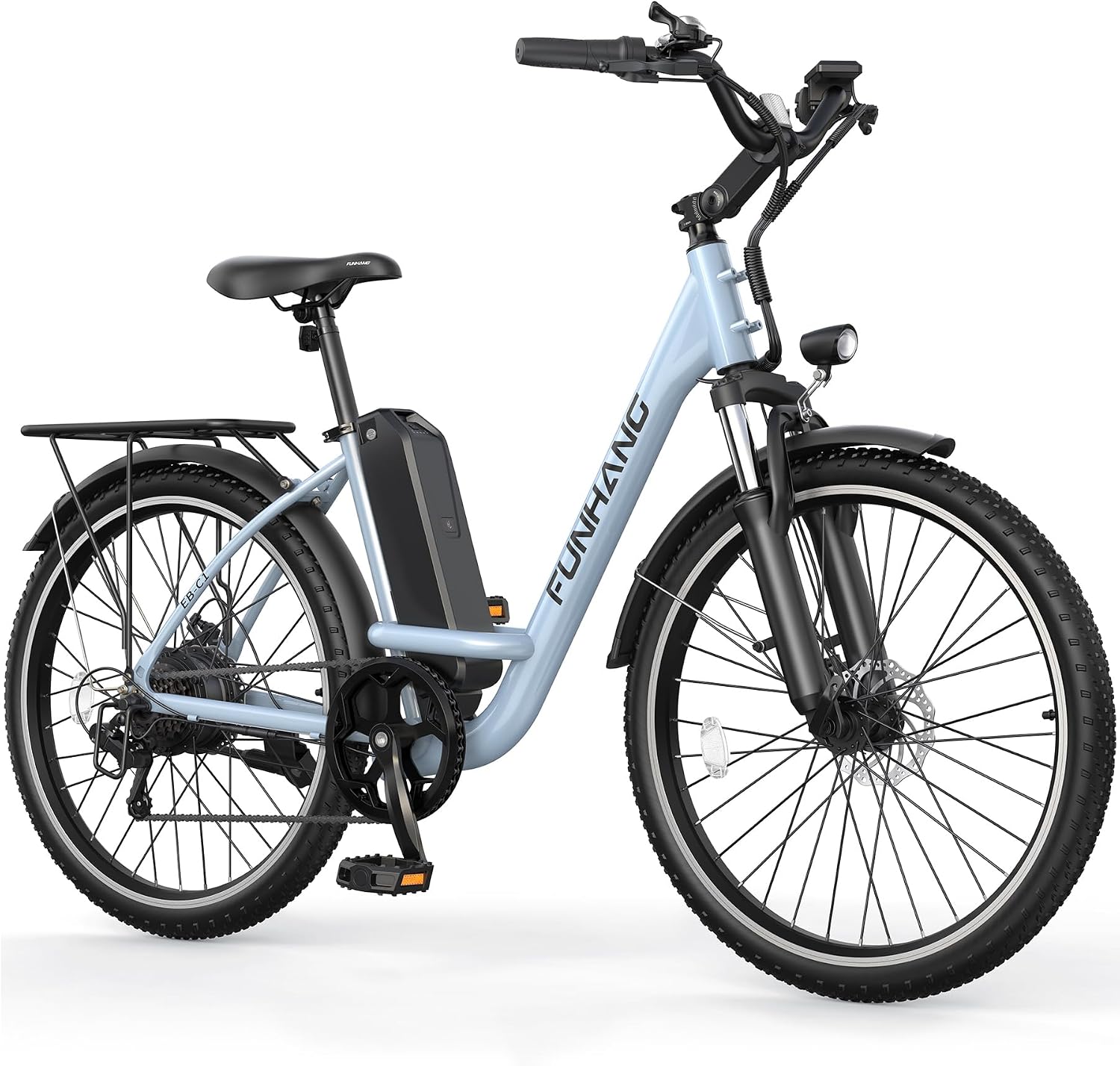
Funhang City Cruiser, first listing
UL 2849 certification stated, 48V battery, adjustable stem and 7-speed gearing, lowest listed of the three Funhang listings
1000W peak hub motor and a 20 mph limit will feel thin on long climbs, and brake type is not stated
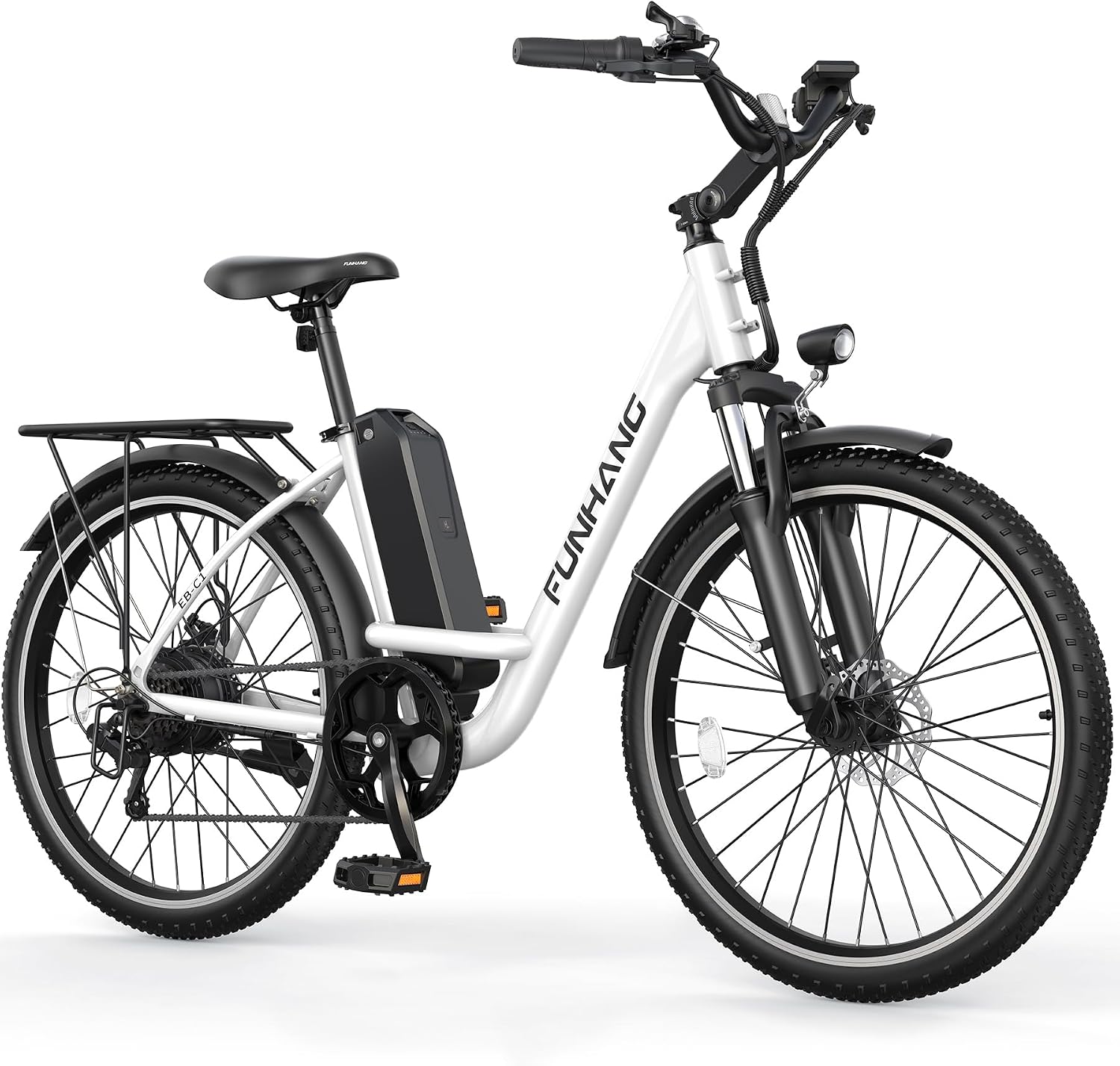
Funhang City Cruiser, second listing
Same stated platform and same certification, so the buyer's checklist is identical
Listed above the first listing with nothing in the spec sheet explaining the gap
Funhang City Cruiser, third listing
Same platform, UL 2849 stated, still the same bike the other two listings describe
Highest listed of the three, with no stated mechanical advantage over its siblings
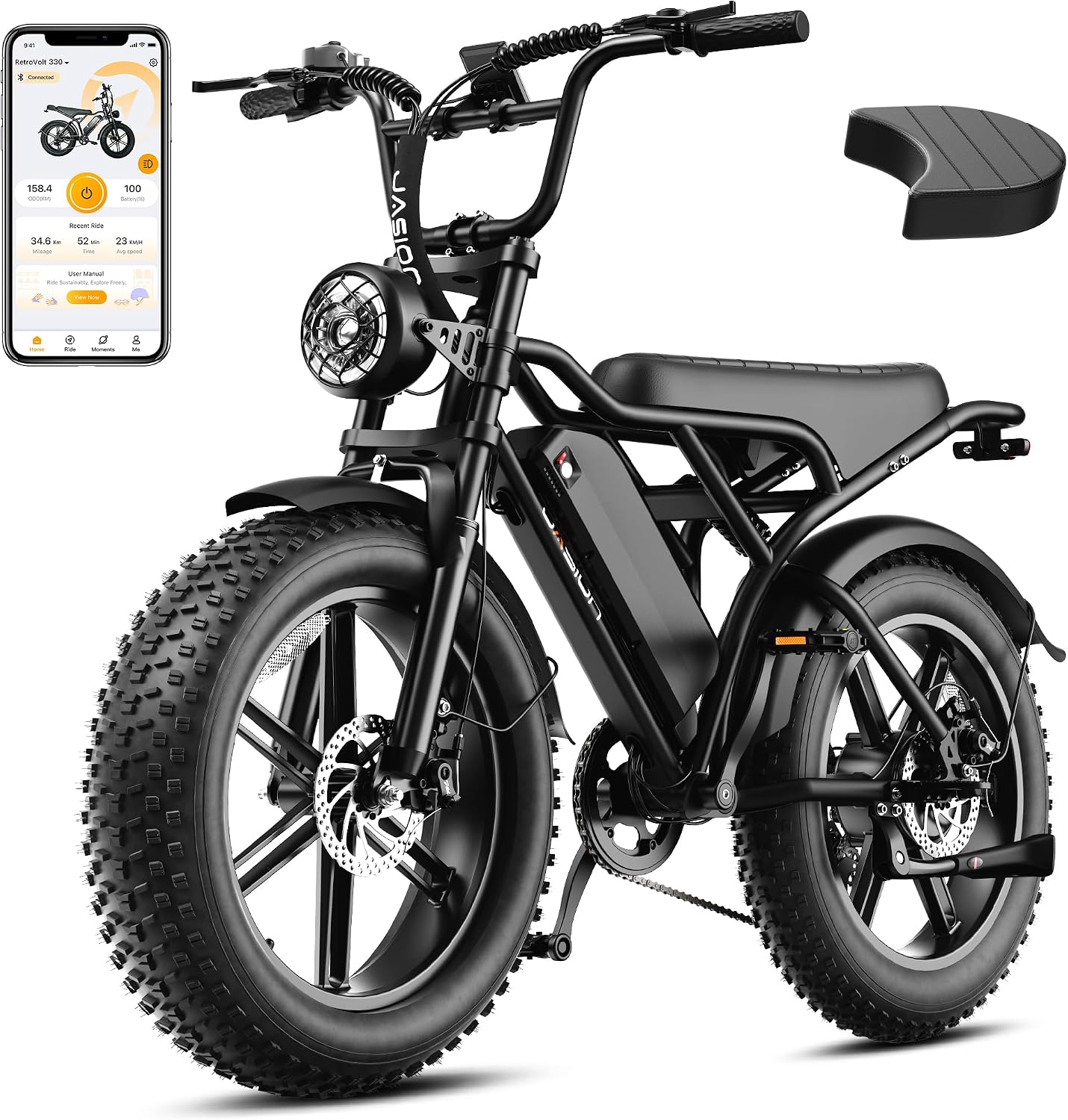
Jasion RetroVolt
2000W peak motor and fat tires, plus the longest range claim of the four, the only one built for loose surfaces
Certification is not stated in the listing name, and fat tires plus a bigger motor mean more weight to stop and more battery to feed
Prices and availability were captured from Amazon Creators API and may change.
Why there are three Funhang listings in this comparison
Three of the four products here are the same bike. Not similar bikes, the same model: a 26-inch city cruiser with a 1000W peak motor, a 48V battery, an adjustable stem, 7-speed gearing, a 20 mph limit, a 50-mile range claim, and UL 2849 certification stated in the listing name.
The three listings differ only in the listing itself, and that matters more than it sounds. Sellers on large marketplaces split one model across several listings to test price points, to separate color options, or to clear returned inventory, and the model name never tells you which is which.
So treat the three Funhang listings as one product with three checkouts. The bike that arrives is the same bike. The things you can actually verify are the live listing price and the seller behind it. If one listing sits clearly below the other two, there is no mechanical reason to pay the difference. If a listing bundles a rack, fenders, or a spare charger, that is worth real money, but you have to read the listing to find it.
What the spec sheets actually say
Strip the marketing and the comparison is short:
- Funhang City Cruiser: 26-inch wheels, 1000W peak motor, 20 mph, 50-mile range claim, 48V battery, adjustable stem, 7-speed drivetrain, UL 2849 certified.
- Jasion RetroVolt: fat tires, 2000W peak motor, 70-mile range claim.
That is the whole picture. Notice what is missing from both: brake type, battery capacity in watt-hours, motor type, bike weight, and charge time. Those five details decide whether a budget e-bike is a commuter or a paperweight, and not one of them appears in the product names.
Peak watts versus real motor behavior
1000W peak and 2000W peak are peak figures, not continuous output. A peak rating is the short burst a controller allows from a dead stop or on a climb. The number that actually carries you down a road for an hour is lower, often by half. So do not read 2000W peak as twice the usable power of 1000W peak. Read it as a bigger burst.
At this end of the market, both bikes are almost certainly hub motors, which means the motor lives in the wheel and does not use your gears. Hub motors are simpler, cheaper, and fine for flat cities. On a long climb the motor works alone and heats up. Mid-drive motors use the drivetrain and climb far better, but you will not find one at the bottom of the price range. If your commute has one serious hill, neither of these is the right answer, and I would rather tell you that now than have you discover it halfway up.
The Funhang listings also state a 20 mph limit. Whether that can be unlocked, and whether unlocking it changes the legal class of the bike where you live, is a question for the seller and your state law.
The battery is the part you cannot upgrade later
The battery is the heart of the bike. It is also the most expensive part to replace and the one that can hurt you. UL 2849 covers the whole electrical system of an e-bike, not just the cells inside the pack, and it is the first thing I check. All three Funhang listings state it. The Jasion listing does not, which is not proof the bike is uncertified, only proof the listing does not say. Ask the seller for the certification and the test report. If they cannot produce it, no discount compensates for that risk. I am not going to call any battery fireproof, because batteries are chemistry, not marketing.
Two more numbers to request: battery capacity in watt-hours and charge time. Volts alone tell you nothing. Watt-hours are the honest measure of how far the bike can go, and charge time tells you whether the pack can be topped up at your desk between meetings.
Brakes and the weight problem
Brakes are non-negotiable. An e-bike at 20 mph carries far more momentum than the road bike most people are used to, and the brakes that stop a light bicycle will not do the job on a loaded commuter with a rack and a laptop bag.
Neither listing name states the brake type, and that is the single question I would ask before buying. Mechanical disc brakes are the floor for this category. Hydraulic discs are better. Rim brakes on an e-bike are a bad joke, and if a listing is vague about brakes, assume the worst until the seller answers.
Tire width feeds into braking too. Fat tires have a bigger contact patch and more rotating mass. That grip helps on gravel and costs you on pavement, because you are accelerating and slowing more rubber every time you touch the levers. Fat tires are a surface choice, not an upgrade.
The 50-mile and 70-mile range claims
Range numbers are marketing. Every range figure on every listing is produced under conditions the listing does not describe: rider weight, terrain, wind, temperature, tire pressure, and assist level. The Funhang claims 50 miles. The Jasion claims 70. Neither number is a lie in the way a fake wattage is a lie, because both are reachable under the right conditions, which are almost certainly not your commute.
My method, when a bike comes through my stand: a 50-mile mixed-terrain ride, range runs at three assist levels on a loop I have ridden hundreds of times, then a battery health check at 500 miles. The pattern never changes. Full assist cuts a claim roughly in half. Low assist on flat ground with a light rider can beat it.
To predict your own range before you buy, take the claimed number and knock off about 40 percent for a commute with hills and stop lights. If the result still gets you to work and back, the bike is viable. If it does not, the claim was never for you.
Fat tire versus city tire
The Jasion's fat tires and the Funhang's 26-inch city tires are the clearest fork in this comparison, because they change who the bike is for.
Fat tires float on sand, snow, and loose gravel, and they soak up potholes and cracked pavement. They also weigh more, roll slower on asphalt, and cost more to replace. City tires roll faster, corner more predictably in the wet, and make sense if nearly all your riding is on pavement, which for most commuters it is.
If you ride a rail trail with a gravel section, or you want to keep commuting through a mild winter, fat tires earn their weight penalty. If your commute is a bike lane on a paved street, you are paying that penalty for capability you will never use.
Which rider should buy which
- Flat city commute, budget first, want the certification question closed: one of the three Funhang City Cruiser listings. Compare the three against each other at checkout and take the one that is cheapest or bundles the accessories you want.
- Gravel, packed dirt, or winter riding, and you accept the weight: the Jasion RetroVolt, after the seller confirms UL 2849 certification in writing.
- Long commute with real hills, or a heavier rider: neither. Save for a mid-drive bike with hydraulic brakes. That is the honest answer, and it is the one I give most often.
- First e-bike: the Funhang, because the 20 mph limit and the lighter city tires make it a friendlier thing to learn on.
What I would verify before checkout
- UL 2849 certification, in writing from the seller.
- Brake type. Mechanical disc at minimum, hydraulic preferred.
- Battery watt-hours, and the price of a replacement pack.
- Motor type and continuous wattage, not peak.
- The return window, and who pays shipping on a heavy box.
- Whether any shop in your city will service the brand. If none will touch it, every repair is yours.
That last item is the one people skip. You do not need a $4,000 e-bike. You need one with a good battery, good brakes, and a dealer that exists.
What I am testing next
I have a 500-mile battery health check running on this batch of commuter e-bikes, and the Funhang platform is on the list, because three listings of one model is exactly the kind of setup that hides a change in battery supplier. The capacity retention numbers and the brake measurements will go up when the test finishes. If a listing changes its certification status or its cell supplier before then, that goes in the update too.