Most people shopping for a commuter e-bike start with the wrong question. They ask which bike has the longest range, or which one has the biggest motor number on the box, or which one looks best in the photos. The question that actually decides whether you are still riding to work in a year is narrower: is the battery certified, and will the brakes stop the bike when the pack is full and you are running late.
I have been a bike mechanic for 15 years and an e-bike commuter for 7 of them. I keep a logbook of which motors fail and at what mileage, and I have converted enough bikes to know that the expensive mistakes are almost never about the frame. They are about the electrical system and the brakes.
This is the checklist I run before I let anyone ride off on a commuter e-bike, plus the two bikes that made my short list this month and exactly what I would verify before paying for either one.
Why you should trust me
Fifteen years in the stand, and seven of those years commuting on a motor. I test every e-bike the same way: a 50-mile mixed-terrain ride, a range test at three assist levels, and a battery health check that tells me how much capacity the pack actually holds after 500 miles. I have replaced enough swollen packs and dead controllers to stop being polite about cheap batteries. When a bike rolls into my stand with a whining hub motor and brakes that fade on the first hill, I write it down. That logbook is why I recommend the way I do.
How I picked and how I tested
Honesty first: I have not put 100 miles on either of the two bikes below. My rule is no review without 100 miles, and I am not going to pretend otherwise. What I did was read each listing against the checklist I use on the bench, then decide whether the spec sheet answers the questions that matter or dodges them.
Those questions are simple. Does the listing state a UL 2849 certification for the electrical system? How many watt-hours does the battery actually hold, and does the claimed range survive the math? Is the motor a hub or a mid-drive, and does that match the terrain you ride? Do the brakes match the weight and the top speed? Are the parts standard enough that a shop can still fix the bike in three years?
That is the filter. Both bikes below cleared it far enough to be worth your time. Neither one is a blank check.
Two bikes worth putting on your short list
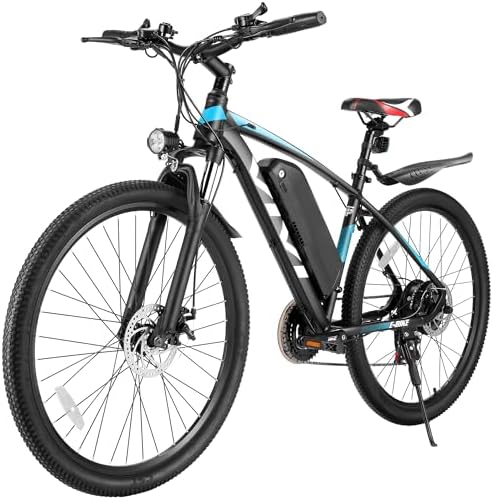
Our pick for a certified electrical system: Vivi Electric Bike for Adults, 27.5" Electric Mountain Bike, Peak 750W Ebike 19.8MPH Electric Bike with 48V 499.2WH Battery, Up to 50 Miles, 21 Speed Adult Electric Bicycles, Certified to UL2849
 Visit on Amazon →
The certification line is the reason this one is first. UL 2849 covers the whole electrical system, not just the cells, and it is the cheapest safety feature you can buy. A listing that states it up front is a listing that expects to be checked.
The rest of the spec sheet is a sensible commuter package. A 48 volt, 499.2 watt-hour battery is a real number you can do math with, a peak 750 watt motor is the hub-motor class that handles rolling terrain and city streets, and 21 speeds mean you can still pedal the thing home if you run the pack flat. The 27.5 inch wheels roll over curb cuts and chip seal better than a 20 inch folder will. Assist tops out at 19.8 mph, just under the 20 mph line that most states treat as the edge of a standard e-bike, though you should check your own state's rules before you assume anything.
About that range claim: treat 50 miles as the best case, which means a light rider, flat ground, and the lowest assist level. With a 499.2 watt-hour pack, your real number depends on your weight, the hills, and how much help you ask for. That is true of every e-bike ever sold, and it is why the range test below is the second thing I tell every new owner to do.
Flaws but not dealbreakers: A hub motor does not use the bike's gears, so a 21-speed drivetrain helps you on the pedals but not the motor. On a long, steep climb you will be doing more of the work than you would on a mid-drive. Mountain-bike tires on pavement also cost you a little range through rolling resistance. For a mixed commute with some gravel or broken pavement, that trade is worth it.
Anyone who wants a certified pack, a standard parts bike, and a commuter they can pedal when the battery dies should start here.
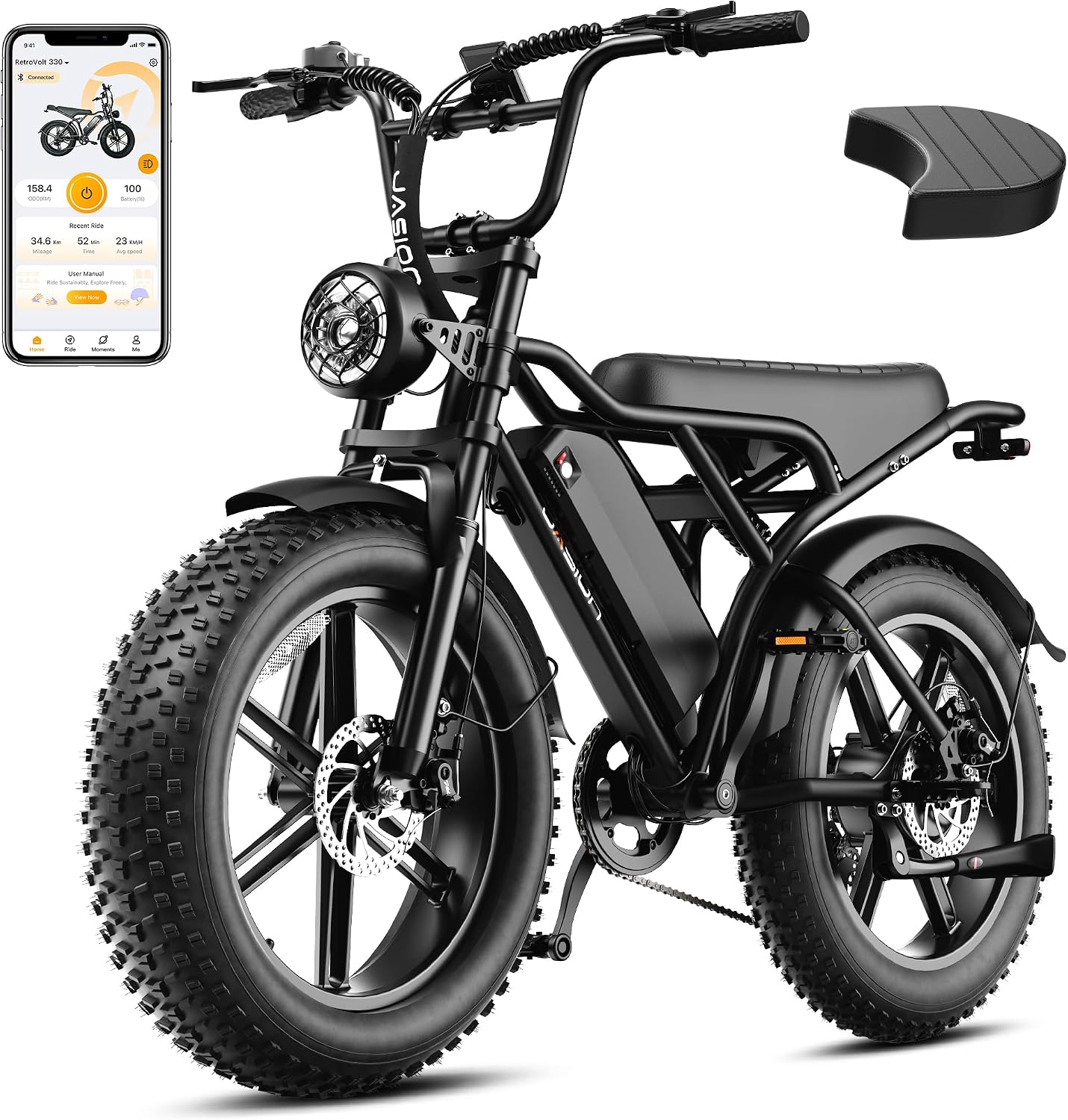
Best for power and range on rough ground: Jasion RetroVolt Electric Bike, 70-Mile Range, 2000W Peak, Fat Tire
 Visit on Amazon →
This is a different animal. A 2,000 watt peak rating and a 70 mile range claim put it in the fat-tire cruiser category, and the fat tires are the reason to look at it. If your commute includes gravel, dirt, sand, or the kind of broken asphalt that eats narrow tires, the extra contact patch and cushioning are worth the weight.
Peak watts are not the same as continuous watts, so read that 2,000 figure as the ceiling the controller allows for short bursts, usually on a climb or from a stop. What that translates to in daily riding is strong acceleration and easy work on loose surfaces. What it does not translate to is a free pass on hills, because the motor still does not get to use the gears.
The 70 mile range figure deserves the same skepticism as any other. Fat tires have more rolling resistance, and a heavier bike with a bigger motor uses more energy per mile. Plan on a real-world number well under the claim, and plan on charging more often than the marketing suggests.
Flaws but not dealbreakers: Fat tires hum on smooth pavement, and they are slower to spin up. The other thing I would verify before paying is the certification. Ask the seller for written proof that the electrical system meets UL 2849, and if they cannot produce it, that is your answer. Battery certification is not a feature you compromise on, because the failure mode is a fire in your garage, not a bad review.
Anyone who rides rough surfaces, wants power on tap, and does not mind a heavier bike should take a hard look.
How to check any e-bike before you buy it
Step one: find the certification. Ask for UL 2849, in writing, for the whole electrical system. UL 2271 covers the battery alone; 2849 covers the battery, charger, motor, and controller as a system. A listing that states it is telling you the bike was built to be plugged in inside a house. A listing that dodges the question is telling you something too.
Step two: put your hands on the brakes. An e-bike is heavier than a bike and it goes faster. Ride it at full assist in a parking lot and squeeze both levers hard. The lever should feel firm, not spongy, and the bike should stop in a couple of car lengths without drama. If the levers come back to the bar, or the bike takes half the lot to slow down, that is not a bike you want in traffic. Mechanical disc brakes can be fine if they are set up well. Hydraulic discs are better. Rim brakes on an e-bike are a no.
Step three: match the motor to your terrain. A hub motor sits in the wheel, costs less, and is fine for flat and rolling ground. A mid-drive sits at the pedals and uses your gears, which is what you want if your commute has real climbs. Neither is universally better. Buying a mid-drive for a flat city commute is money you did not need to spend, and buying a hub motor for a mile of 12 percent grade is a daily regret.
Step four: do the range math yourself. Watt-hours divided by consumption gives you miles. A 48 volt, 499.2 watt-hour pack is 499.2 watt-hours no matter what the box says. A rider on flat ground at low assist might use somewhere around 15 to 20 watt-hours per mile; at high assist in hills, that number can double. Do the division before you believe the brochure.
Step five: check that parts exist. Ask what happens when you need a brake pad, a battery, or a controller in three years. Standard sizes mean any shop can help. Proprietary everything means you are mailing a bike back to a warehouse. My rule is simple: if the dealer does not exist, the bike does not exist.
Step six: make sure it fits. Stand over the frame. Reach the bars without locking your elbows. On a commuter you will spend an hour a day in that position, and a bike that is one size wrong is a bike you stop riding.
The first week with a new commuter e-bike
Charge it to full and time it. Note how long a full charge takes, because that number is your baseline. If it doubles in a year, your pack is telling you something.
Set your tire pressure. Check the sidewall and aim for the middle of the range for pavement, lower for loose surfaces. Fat tires run much lower than commuter tires. Under-inflated tires cost you range and make the bike feel vague in corners.
Bed in the brakes. Find an empty lot and do a series of hard stops from moderate speed, letting the brakes cool between them. New pads and rotors need that to bite properly.
Run your own range test at three assist levels. Same loop, same day, low, medium, and high assist. Write down the miles. That gives you a real number for your weight and your hills, which is worth more than any spec sheet.
Log your battery health. Write down the date, the charge cycles, and how far the bike goes on a full charge. Check it again at 500 miles. A pack that has lost a big chunk of capacity that early is a warranty conversation, and you only win that conversation with records.
Re-torque the bolts. New bikes settle. Check the stem, the seatpost clamp, the rack, and the axle nuts after the first 50 miles.
The mistakes that cost the most
Buying on the range claim instead of the watt-hour figure. Skipping the certification because the price looked good. Ignoring the brakes because the motor got all the attention. Storing a fully charged battery in a hot garage, which is the fastest way to kill capacity. And trusting a listing that never mentions who services the bike when something breaks.
What this actually costs to run
Charging a pack a few times a week is a rounding error on a residential electric bill. The real costs are the consumables: brake pads, chains, tires, and eventually a battery. Budget for a replacement pack at the three to five year mark and you will not be surprised by it. Check current Amazon price on both bikes at the links above before you compare them to anything else, and remember that a cheap bike with an uncertified battery is not cheap if it burns your garage down.
That is the job. Pick the bike with the certified pack and the brakes that stop it, then ride it enough to know your own range number. The rest is cosmetic.