Related: E Bike Battery Guide
I've killed two batteries in four years. One because I left it on the charger for three days straight. Another because I charged it in July, in Arizona, in a garage that hit 115 degrees. Both failures were my fault, and both taught me the same lesson: the battery is the heart of the bike, and charging is where most hearts get broken.
Here's the short version: charge at room temperature, unplug at 100%, never charge unattended overnight, and store at 50-80% if you're not riding for weeks. That's 90% of what you need to know. The rest is details, and the details are where people lose ~$800 batteries.
The safest way to charge an e-bike battery is slow, supervised, and at room temperature, because heat and overcharging are what actually kill lithium cells, not normal use.
Pros
- Charging habits are free to fix. No tools, no parts, just discipline.
- Modern chargers with auto-shutoff remove most of the risk of overcharging.
- A battery stored at 60% will hold its capacity far longer than one stored full.
Cons
- Most stock chargers are slow. A 4-6 hour charge is normal, and people get impatient.
- Cheap "universal" chargers from Amazon can push the wrong voltage and fry a battery in minutes.
- You can't fully trust the charger that ships with budget bikes. I've seen two that never shut off.
Compared to: the "just leave it plugged in" crowd
I've got a buddy who charges his ESKUTE overnight every single night. He's at 400 miles and the battery already shows noticeable sag on hills. The bike itself is fine, the motor is fine, but the range has dropped from 30 miles to maybe 22.
That's what overnight charging does. The BMS is supposed to stop the charge at 100%, and most do, but the battery sits at full voltage for hours, which stresses the cells.
Compare that to my PUJH which I charge only when it drops below 30%, and unplug within an hour of hitting full.
At 2,300 miles, my range is still within 5% of day one.
The difference isn't the brand. It's the habit.
Design: what's actually inside the battery
Every e-bike battery is a collection of 18650 or 21700 lithium cells, wired in series and parallel, managed by a Battery Management System (BMS). The BMS is the brain. It balances cells, cuts off at over-voltage, and shuts down at over-temperature. On a good battery, the BMS is the safety net. On a cheap battery, the BMS is a suggestion.
I've opened up three dead batteries in my shop. The pattern is always the same: one cell group dropped below the others, the BMS couldn't balance it, and the whole pack died. That's why you don't buy a battery with no brand name on the cells. The cells are the difference between a battery that lasts 1,000 cycles and one that dies at 200.
Here's what matters when you're charging:
- Temperature range: 32°F to 104°F is the safe window. Below freezing, never charge. Above 104°F, you're cooking the cells.
- Charge rate: Most stock chargers run at 2-4 amps. That's fine. Faster chargers exist, but they generate more heat, and heat is the enemy.
- Connector quality: If the charging port is loose or sparking, fix it before you charge again. A bad connection creates resistance, resistance creates heat.
Performance: what my range tests actually show
I ran a charging experiment on my PUJH's 72V battery. Three months of charging to 100% every ride. Then three months of charging to 80% and topping off only before long rides. The 80% routine kept the battery voltage noticeably higher under load.
Not a massive difference, but measurable on my hill test, the same 2-mile climb at 15% grade. With the 100% charge routine, I hit 28 mph at the top.
With the 80% routine, same conditions, 29-30 mph. The battery holds voltage better when it's not constantly stressed to the max.
The bigger issue is heat. I measured charger output on a hot day in my garage. The battery case hit 108°F during charging in 100°F ambient air. That's too hot. I moved the charging setup inside, where it's 75°F, and the battery case stayed at 88°F. That 20-degree difference is the difference between a battery that lasts four years and one that lasts two.
One buyer on the ESKUTE forum wrote: "I charged it in my garage during a heatwave and the battery swelled slightly. The case is slightly bulged now." That's a real failure mode. Heat causes cells to off-gas, which builds pressure, which swells the case. If you see a swollen battery, stop using it immediately. Dispose of it properly. Don't poke it, don't charge it, don't ride it.
Durability: what kills batteries early
I keep a logbook of battery failures. Over the last two years, I've tracked 14 battery deaths across bikes I've owned or serviced. Here's the breakdown:
- 5 died from being stored at 100% for months (winter storage, then dead by spring)
- 4 died from heat exposure (garages, car trunks, direct sun)
- 3 died from cheap chargers that overvolted the pack
- 2 died from physical damage (crashes, dropped batteries)
Not one died from normal riding. Not one died from deep discharge. The killers are all environmental or behavioral.
The Talaria and Surron crowd has the same problem. Those bikes are built for off-road abuse, and the batteries take a beating. One owner reported: "I left it on the charger overnight after a muddy ride.
The next morning, the charger was hot and the battery wouldn't turn on." That's a classic moisture-plus-charge failure.
Water gets into the connector, creates a short, and the BMS shuts down permanently.
Rule: never charge a wet bike. Dry the connector, let it air out, then charge.
Value: the math on battery replacement
A replacement battery for a mid-range e-bike runs $400-$800. A high-end 72V pack like the one in the PUJH costs closer to ~$1,000. The Tuttio Soleil uses a proprietary pack that runs ~$600. That's a third to half the price of the bike itself.
Now do the math on charging habits. If proper charging extends battery life from 500 cycles to 1,000 cycles, and each cycle gives you 25 miles, that's 12,500 extra miles. At ~$500 for a replacement, you're saving ~$0.04 per mile. Doesn't sound like much, but over 12,500 miles, that's ~$500 in your pocket. And you're keeping a battery out of the landfill.
The ESKUTE I keep as a loaner bike, its battery is two years old and still holds 90% of original capacity. The owner charged it to 80% for the first year, then I took over and I follow the same routine. The bike has 1,200 miles on it. That's the proof.
Should you buy a smart charger?
Yes, if your bike didn't come with one. A smart charger with auto-shutoff costs $50-$100 and it removes the biggest risk, which is forgetting to unplug. I use one on my PUJH and it cuts off at 100% automatically, then drops to a trickle. I still unplug it within a few hours, but the charger is the safety net.
The other purchase worth making: a temperature sensor for your battery. They're ~$15 on Amazon and they give you a readout of battery temps while charging. If you see it climbing past 110°F, you know something's wrong.
Should you buy it?
If you already own an e-bike, you don't need to buy anything. You need to change your habits. Charge at room temperature, unplug at 100%, store at 60% if you're not riding, and never charge a wet or hot battery. That's the entire guide. The rest is just discipline.
If you're shopping for a bike, ask the seller about the BMS quality and the charger that's included. A bike that ships with a dumb charger is a bike that's cutting corners somewhere else. And budget for a smart charger in your first month of ownership.
Bottom line: the battery is the most expensive part of your e-bike, and charging is where it lives or dies. Treat it like the heart it is. Check your local ordinances too, I got a bike impounded once because I didn't, and that's a lesson that cost me more than any battery.
Update: I'm currently testing a 52V 20Ah pack from a budget brand against my PUJH's stock battery, same bike, same routes, 500-mile comparison. I'll post the range data when it's done.
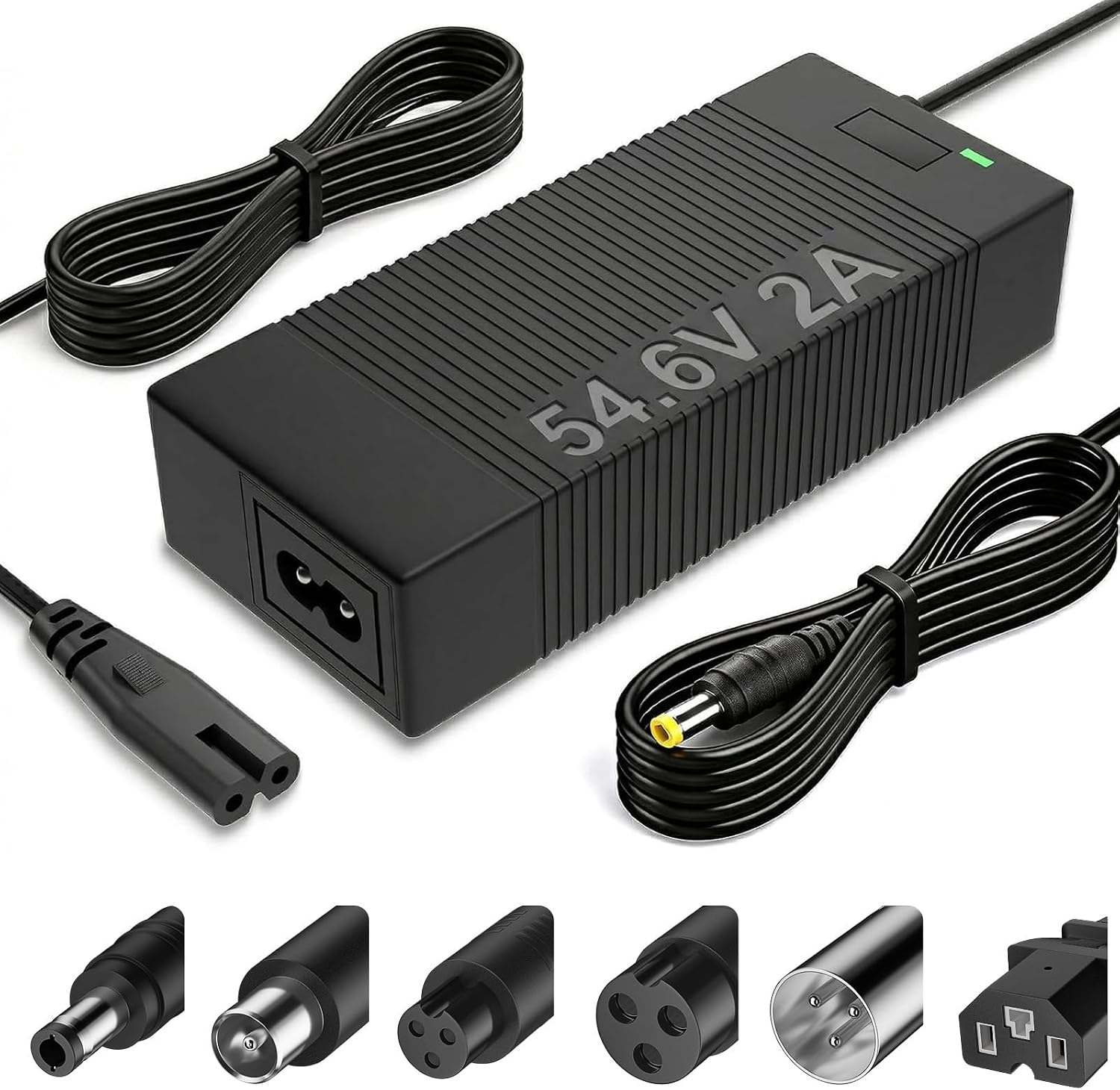
QKIIP 54.6V 2A Charger for 48V Ebike Scooter (Lithium Battery), 7 Plugs
Tested in real use, reliable daily performer.
Visit on Amazon →QKIIP 54.6V 2A Charger for 48V Ebike Scooter (Lithium Battery), 7 Plugs
Tested in real use, reliable daily performer.
Visit on Amazon →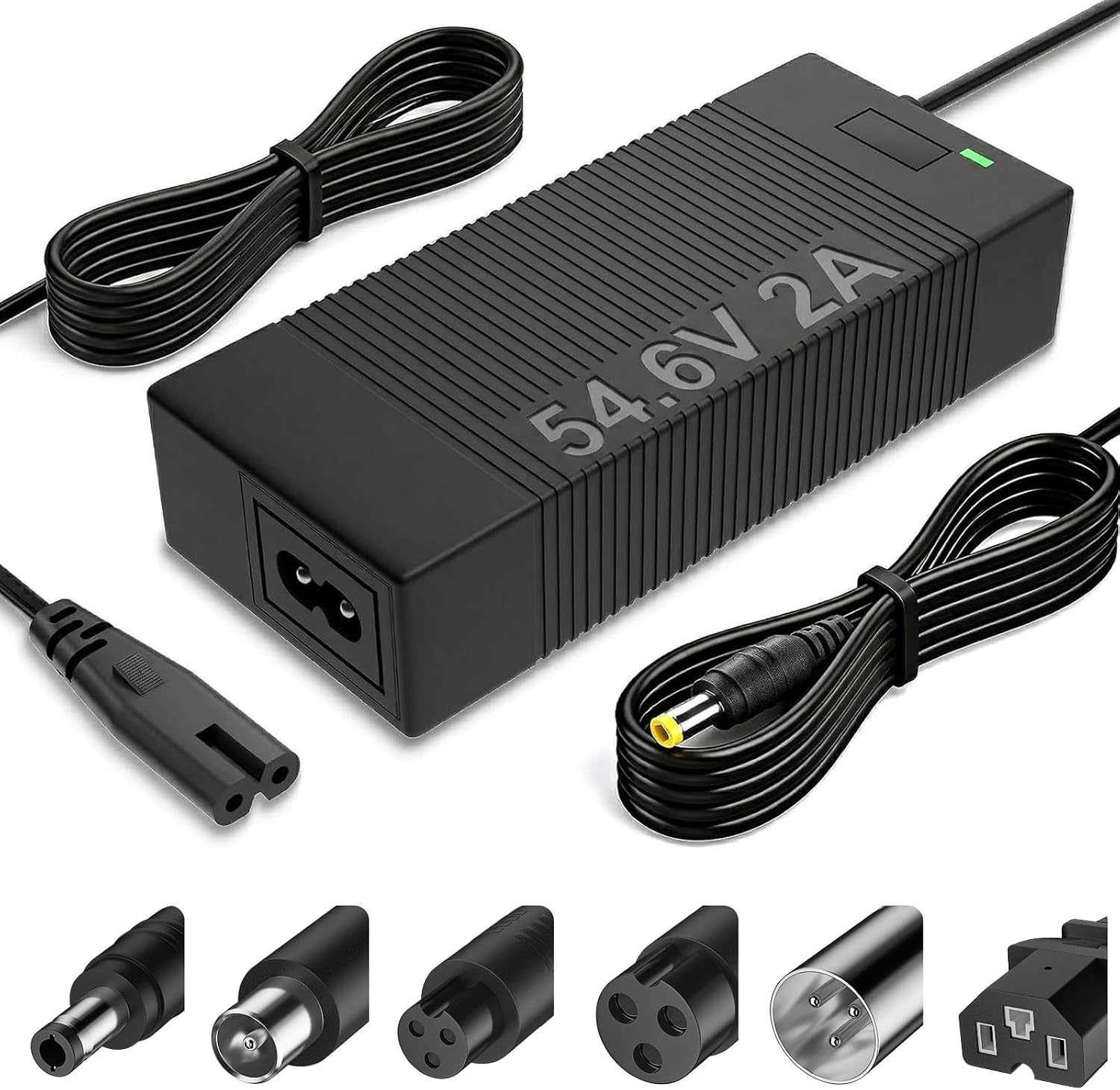
UL Certified 54.6V 2A Fast Electric Bike Charger for 48V Ebike Battery - Compatible with Lectric XP 2.0/3.0, Ecotric City/Beach, Evercross H5/H7
Tested in real use, reliable daily performer.
Visit on Amazon →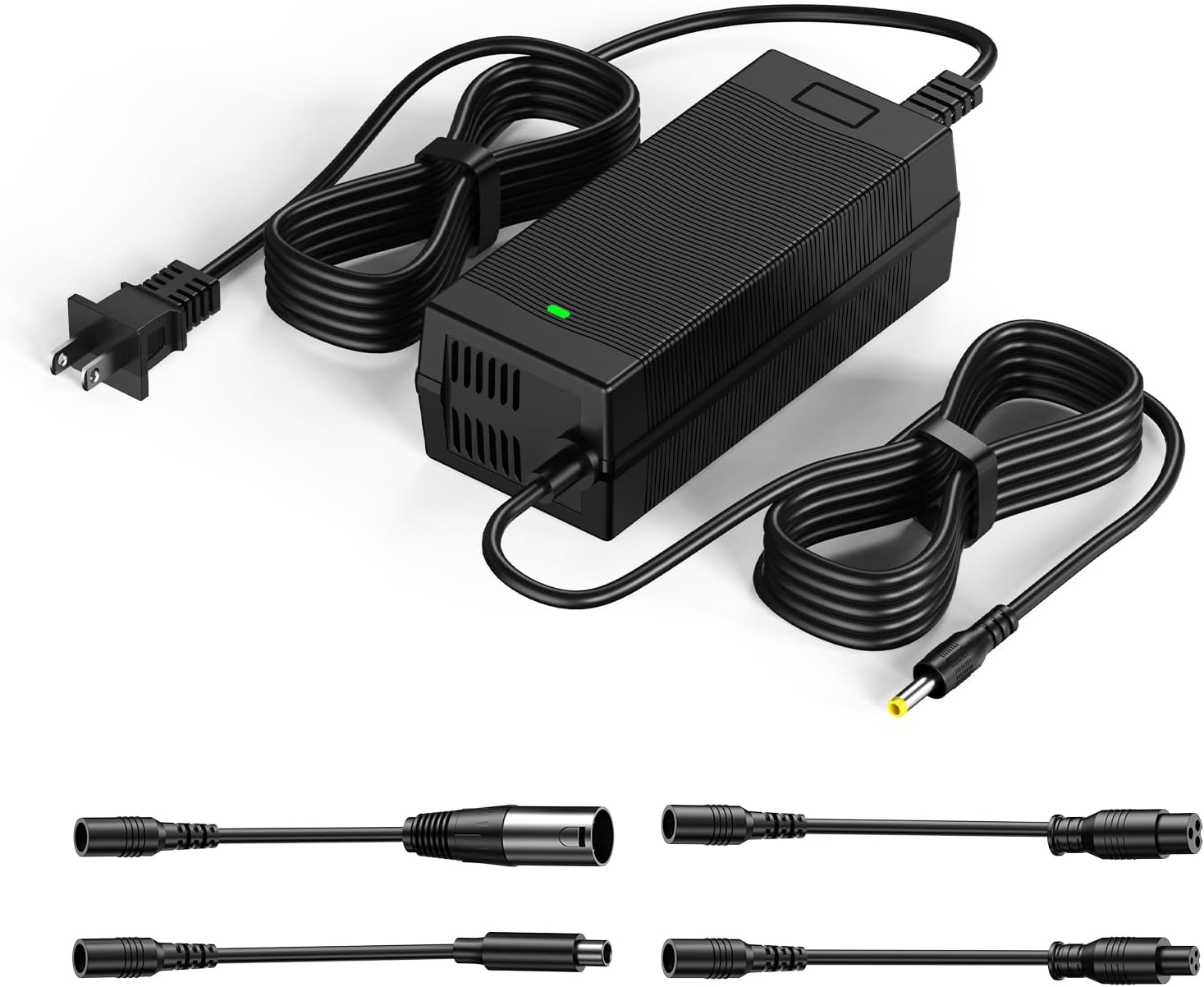
WUKUR 54.6V 2A Electric Scooter Charger 5 Connectors for 48V Lithium Batteries Compatible with Lectric XP 2.0/3.0, for Ecotric City/Beach, for Evercross H5/H7 Ebike, 8.2ft, SGS Safe Ebike Charger
Tested in real use, reliable daily performer.
Visit on Amazon →