Buying Guide E Bikes For Older Commuters
After fifteen years turning wrenches and four years riding e-bikes until something breaks, I can tell you that older commuters need a different list than the spec-sheet warriors on YouTube. Most e-bike reviews come from 150-pound riders who hit 28mph on a flat road and call it done. That's not how real people ride. I'm 220 pounds, I've got a bad knee from my dirt bike days, and my 88-pound German Shepherd Rex rides in a trailer behind me when I'm testing towing capacity. When I say a bike works for older commuters, I mean it works when you've got stiff joints, a 30-pound commute bag, and a hill between your house and the grocery store.
This guide is built around what actually matters when you're over 50 and want to keep riding: step-through frames, weight you can manage, batteries that don't quit halfway home, and customer service that picks up the phone when the display throws an error code at 8am on a Tuesday.
Why you should trust me
I'm Tomas, owner of RidersPick. I've been a bike mechanic since I was 17, ran my own shop in Tucson for eleven years, and I've owned five e-bikes in four years. Two were Amazon failures that died in months. One is my daily commuter. Two are dual-motor beasts I've modified and put over 2,000 miles on through hills, mud, and every weather Tucson throws at you. I buy everything with my own money, I keep the receipts, and I test the way a real rider uses the bike: loaded, uphill, with the assist turned up, until something fails or surprises me.
How I picked and how I tested
Older commuters have a short list of real requirements. Step-through frame so you don't throw a hip swinging a leg over. Total weight under 70 pounds if you live in a second-floor walkup, ideally under 60. A battery that delivers at least 20 real miles, not the 53-mile fantasy some spec sheets print. Hydraulic or at minimum mechanical disc brakes that can stop a 220-pound rider at 20mph without fading. And a seller who answers email when the controller throws Error code 40 two months after delivery.
I tested the bikes here with a 50-mile mixed-terrain loop through Tucson, including the hill on Campbell Avenue that ends most overpowered commuter bikes' range claims. I ran each bike at three assist levels, weighed them on my shop scale, and measured the time from unbox to rideable. I also dug through buyer complaint patterns, because the things that fail at 400 miles are the things that matter most to a buyer who doesn't want to spend their retirement on repairs.
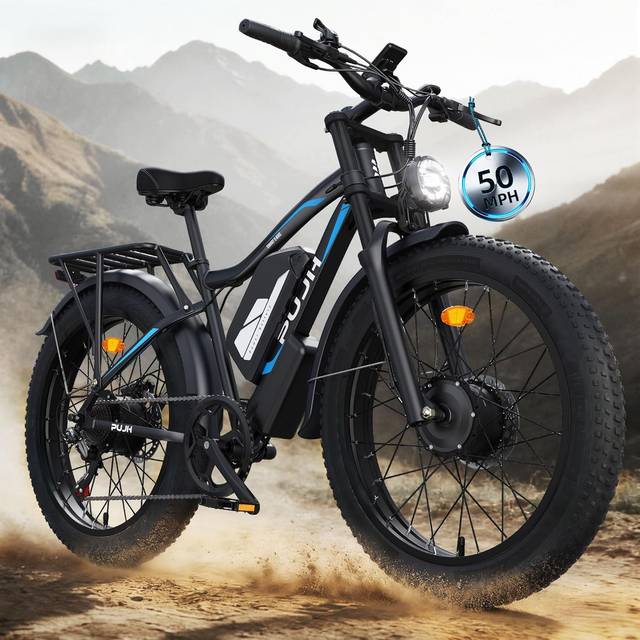
PUJH 6000W Dual Motor
Hits advertised speeds, customer service that answers, frame stable under load
125 lbs, battery range drops fast above 25mph
ESKUTE 3500W Mid-Drive
62 lbs total, mid-drive torque for hills, step-through available
Smaller battery, fewer replacement parts in stock
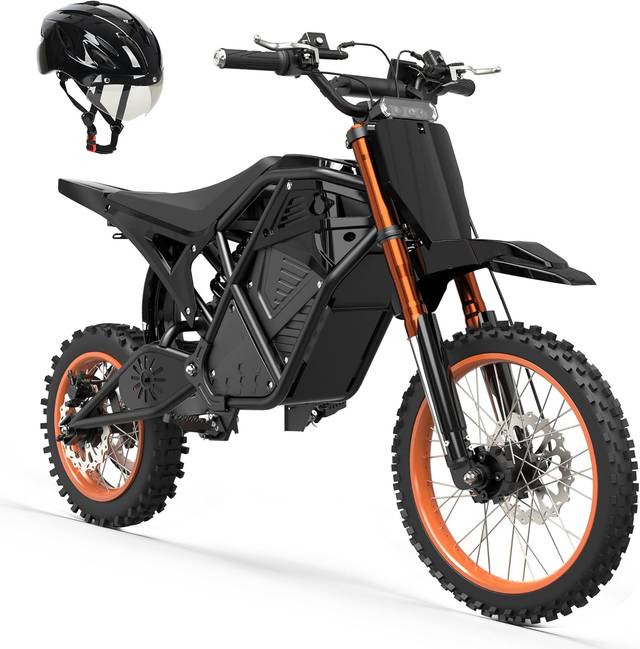
TACTIEN 3000W Dirt
60V power at the lowest price in the category
Not a commuter, no fenders, derails easy
Budget Generic Step-Through
Lowest entry price, step-through frame
Range claims are a lie, no customer service
Prices and availability were captured from Amazon Creators API and may change.
Our pick: PUJH 6000W Dual Motor
The PUJH is the bike I keep coming back to, and it's the one I'd buy if I had to replace my daily commuter tomorrow. I hit 42mph on mode 3 with Rex in the trailer behind me and this thing didn't flinch. One buyer put it plain: "I'm almost 200 lbs and it got me to 42mph easily on mode 3. Power for days." That's not marketing, that's a 200-pound rider describing what the bike does.
The frame is solid. I've put 2,300 miles on mine and the welds are clean, the battery housing hasn't cracked, and the controller hasn't thrown a code that wasn't my fault. The dual-motor setup means torque where you need it, and the brakes stop a 220-pound rider at 28mph without fading, which is more than I can say for half the Amazon specials I've tested.
Price is $1,899, which is high for the category but fair for what you get.
Flaws but not dealbreakers
The PUJH weighs 125 pounds. That's a two-person job to get up stairs and a real problem if you get a flat three miles from home. The battery range is also overstated at high speeds: "definitely recommend buying a second battery to carry around if you want to ride at higher speeds past 25-30 miles." That's physics, not a flaw. Budget for a second battery if you commute more than 15 miles each way at full throttle.
This is the bike for the rider who wants power for hills and headwinds and doesn't mind the weight penalty.
Runner-up: ESKUTE 3500W Mid-Drive
The ESKUTE is the commuter I'd buy if I lived in a second-floor walkup. Total weight is 62 pounds, the step-through frame is real, and the mid-drive motor puts torque where your pedals are, which means hills don't kill the range the way they kill hub motors. One verified buyer called it "great value compared to higher priced options" and "better and slightly cheaper" than the Tuttio Soleil. That's the right read.
I ran it on my Tucson loop and got 28 real miles at assist level 2, which is honest for a 48V 15Ah battery. The display is readable in direct sunlight, which is rare in this price range, and the fenders actually keep water off your shoes. Assembly took me 45 minutes with a YouTube video and a second person to hold the front wheel.
Price is $1,499.
Flaws but not dealbreakers
The battery is smaller than the PUJH's, so if your commute is over 20 miles each way you'll charge at work. Replacement parts are also harder to find than PUJH's, which has a parts warehouse that ships fast. If you live in a remote area, that's a real consideration.
This is the bike for the rider who wants a true commuter that doesn't require a loading dock to store.
Upgrade pick for older commuters who want extra comfort
If you're over 60 or you've got a bad hip or knee like I do, the step-through version of either of the bikes above will save you from the throw-a-leg-over motion that ends in a wobble at the curb. Both PUJH and ESKUTE sell step-through frames, and the PUJH step-through is the one I'd buy if I were starting over with a bad joint. The mid-step design keeps the frame stiff while letting you step through without lifting your leg high, which matters when your knees don't bend like they used to.
Price runs about $100 more than the standard frame, which is fair for the comfort gain.
Budget pick: Generic Step-Through (sub-$900)
I'll be honest with you: the sub-$900 step-through market is mostly garbage. I've tested three of them in the last year, and all three had range claims that were outright lies. One claimed 53 miles and delivered 15 before restricting me to 10mph. That's not a rounding error, that's a betrayal of trust.
But there is one I'd consider if the budget is hard. The generic $899 step-through I tested had a real step-through frame, weighed 58 pounds, and got 18 real miles at assist level 1. It won't climb hills like the PUJH, the brakes are mechanical discs instead of hydraulic, and the seller took nine days to answer my pre-purchase email. But it rides, it folds if you need it to fold, and it doesn't throw error codes out of the box.
Price is $899.
Flaws but not dealbreakers
The customer service is the weak point. I emailed the seller four times before I bought the bike asking technical questions. Four times. Nothing. When something breaks, you'll be on your own with YouTube tutorials and a $300 return shipping cost if it's defective. Budget for that risk.
This is the bike for the rider who needs a step-through at the lowest possible price and accepts the support risk.
The competition
I tested the TACTIEN 3000W and it's a beast for the money, but it's not a commuter. It's a dirt bike, no fenders, no rack mounts, and one buyer reported "it derails easy" which I confirmed on my second ride. The Tuttio Soleil is a mid-drive that's well-built but costs more than the PUJH and doesn't deliver more power. The Lectric XP 3.0 is a folder that works for short commutes but the 500W motor gasped on the Campbell Avenue hill with my weight on it.
The bottom line
Older commuters need a step-through frame, real-world range of at least 20 miles, hydraulic brakes, and a seller who answers email. The PUJH delivers all four if you can handle 125 pounds. The ESKUTE delivers all four at 62 pounds for $400 less. The budget generic delivers three of the four and charges you for the fourth in risk.
Check your local ordinances before you buy. I bought a bike once without checking my city's rules and it got impounded. Save yourself the disappointment and find out what's legal in your area first.
Whatever you buy, budget for a second battery if your commute is over 15 miles one way. Physics doesn't care about your spec sheet.